Sarah’s Journal

Photo that relates to theme and shows person described in the text

Like Ash Sarkar who interviews Richard Beard on Novara Media’s podcast Downstream: We Must Ban Private Schools’, I went to a comprehensive school. If this was also your experience, you’d be forgiven for thinking that ‘boarding school syndrome’ doesn’t affect you. Maybe like me you have friends or family who did, but it’s not just that. As Ash says,
“boarding school life is suffused through our popular culture,” and it creates a fascinating mystique, and consequences for us all. Of course, not everyone has a bad experience of boarding school life, and I’m not suggesting that if you went to a comprehensive school you had a brilliant time either. In an ideal world, education would be a flexible, caring, child-centred place to explore and develop.

Richard Beard argues (one of a growing cohort who have written on the subject including Joy Schaverien and Alex Renton), that boarding school is where many of our leaders in politics, business, law, journalism and other professions may have learned to disconnect from compassion. The consequences of the normalisation of separating children as young as seven or eight from their loving care-givers, to be imprinted by a competitive system that shames vulnerability, and where abuse, bullying and punishment were (in the past at least) endemic, may have repercussions for everyone in society.

This potentially traumatising system underpins much of our society, and was exported from the UK via colonialism to mete out further harm in other places. Beard adds that the values of this exclusive education also trickle down into the whole private school system in the UK, where “a cycle of entitlement” may be fostered, if people have been repeatedly told that they have received the best education. Beard eloquently describes a system that can condone independence, at the expense of distress, in the name of privilege.

Beard also describes the mechanism that creates this
“dislocation between what you’re being told and what you’re feeling”, which gives rise to repression of empathy. He describes the painful sound of a dormitory’s grief, where,
“a volley of cries goes round the room”, but “the next day we’ve got to get up and we’ve got to pretend that never happened.” The resulting internalised message is, “Don’t show empathy for other peoples’ emotions, and then don’t show empathy for your own. Don’t show empathy for your own sadness.”

Some of the other defences that people may be socialised into in this system include: deflection, politeness, charm and inauthentic self-deprecation. These defences compensate for a complex set of emotions that are being defended against. Richard Beard’s book ‘Sad Little Men: Private Schools and the Ruin of England explores these dynamics in public schools in more depth.

In artist Tony Gammidge’s animation ‘Norton Grim and Me’, he reveals himself as school boy in a dormitory where tears are ignored, and the severing of family ties is perpetuated in the name of tradition. He says:
Norton Grim and Me is about my experiences of going to boarding school, aged 7 years old. It is about the trauma of the separation from my home and family, the tradition and culture that normalises this practice and the impact that this has had on me emotionally and somatically.”

It’s a short, powerful watch that gives an alternative version of boarding school to the jolly games of Quidditch in Harry Potter. Also disturbing is the portrayal of Philip and Charles’ school days as dramatic portrayals of a repressive regime in ‘The Crown’.

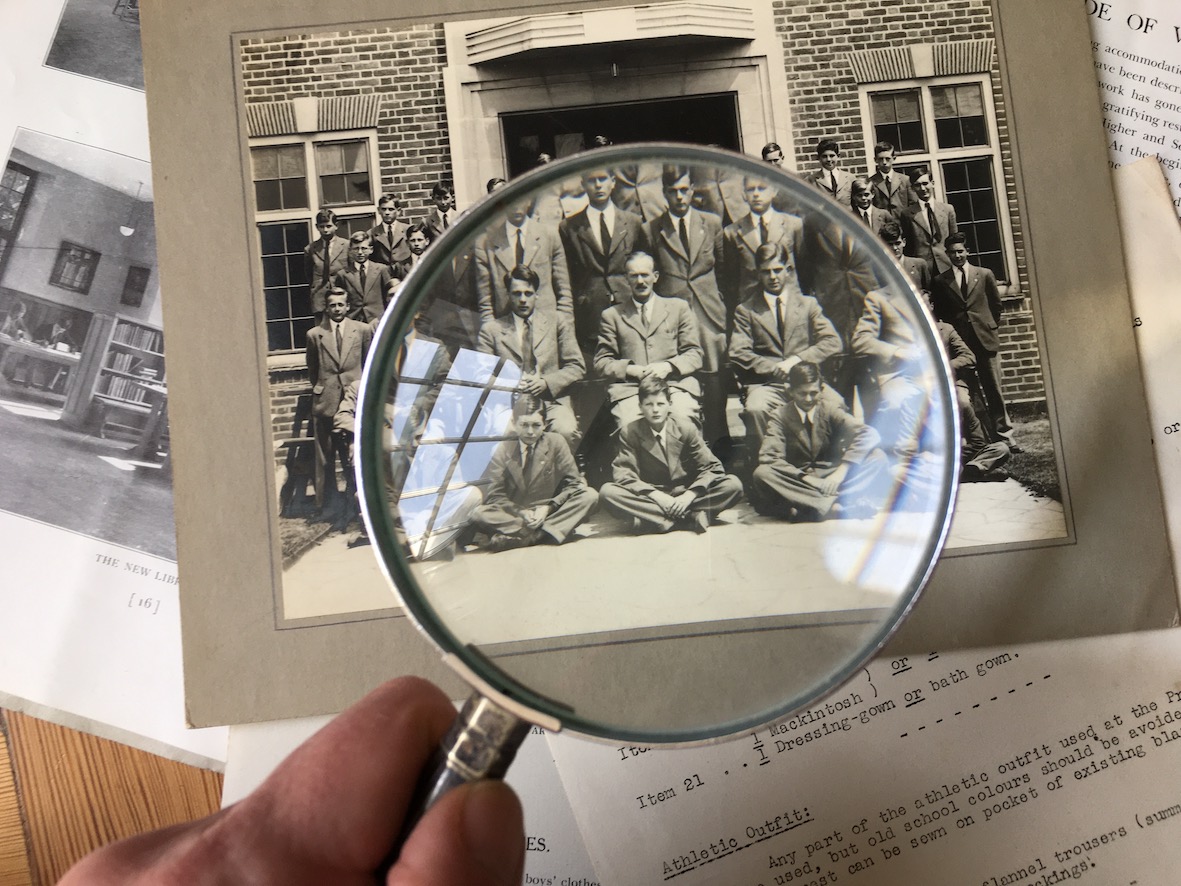
Rummaging in family papers, I find evidence from my father’s school days. I shudder when I read his school report age 8 that reads, “Has started Rugby. Will do better when he is a little more robust”. Even as an adult he remained slight.  I scrutinise the faces of boys, the majority of whom look unhappy, and the stern ‘masters’.

In addition to the foundation provided by a boarding school education which may in itself be problematic, sexual abuse, at least in former decades was rife. I am gratified by Christ’s Hospital’s recent ‘statement of acknowledgement’, which feels like a significant step in the right direction. The Scottish Child Abuse Inquiry is currently investigating not only children in care, but also in boarding schools.

While individual teachers who are subject to allegations may face prosecution, the recognition that school cultures may have played a part in enabling or covering up harm that children in their care experienced is important. Boarding schools are one example of a ‘total institution’, as described by Erving Goffman. This is a “place of residence and work where a large number of like-situated individuals, cut off from the wider society for an appreciable period of time, together lead an enclosed, formally administered round of life.” In such systems, if unscrupulous people are in charge, perhaps with their own developmental trauma, they can wield power unchecked with impunity.

Sophy Banks enquiry into Healthy Human Culture’, looks at the dynamics of change in organisations. This work explores how we uncover the unhealthy dynamics that enables misuse of power, and how to begin the work of restoration and repair. Vitally she asks the question, what would a healthy system look like, with caring community at the centre, and educational values that favour respect, curiosity, creativity over ruthless competition?

In ‘Of Water and the Spirit’, Malidoma Patrice Somé describes his own religious schooling. It is an example of the way some Europeans exported an authoritarian educational regime. He rebelled,
“…for there are times when disobedience heals a very ailing part of the self. It relieves the human spirit’s distress at being forced into narrow boundaries. For the nearly powerless, defying authority is often the only power available.” His experience in this system was part of the process that eventually brought him back to his indigenous roots. This cross-cultural journey is one of the threads that would bring the social technology of Grief Tending to the UK.

Re-connecting with emotions, long repressed is a common theme that people may bring to Grief Tending spaces. Boarding school trauma, and other surrounding issues, may be a theme that someone carries. We offer support circles and grief workshops where we encourage empathy for both ourselves and others. You can find our next events here.

Sarah Pletts is a Grief Tender and Artist who offers workshops in London and online, sharing rituals where grief on all themes is welcome.  For more information about Grief Tending events see here

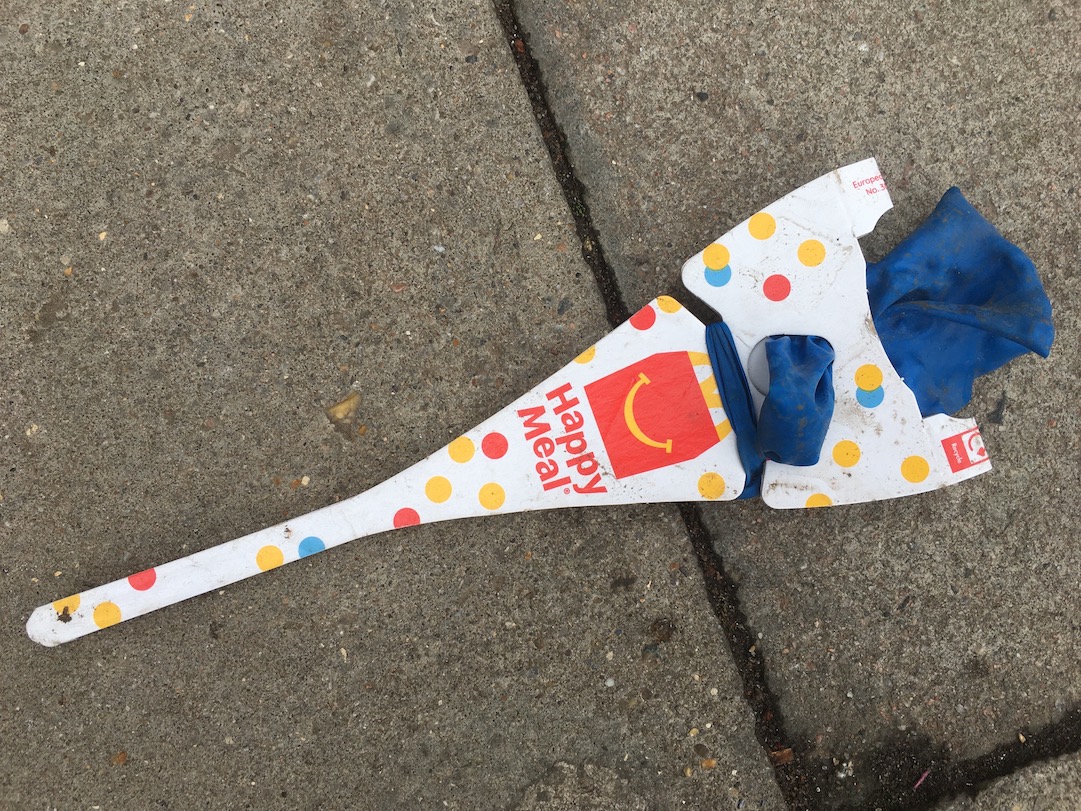
Image to represent the betrayal of a lost dream symbolically.

I’ve been thinking recently about the theme of betrayal. Do you feel that you were sold the dream of happiness in life, but all you are left with is a burst balloon?

There are the deliberate acts of betrayal – stories of revenge or deception. The fascinating ‘cat-fishing’ story recounted in the Tortoise Media podcast Sweet Bobby’ describes how devastating an intimate betrayal can be. Just think about how you felt if you have ever been scammed and multiply it.

There are ways in which we may feel betrayed by care-givers, elders or leaders; the very people we trusted to take care of us in our families or communities. Imagine the betrayal, for example, of those affected by disasters such as earthquake, flood, storm – who may have been failed by builders, town planners, governments, NGO’s and the wider world.

‘What we expected but did not receive,’ one of Francis Weller’s ‘Gates of Grief’, comes in many shapes and forms. It may show up as an existential sense of betrayal – the hopes and dreams which have not been delivered. This may be where disappointment and longing meets betrayal.

From our early years, stories portray the ‘hero’s journey’ as the route through life, but Paul Weinfield tells another version:

“In the real hero’s journey, the dragon slays YOU. Much to your surprise, you couldn’t make that marriage work. Much to your surprise, you turned forty with no kids, no house, and no prospects. Much to your surprise, the world didn’t want the gifts you proudly offered it.” Quoted here.

Then there are all the mundane acts of betrayal we have experienced or dished out to others in our everyday relationships. Have you ever cheated or been cheated on? These acts of dishonesty, disloyalty, or insensitivity, and accidents of miscommunication populate our relationship lives with all too familiar drama.

Acts of self-betrayal are also often painfully commonplace. Where have I disregarded my physical or emotional needs? My personal needs are regularly competing with my social needs to be liked and belong. Remaining loyal to my body, I regularly feel as though I am letting people down, betraying the loyalty of a friendship because my social capacity has limits.

Wherever there are relationships based on trust, there is the potential for betrayal. In the past I have assumed shared ethics, only to discover that someone was abusing their position of power, and exploiting my loyalty. The outcome was that I felt betrayed. Afterwards I felt the absence of places to express my feelings, to explore what was true for me.

In the wake of ‘betrayal trauma’, trust doesn’t come easily. I discovered Grief Tending post ‘Me Too’, as a space where a vast range of complex feelings might be welcomed, and as a way for people and communities to begin the process of acknowledgement and repair. Whether personal or collective, the grief of betrayal is a welcome theme at our events.

You can find out more about the Grief Tending events we offer here.

Sarah Pletts is a Grief Tender and Artist who offers workshops in London and online, sharing rituals where grief on all themes is welcome.  For more information about Grief Tending events see here

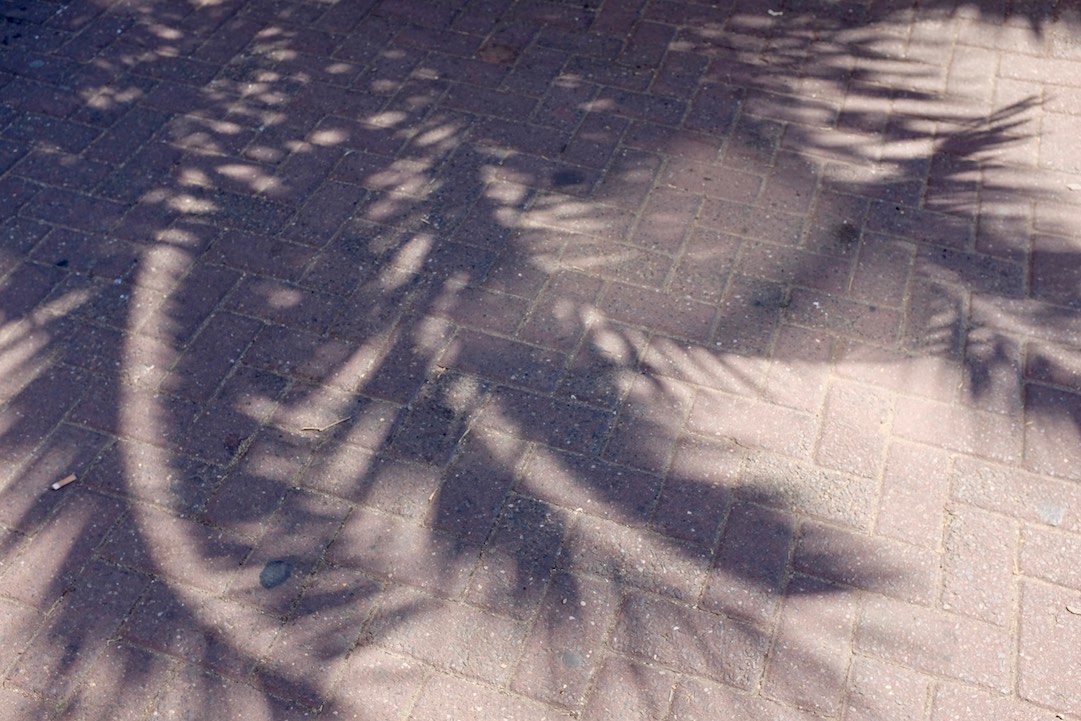
showing the shadow of a palm tree to symbolically represent changing weather patterns in theme of text

“Isn’t it lovely?” My neighbour asks on my return from a glorious walk in the park in my sun hat and shades. I’m experiencing cognitive dissonance. While I may enjoy the sunshine, the consequences are far from lovely.

In the UK we have a temporate climate, and have so far been insulated from many of the more extreme weather that impacts other places on the front line of climate chaos. In the park and gardens, plants are crisping, leaves are coming down ahead of their scheduled drop. The grass in the park is bleached blonde with bald patches where footballs have scuffed the surface. A hose pipe ban is imminent.

In my life so far, the benchmark for drought was the summer of 1976. We were living in a forester’s cottage in a pine forest. Instead of a wolf, there was a Cairn Terrier. My family were sitting eating Sunday lunch when a piece of ash blew in through the open window. My father jumped up and ran out to see a wildfire leaping towards our house.

There were no fire engines available as they were all already out. My father sent me to run down the road to find a fire engine stationed at a nearby fire, and let them know we needed help. The feet that I would eventually grow into flapped along the road, and I carried out my mission with urgency.

While forty-foot flames lapped at the garage, my Dad said I could choose one precious thing. I grabbed Panda (who ironically, I would later betray by burning). Dad drove our Mini onto the lawn. The way to the road was already aflame. His most precious things were the portraits of my Great, Great, Great grandparents, which he shoved in the backseat of the car hoping they would be safe. (They’re hanging in the house I live in now, so survived the ordeal).

The house was doused with water and escaped the fire, but much of the forest burned. A team of soldiers camped in the garden for the next week to stamp out fires which sprang up having burned along tree roots like detonation cords. I was whisked out of the way to have my tonsils out, and returned to a charred landscape.

I remember the water saving measures that included sharing baths with no more than 2” of water, avoiding flushing the toilet, washing up water watering plants, and brushing my teeth in just a splash of water. I remain acutely aware of wasted water. So, I am conscious that drought is the shadow of sunshine.

If the climate is worrying you, Grief Tending can be a place where it’s possible to express ‘unloveliness’. It’s not a strategy to change what’s happening, but it can be a way to let off steam, and help stay engaged enough to continue working for change.

You can find our next Grief Tending events and links to book them here.

Sarah Pletts is a Grief Tender and Artist who offers workshops in London and online, sharing rituals where grief on all themes is welcome.  For more information about Grief Tending events see here

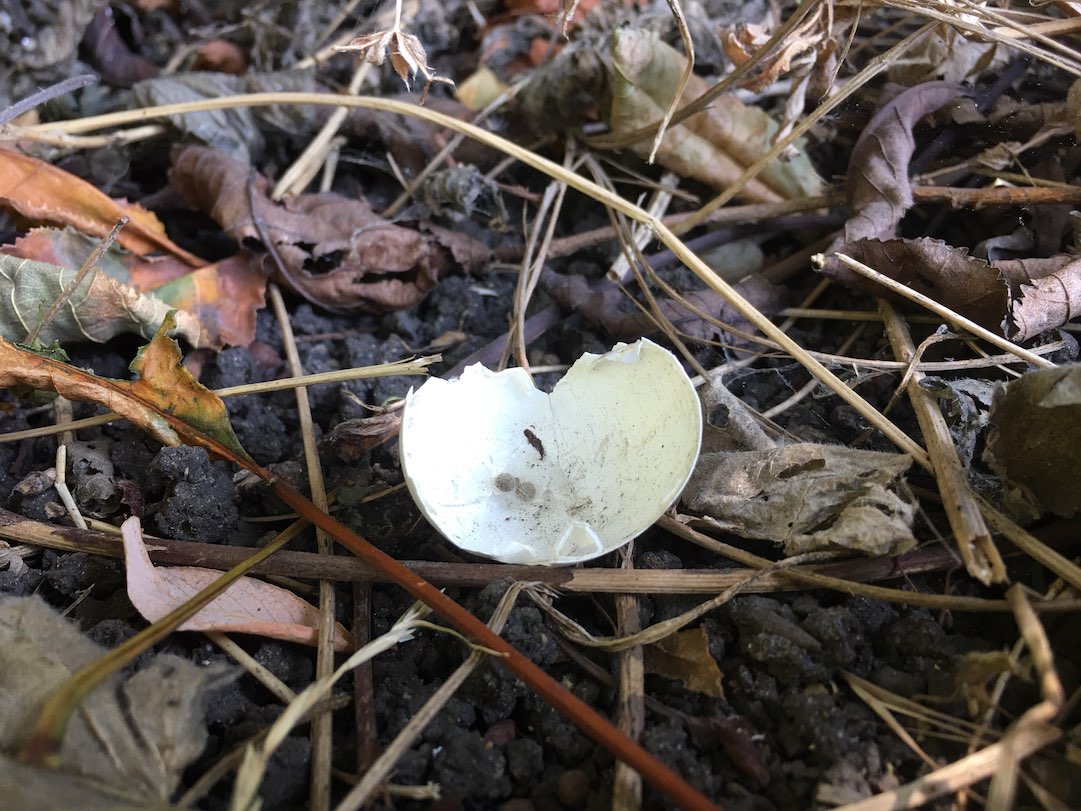
Image of a broken egg shell which is mentioned in the text as a symbol of feeling too much or too little

Where are you on the feeling spectrum? It might be helpful to imagine a scale for access to feeling responses, where 0 is no access to feelings and 10 is overwhelmed by feelings all the time. Whether we find it easy to feel or to express our feelings may change over time. When I was young, for instance, I decided I wasn’t going to be like my mother – who had a very different feeling style to me. Under-feeling and over-feeling will be responses to our own complex histories, and may include some adaptive strategies that have been helpful to us. We may also have outgrown defences that no longer serve us.

Are you the person who feels, in a family who seem to be oblivious to their pain? Perhaps you are the one who cries when the latest disaster statistic is mentioned on the news and no-one else appears to blink? How is it to feel so sensitive? Is this fragility or strength? Do you cloak your softness in tough armour? Do you create a persona that is unapproachable to disguise your tender heart?

Or are you at the other end of the feeling spectrum? Perhaps you are one of those who seem to have lost the ability to feel? Maybe something happened long ago, and you decided that it wasn’t safe to feel? Perhaps the only defence that was possible for you was to fight? As a child, did you have no choice but to disconnect, to freeze out the feelings that made you vulnerable, or split off a part of yourself in order to survive?

Whether you recognise yourself in one or the other ends of this spectrum, or somewhere in between, at a Grief Tending workshop, people may begin to look behind the strategies they have developed. Sometimes people feel safe enough to take off their masks – the necessary protective shields they wear in public. I feel privileged to have seen so many people show their un-curated selves, so different to their ‘shiny’ social media appearances.

It is extraordinary to witness long hidden truths, and real expressions of feeling. The perception is often that if my shell is cracked, I will be seen to be broken. But what often happens is that we see how each of us feels inside, which evokes our compassion. We all have places that are vulnerable – where we have been wounded, or feel unworthy. What changes everything is when we see that we are not alone in our imperfections.

Sometimes if we are willing to crack ourselves open, to look inside and process the experience, there may be strength that comes in its wake. Although I would never wish the impacts of developmental trauma on anyone, the ‘trauma growth’ that often strengthens us after we have been through our troubles, (whatever they may be) can be a gift. Working through our pain, can allow us to connect with insights, to cultivate meaning alongside the grief.

Come and explore you are on the feeling spectrum at a Grief tending workshop. You can find our next events and links to book them here.

Sarah Pletts is a Grief Tender and Artist who offers workshops in London and online, sharing rituals where grief on all themes is welcome.  For more information about Grief Tending events see here

Hospital curtain as a symbolic image to represent the drama and change that a hospital visit might set off.

This week I had a routine procedure in hospital. As I waited in a cubicle painted institutional pastel colours, I noticed a tremor of recognition. Many explicit memories – filed as linear stories – came to mind, along with implicit ones – sensations and emotions stored in the body. The hurried sound of curtain swishing on rail, and the illusion of privacy felt so familiar.

Not every hospital visit has been traumatic. Some have brought relief or comfort. Sometimes I was playing a supporting role. But I am aware of how many pivotal moments in my history have happened in or next to a hospital bed.

This has been somewhere that I have experienced initiations. Now, as I watch the light sneak onto the wall through the gap in the curtains, it reminds me of my own mortality. As I grow older, this may be somewhere I visit more often. I am at the stage of life where conversations often begin with an exchange of symptoms. This is a time for me, where there is moment of balance between having processed much of what has happened so far, with anticipating the unknown that is yet to come.

Some of the challenges in my life have arrived as sudden impacts, others have been slow burning troubles, and there are the known and unknown in the future. People bring things to a Grief Tending session from any or all of these sources of grief. Sometimes there is just a sense of absence or longing.

Sometimes there are turning points in life when you recognise that something needs to shift, and sometimes life doesn’t give you the luxury of a choice. We hope that the spaces we hold offer a safe enough space to explore all of this.

You can find our next events and links to book them here.

Sarah Pletts is a Grief Tender and Artist who offers workshops in London and online, sharing rituals where grief on all themes is welcome.  For more information about Grief Tending events see here

Artefacts belonging to my father as part of the memorial act described in the text

There are times to grieve, and when it feels right, celebrating someone’s life can be another important acknowledgement. Everyone’s different, and this might be soon after a funeral, or years later.

Celebration Day is happening this year as a dedicated opportunity to do something special to remember someone. It might be a friend, family member, or a distant ancestor. Many people already mark specific dates – perhaps a birthday or anniversary. For others, there may be a longing for a wider awareness of the cycle of life and death. The rising popularity of Halloween and Dia De Muertos (Day of the Dead) point to this upsurge in hankering for communal rituals on this theme.

Love and loss are so tightly woven together, that the invitation to honour someone’s life will also create space to grieve. I know I can feel reluctant to make time to be with feelings. The intention is to have an annual day where we can plan to pay attention to someone we love, who is no longer here.

What you might choose to do is up to you. It could be a small personal tribute, or something bigger. Perhaps it might be a part of ‘finding meaning’ for you, as a project or gathering inspired by the person who has died. David Kessler names making meaning as one of the stages of grief (that may co-exist with or follow others).

It doesn’t have to be a huge gesture. I rang family members on my Mum’s birthday. Five years on from Rob’s death we gathered and sang Bowie’s ‘Five Years’, and then read out poems that were composed by him. You can see some ways to get involved on the Celebration Day website, and an invitation to submit your ideas and plans.

Nicholas McInerny has written ‘Common People’ inspired by his friend Andrew’s final days in hospice, (imagine latex, leather and dancing!) The play had its first public reading on Celebration day.

The death of my father John was an initiation that began my enquiry into mortality. His thesis – a large orange tome with his name, “CRS Thesis 1982” on the spine has been unread on my shelf for the last 34 years. Some words underlined on the synopsis include, “talking about feelings…caring for communities…responses to major social problems…discoveries about being ill-at-ease…” I wish I could discuss our common aims now. I have decided to spend some time this Celebration Day reading some of his words. I spotted a note in his distinctive hand-writing in the margin, which still has the power to catch at my heart. I have poured him a brandy, and picked a rose from the garden in his honour too.

We’re also hold regular Grief Tending workshops, in case you’re not yet ready to celebrate.

Sarah Pletts is a Grief Tender and Artist who offers workshops in London and online, sharing rituals where grief on all themes is welcome.  For more information about Grief Tending events see here

Image that illustrates the events described in this post.

It is a beautiful day. The sun is shining. Windows and back doors are open. I can hear the boy next door calling to his friend’s Dad in the garden on the other side of us. I feel deeply rooted in this place, and enjoy the friendly connections between people and pets.

I have just returned from a gathering of friends, where conversation about melting glaciers and soil quality sit nestled with tales of frivolity and pleasure. I decide this is a good moment to complete the Earth ritual I have been preparing.

My deep time ancestors would have known rites for honouring the earth, been aware of Mother Nature’s generosity. They would have known how to live, in right-relationship with resources, been in awe of the elements, but I am still finding my way.

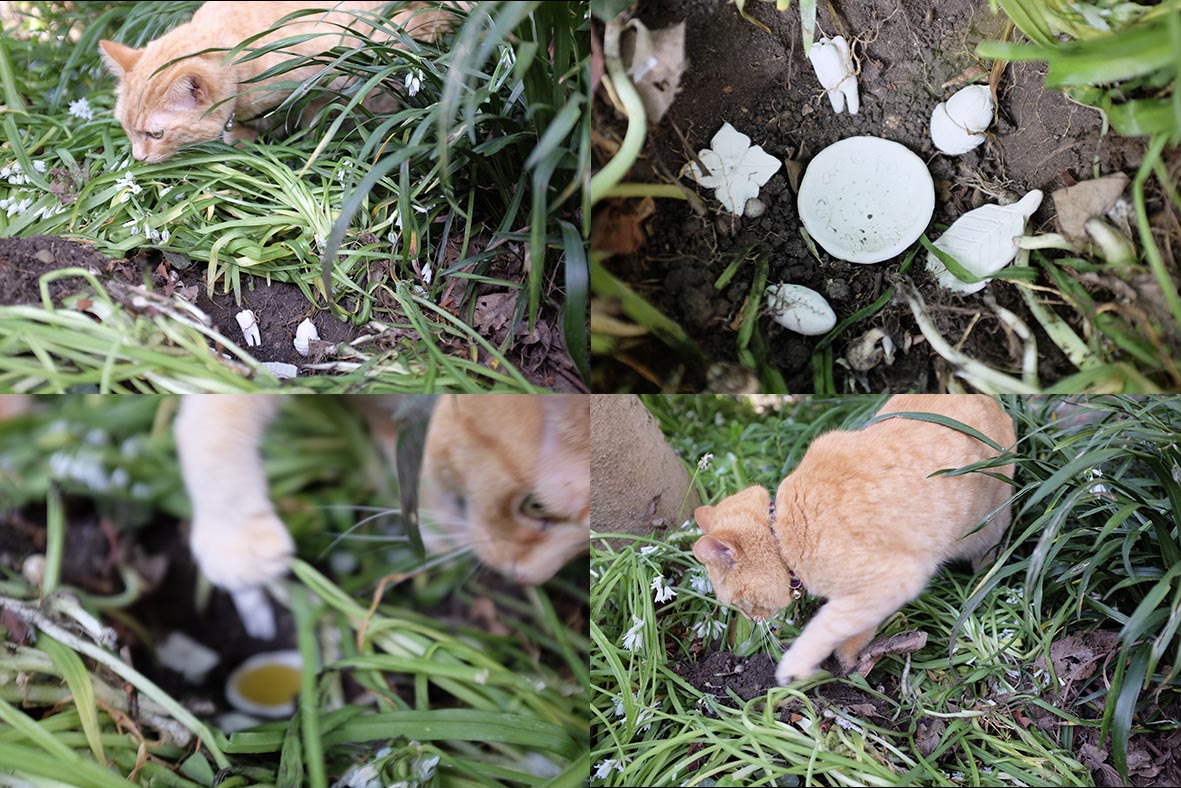
This is a practice I have learned from Francis Weller, to offer gratitude to the Earth, in response to ‘The Sorrows of the World’ (from his ‘Gates of Grief’). I have made an intuitive selection of small clay totems – a Beech leaf, a flower, an acorn, a Cowrie shell, a tooth, and a small bowl. I have inscribed “My tears are for…” on the bowl to symbolise the sadness I find hard to express.

In the face of the changes that are happening – weather disruption, bio diversity loss, and carbon emissions, it is easy to feel hopeless. I am working to remain in relationship with the natural world, and my grief, as I recognise my inter-being with the more than human world. A practice of giving thanks and offering gifts can foster this connection. It is a micro action in the face of a prevalent ‘extractive’ attitude to our planet.

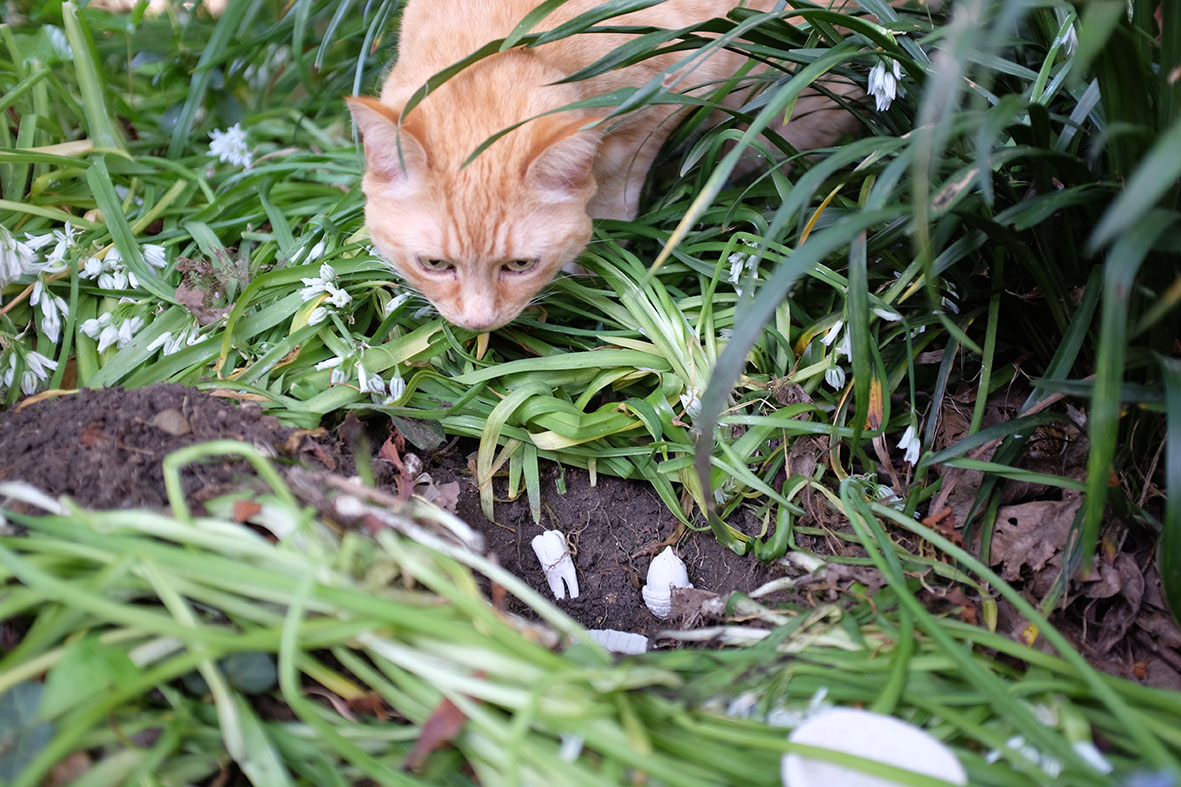
Under the magnificent magnolia tree, I dig a hole. Ginger Girl – the cat from next door, (who regularly appears for on-line Grief Tending workshops) shows up. I place my clay offerings into the hole while chanting. Ginger Girl, after inspecting my work, turns to squat. A stream of yellow liquid fills the small bowl. These were not the salt tears I imagined, but present an image of a different kind of regenerative cycle. She then turns back again and scrabbles with her front paws, neatly filling the hole with earth again. She then sits looking satisfied. We both look up, as two of our regular squirrels travel across the branches of the tree above us. I offer apple, oats and incense as further blessings, feeling nature’s magic alive in me.

See here for next Grief Tending events.

Sarah Pletts is a Grief Tender and Artist who offers workshops in London and online, sharing rituals where grief on all themes is welcome.  For more information about Grief Tending events see here

Further documentary evidence of the story described in the text of this post

Ginger Girl participates in my Earth Ritual

Letter and pair of shoes described in the text that are a part of the project.

These crimson suede shoes are potent grief objects for me. They hold the imprint of my Step-Grandmother Pat. The soles are worn from years of shuffling along the corridor of a care home. They held her unusually long, narrow feet in pop socks. Her striking home-made dresses in vibrant upholstery fabrics stopped just below the knee, revealing the red suede toes beneath. The dresses, these shoes, and her memory were worn out, misshaped by time.

As part of Natalia Millman’s ‘Grief Letter’ project, I have written Pat a letter. It is a love letter of sorts, a chance to express my sorrow and regrets. Our responses to grief are as many and varied as the causes, and the people we mourn. In writing a grief letter, Natalia gives us permission to speak from the heart. “Grief Letter is an ongoing community-based project where people can share their personal experience of loss and grief in the form of a letter,” writes Natalia about the project. The letters she receives are incorporated into a touring installation.

Millman has been exploring mortality and loss in response to her own grieving process. Her art works use a variety of media to experiment with these themes. Found and natural materials layer with photographs and sculptural forms. Many of her pieces are made with juxtaposing textures, and fragmenting imagery. In the wake of a parent’s disappearing memory, she creates visual remains that have the quality of decomposition.

Writing can be a powerful tool to use in the practice of tending our grief. Many people find journaling or free writing useful ways to download feelings. A letter to someone who has gone away or died can be a significant way to say what may not have been possible or welcome at the time. It can offer a chance to remember someone, to acknowledge them, as well as taking a step towards processing the feelings that remain in their absence.

Taking part in the Grief Letter project by writing your own letter will leave a document of your experience of grief that may resonate with others.

Embracing Grief also offers Grief Tending weekends that include writing as one of the central practices. Look for Embracing Grief: Weekend Community Journey.

Sarah Pletts is a Grief Tender and Artist who offers workshops in London and online, sharing rituals where grief on all themes is welcome.  For more information about Grief Tending events see here

Image of the artist demonstrating the theme of the post

This week I watched a friend’s funeral. I had not known them well although over a period of twenty years. It was an extraordinary event, for its authentic portrayal of a maverick, complicated, inspirational person, whose life-force burned bright and came to a sudden end.

I am not just mourning the loss of Tobias the person, but of the role he played in community. He organised events which created the conditions to foster connections. This collective is unravelling like a hand-knitted jumper which now has a large frayed hole in it. I am seeing the shape of the absence he leaves behind, like George Bailey in ‘It’s a Wonderful Life’.

The funeral stirred me to cry, laugh, and then dance. I am left with regret for the conversations we never had. I learned things about Tobias that I wish I had known before; and remembered many of the qualities described in heart-felt eulogies. He was, (amongst many other things), an advocate of inclusive sex-positive community, and driven to normalise taboos around desire.

“He used to share crying selfies with those he loved,” I learned. I took one to honour the moment, as I was in full flood at the time. I have long attempted to document a range of moods, and expressions in our family photos, and have taken crying selfies before. Showing our crying faces in public is another taboo. Tears are sometimes expected in measured ways, but messy outpourings of grief are often less permissible.

Sudden, unexplained, ‘out of time’ deaths can leave huge impacts. We are left wondering why, how, often with shock, regret, guilt or shame rippling out. Those left behind are often left with strong feelings; denied a timely way to express our goodbyes.

The pandemic brings in its wake a mental health crisis, along with many deaths that are complicated, have been without good endings, and with minimal funerals. Let us offer our gratitude to those we love, and let them know we love them while they are still here. Perhaps even send a ‘crying selfie’?

For Grief Tending events coming up, follow this link.

Sarah Pletts is a Grief Tender and Artist who offers workshops in London and online, sharing rituals where grief on all themes is welcome.  For more information about Grief Tending events see here

A seasonal image that is symbolic to represent the theme of the post.

When I have experience deep personal grief, it feels as though there is a sheet of glass between me and the rest of the world. When life is presenting us with challenges, it’s easy to feel shut out of everyday life. Especially when everyone else seems to be having fun, this can feel alienating. Communal times of celebration like seasonal festivals amplify absence, and can add stress from other people’s expectations of jollity, social or family pressures.

In her explorations into Healthy Human Culture, Sophy Banks describes the “conditions for health as being: empowered, resourced, valued, safe and connected.” For me, the yearning for belonging is a hunger for these needs to be met.

Feeling like an outsider can be especially painful, especially if your authentic expression is not welcome in a particular group. If you are involuntarily alone, or without enough support, or part of a marginalised group, this can add an additional layer of grief at these times.

For a variety of reasons which include social restrictions, scarcity/cost of venues, reduced income/higher costs of living, lack of volunteers, many of the community groups where I used to feel a sense of belonging have not been able to meet in person. Ongoing groups of people who share values or activities are a much-needed part of the social net which holds us. The waning of community groups may return after the current wave of pandemic infections, but we will still have to bridge the divides which have sprung up to between people polarised by different preferences and viewpoints.

Making ourselves vulnerable builds intimacy, holding the capacity to sit with different opinions, where all of us is welcome, and speaking from our own experience including uncomfortable subjects, are ways to bring people together. Grief Tending meets this need, to meet with others, to find belonging.

A Grief Tending group is one place where I can rely on feeling included. So, as we cross the threshold into another year, we wish you well, and may you find places where you feel a sense of belonging, whatever you are dealing with.

For Grief Tending events coming up both online and in person, follow this link.

Sarah Pletts is a Grief Tender and Artist who offers workshops in London and online, sharing rituals where grief on all themes is welcome.  For more information about Grief Tending events see here