

18 Jun How Not to Save the World
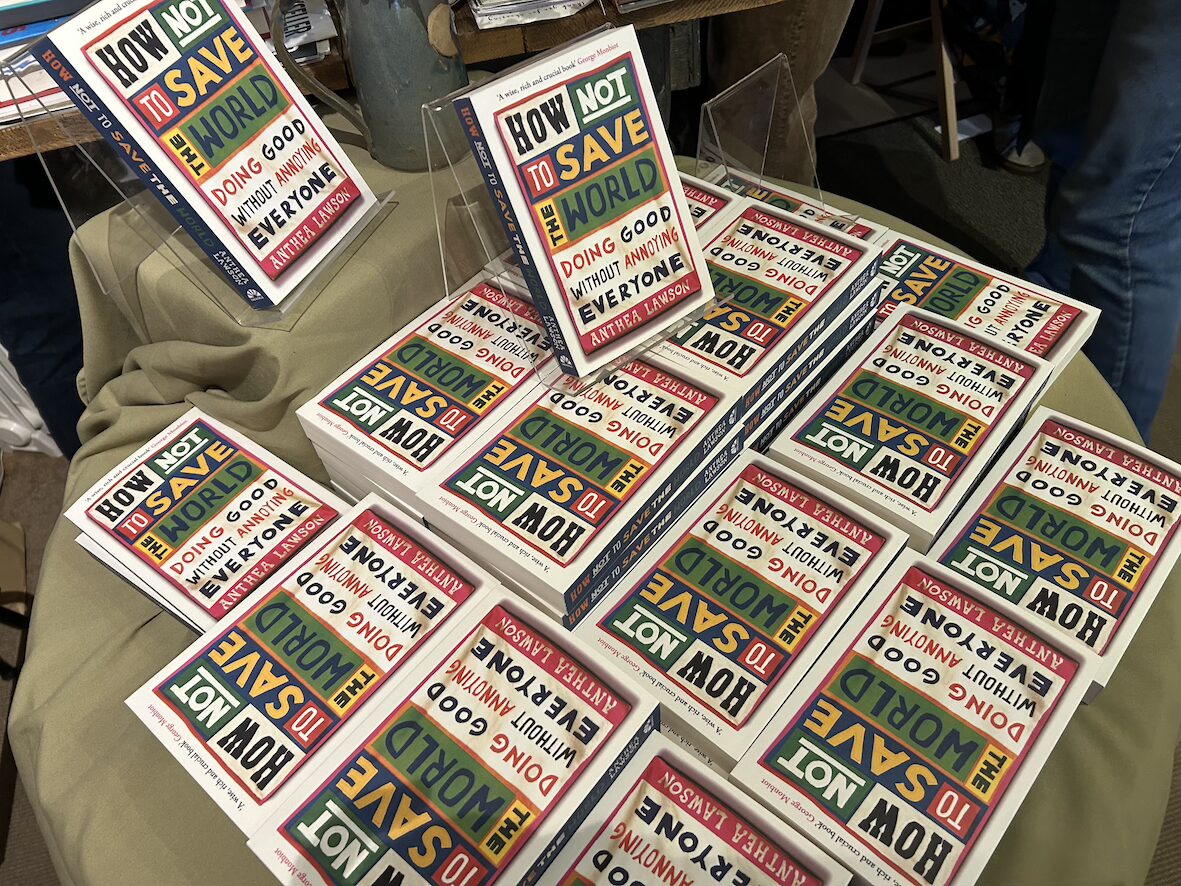 Giving it it’s full title, ‘How Not to Save the World: Doing Good Without Annoying Everybody’ is by Anthea Lawson. From the title, I already know that Lawson’s perspective will question some of the ways that activism can be controversial or even counter-productive to its very aims. I also know, because I have spent some time with Anthea that she is extremely smart, dogged in the pursuit of justice, and cares deeply about the world.
‘How Not to Save the World’ is very readable, relatable, and rooted in her own experience. It explores the terrain of change-making, and asks how we can do it better. Each chapter of the book proposes some of the potential pitfalls as well as positive antidotes to a particular shape or Achilles heel of doing good in the ‘Save the World’ script. Lawson explores: ‘I am good’, ‘I protest’, ‘I am pure’, ‘I know better than you’, ‘I save people’, ‘I am a hero’, and ‘I must save the world now’.
At the Totnes book launch, Lawson spoke with courage, honesty and humour about her own mistakes/learnings in the campaigning field. She also invited us, the audience to put our hands up when we recognised our own underlying scripts. People were more reluctant to own some than others. My tendency for “I know better than you,” is currently a running joke in our house, as we spot this particular pattern that suggests grandiosity and judgement.
The mirror that Anthea Lawson provides can help us to name the shadow dynamics that often lurk in ‘purity’ politics of left or right. Written in a time where polarisation seems to be rife both within communities and between philosophical approaches, ‘How Not to Save the World’ offers helpful insights into ways to slow down and hear one another across divides.
I need to acknowledge here that I’m not a neutral reader. Lawson describes coming to one of our ‘Embracing Grief’ workshops in the chapter titled ‘I Must Save the World Now’, which is about the prevalence of the politics of urgency, and our collective reluctance to be with grief.
As a facilitator of Grief Tending workshops, I am all too familiar with the infinite ways that we may seek to avoid, push away, resist, disconnect, distract from, and defend against the possibility of allowing ourselves to experience our feelings. After the workshop, Lawson reflects:
“And it wasn’t only what I was doing myself that felt good. It was that we were doing it together. I imagined what life could be like if society made space for us to share our vulnerability and pain regularly.”
This is a thought-provoking and practical book. I hope it will provide food for thought for all kinds of people – the hardened muesli-eater, the croissant-nibbler and the regular buttered-toast cruncher. If you want your community to just relate more while being in service, it may speak to you. It could also act as a bridge between these types and all the others in between who share the goal of wanting their world to be better; especially if they are wondering about the most effective and manageable ways to bring about change.
Sarah Pletts is a Grief Tender and Artist who offers workshops in London and online, sharing rituals where grief on all themes is welcome. For more information about Grief Tending events see here.
No Comments