
Articles

Different sizes of grief ritual shown here with stones

Different Grief Ritual Sizes

Whatever the size or format of the Grief Tending rituals and events we offer, they all follow a similar shape, and include the same arc of experience. We begin by building connection within the group, and calling on support. Then we offer exercises to help surface feelings. A central grief ritual allows emotions to be expressed, and then we are welcomed back into community. This is followed by gentle soothing. Towards the end, we do some tasks to help us integrate our experience of the session before closing.

A Big Grief Ritual

The Embracing Grief Team and Sophy Banks are holding ‘Tending the Heart’, a 4 Hour Grief Tending communal grief workshop in London with the capacity for up to 100 participants plus a large team to provide support. It has the potential to be a powerful experience, an opportunity to share a big grief ritual with many others.

Small Group Grief Workshops

The size of the group we are in effects the shape and impact of the event. In our small group workshops in London, the maximum capacity is 12 participants plus 3 Grief Tenders in the team. At this size, everyone will be able to hear something from each person. A small group allows everyone to feel connected. It is intimate. We may feel visible, which may be both exactly what we hope for, and uncomfortable for some. The facilitators will have direct contact with each group member. There is usually an option for stepping into a quieter space, or having a one to one chat with a team member if needed, to support someone’s ability to participate.

Medium Size Grief Workshop

In a medium sized group of 13-24, there is usually a bigger team supporting the participants. There may be exercises in small groups, where intimate sharing is possible. But not everyone will hear from each person. A group ritual is likely to have more energy than in a small group. There are more potential connections to make, so it may feel less intimate, but also provide more opportunities to meet different people or find those with shared experiences. The group itself may be a dynamic mix of people. The facilitators will still have direct contact with every member of the group. We have capacity for up to 20 participants plus team at our new venue in Devon.

Big Grief Ritual Events

We design the format of the session to accommodate the size of the group. We also take into consideration the surroundings. In a large event with more than 25 people, everyone will not necessarily meet or hear from each person. The group itself takes on more of a holding role. The facilitators will hold the space and steer the energy of the whole group, but not have direct contact with every person.

The big workshops and community rituals which we have held at festivals have comprised 150-200 + participants, depending on the available space. This may allow people to feel more anonymous, to try the practice with less self-revelation. Strong singing and drumming may happen in a big group, offering another layer of community holding. This kind of stimulation and noise may also be overwhelming if sensory processing is challenging for someone.

Grief Tending rituals with Sobonfu Somé, one of the main conduits of Grief Tending as a practice, would regularly hold huge groups. When a gathering of this size comes together, there is opportunity for a very potent ceremony.

People often have different needs, and understanding these different grief ritual sizes may help someone recognise what is right for them. Our frequently asked questions page includes more information about different formats of event – such as online or in person, one or two day events. You can see more about Grief Tending, and different workshops here.

Sarah Pletts is a Grief Tender and Artist who offers workshops in London and online, sharing rituals where grief on all themes is welcome.  For more information about Grief Tending events see here

'A New Kind of Wilderness' image from the documentary film.

The Wilderness of Grief

‘A New Kind of Wilderness’ is a moving portrayal of a family navigating love, loss and belonging. The film captures how grief shows up in many forms. We see the family’s struggles to navigate change. It is unusual to see the intimacy of grief revealed, as it often remains private, and undocumented. Over time, we discover how the family meets the challenges, through the beautifully captured micro details of their relationships with each other and the world around them. This documentary film may resonate with different experiences of the wilderness of grief for its audience.

Loss of Hopes and Dreams

In everyday life, grief manifests as a range of natural emotional responses to many kinds of loss, change and absence. This includes bereavement, as well as other forms of separation, longing or change.

One of the ways in which grief plays out in ‘A New Kind of Wilderness’ is in the loss of hopes and dreams. We see multiple elements of grief in the film, as one impact sparks an unravelling of layers. Nik and Maria have chosen to create a sustainable lifestyle, home-schooling the 3 younger children, but the future they have imagined together crumbles.

Secondary Losses

When grief impacts us with one loss, separation or tragedy, there may also be other associated losses, endings or changes. Some of these ‘secondary losses’ or consequences may dramatically affect the life of someone who is already grieving. The death of a loved one for example, may start a whole connecting set of losses like dominoes falling. This may cause a bewildering and devastating impact on all those involved.

Our Existing Emotional Landscape

Each person’s grief is unique. When something happens in our life, like the death of someone close to us, it doesn’t arrive in a neutral environment. It lands in our existing emotional landscape. What impacts have come before, may define how this new event adds to our current grief load. Are there unresolved issues, previous losses, absences, childhood traumas, minority stresses, or other pressures that might affect how we deal with what is happening in the present? There isn’t usually a neat and easy pathway to follow, but we may turn away from the feelings; and then when we have capacity, move to face into grief.

Additional Factors to Grieving

If we are well supported, and resilient enough to experience the emotional storm, we may be able in time to grow through grief. When the death of a loved one happens, there are many factors that will affect our ability to cope. What was our relationship like? Did we have time to prepare for their end-of-life? Were the circumstances traumatic? Are we accepted by their friends and relatives? Are we separated from home? How resourced are we?

Finding Enough Support

In order to meet the challenges of grief, we need enough support, and resources to manage our circumstances. A supportive community around us in the wake of loss, is really helpful. Feeling a sense of belonging and shared values may enable us to feel held by family or community. If this is not available, it may be yet another reason to grieve. There are ways that the family in ‘A New Kind of Wilderness’ are making ‘alternative’ choices. Belonging becomes an important longing, as each person learns to adapt to new circumstances.

When we are grieving in a grief-averse culture, it can really amplify the sense of being an outsider. Whether there are people around us who are ‘grief literate’ and willing to listen without judgement or fear matters. We also need people to help with practical jobs that are beyond our capacity. It is important to be able to reach out to ask for and receive the support that may be available to us.

Simple practices that help us to take care of ourselves are essential. In the wake of loss, juggling the needs of everyone at home, and having space to be with grief may be complex. As a parent in a grieving family, it can be difficult to find what supports you, as well as helping children to adapt and grieve at the same time.

Grieving Style

Our grieving style is one of the things that will affect our ability to grieve well. Our personality, history, socialisation, cultural norms and even our neurobiology will make a difference in how we experience feelings and express grief. When things are too much to bear, we may find ourselves overwhelmed or numb. We may feel a confusing mix of anxiety, rage, despair, guilt, and deep sorrow. There may be relief, gratitude and love present too. These are all normal responses to life’s challenges.

There are many ways to allow the natural expression of grief – whether quiet or loud. If we can find kindness, without judgement, (from ourselves or others) it can ease our journey through the wilderness of grief. Shame is also often present where others are suggesting that it’s time ‘to move on’. Grief doesn’t have a sell-by date. Space to be with our own grieving process, for as long as it takes, is a more useful frame. We don’t ‘heal’, but may in time, be able to grow our life around the grief.

Rituals to Manage Change

Rituals can help us to manage change. In ‘A New Kind of Wilderness’ we see the family create some of their own rituals to mark the passing of time, to remember and to honour what is important. You may have an existing belief system with a known set of practices around rites of passage. For those without a particular faith, choosing what to do and how to mark significant moments may be more unknown. There are many possibilities available to the ‘spiritual but not religious.’ There are often many ways to experiment and make your own personal or family rituals.

Sometimes the small ways to honour someone or something are supportive and healing. It may be as simple as lighting a candle, writing a letter to someone to tell them you love them, placing an offering of flowers by a photography, or placing hands together on the earth. Community rituals are another great way to step from one phase of life to another, or to process grief.

Grief for the Earth

From the opening of the film, we find ourselves embedded in wildness. Our guides are parents who believe in teaching their children to respect the natural world. Their choice is to live sustainably ‘without taking more than we need’. Earth grief, and the collective pain of climate disruption and bio-diversity loss are the implied context of ‘A New Kind of Wilderness’. An awareness of the disconnection from nature in an extractive, and digital culture is the wider grief that provides the context for the setting of the film. Maria and Nik have set out to live in close connection with the cycles of nature, and the family find themselves understanding more about what it means to live and die, to be part of the cycle of life.

Imagining a New Future

From the impacts of loss, and ruptures with their chosen lifestyle, we watch the family move towards a re-imagined future. Belonging isn’t easy. Each person has to step into vulnerability, and risk something to grow up. Finding their way to make a new life takes us on a moving and inspiring journey. The love of what is lost remains. Grief is hard to bear, but sometimes, through experiencing it, there can be a deeper-meaning integrated into our lives.

Sarah Pletts is a Grief Tender and Artist who offers workshops, sharing rituals where grief on all themes is welcome. She has a close relationship with local urban wildlife, and chosen family in Hackney, London. For more information about Grief Tending events see here. For a review by Sarah of the film ‘A New Kind of Wilderness’ see here.

Poppy in full bloom to represent the flourishing of Grief Tending.

We have been collaborating with Sophy Banks of Grief Tending in Community to track the way that Grief Tending is flourishing. It is becoming more widely known, and spreading geographically. Many more people are offering the practice and there is a growing number of people who have attended one or more Grief Tending workshop, ritual or event.

Introduction to Grief Tending Audit

Grief Tending in community is a practice that involves a group of people coming together to share grief, with space to express their emotions. It can be a life-affirming experience and in addition to providing support and relief for current grief, can help people learn skills to cope with grief. Grief Tending events including a range of practices: simple exercises for participants to build trust, group ritual to express and witness feelings, embodiment to regulate the nervous system.

In Grief Tending events, all kinds of grief are welcome. We honour loss, absence, longing and change, and reconnect with intimacy and belonging. Grief tending is rooted in the teachings of Sobonfu and Malidoma Somé, Joanna Macy, Martín Prechtel and others, and has been shaped by teachers including Maeve Gavin, Francis Weller and those in this network.

Grief Tending events take place in a variety of face to face and online settings, including: an existing community, a group of people who come together temporarily, and a group who meet regularly.  Each Grief Tending event is facilitated by Grief Tenders.

In 2024 a preliminary audit was undertaken of Grief Tending events in order to observe and record the range and diversity of current practice

Audit Methods

Grief Tenders recorded and shared information on their face to face and/or online events. Information on the date and length of event and numbers of facilitators, assistants and participants was recorded in an online spreadsheet. This information was then summarised.

Note that we recorded the numbers attending each event. Some will be returners, so the total number of people who have attended events is less than the number shown here. We estimate that between 10 – 25% of people have been to an event before.

Results Show Grief Tending is Growing

Eight Grief Tenders shared information on 225 events held between 1/12/2013 and 31/12/2024, where grief was shared and witnessed. In total there were 3066 people attending (including a total of 720 at two festivals in 2023 and 2024). Participants joined from all continents (except Antarctica), the majority from the UK, followed by Europe and the US and Canada.

The number of Grief Tending events increased over time. The duration of both face-to-face and online events varied widely.

There were multiple short online events – some lasted 1 hour others 4 hours and others were all day or over multiple days. The longest online programme is the Apprenticing to Grief, which runs over 3 weekends.

The duration of face-to-face events varied from one or more hours, to workshops which ran over four days, and the Apprenticing to Grief over six days. Most face-to-face events lasted for 1 day or 3- 5 days.

All events (online or face-to-face) were led by a Grief Tender and supported by at least one other Grief Tender, facilitator or assistant.

Developing our Research

We believe this to be the first audit of Grief Tending events. Some participants have taken part in more than one event, so the total number represents workshop spaces attended. The number of unique people who attended is estimated at around 80% of this figure. Some figures provided by facilitators are estimates based on average numbers attending workshops.

Our initial objective in gathering this data was to sense the impact and reach of this network. In 2025 we aim to gather more comprehensive information from more people who are holding spaces. We would also like to see what else has resulted from attending the Apprenticing to Grief programme.

Many of us holding workshops gather evaluation information at the end of a workshop, or invite this feedback from participants online afterwards. We believe Grief Tending in community to be a low-cost, high impact intervention to improve mental wellbeing of those impacted by bereavement, loss, past trauma, stress, and life changes. We also believe it can have beneficial effects on those around people who come, which would be harder to measure. We would like to understand more about the impact of these practices on those who have attended Grief Tending events. We are exploring the best methods for doing this e.g. a survey of people who have attended.

Thanks to all those who shared their data, and all of you who are helping this vital work to spread to those who may need it.

You can find Grief Tending workshops with the Embracing Grief Team in London, Devon and online here. For the Apprenticing to Grief programme online or in person see here.

Sarah Pletts is a Grief Tender and Artist who offers workshops in London and online, sharing rituals where grief on all themes is welcome. For more information about Grief Tending see www.griefsupport.org.uk .

Image of rubbish on the shore to provide an atmospheric portrayal of grief, through this sad image

The Origins of the 5 Stages of Grief

Elizabeth Kübler-Ross originally defined ‘The 5 Stages of Grief’ in 1969, when she was working with the dying. These stages were never intended as a route map for grieving. Kübler-Ross was a pioneer whose work with the dying brought many valuable insights into end of life care. Her book ‘On Death and Dying is a classic text in care for the dying. She later revised her thinking and described overlapping and incomplete stages, the 5 Stages intended only as a loose framework, and re-defined as the ‘Kübler-Ross Change Curve.’

The Stages of Grief Model May be Unhelpful

Kübler-Ross’s 5 Stages – Denial, Anger, Bargaining, Depression, Acceptance have been absorbed into popular culture and spread widely. They sometimes include additional or varying stages – shock at the beginning and meaning at the end to comprise 7 Stages of Grief. If you were to ask most people what they know about grief, “the five stages of grief” will be a common answer. What isn’t so widely known is that our understanding of grief stages have been updated both by Kübler-Ross and subsequent bereavement researchers. There are now more theories about grief and loss.

Each Grief Journey is Unique

The problem with reducing the messy, unpredictable landscape of grieving into a series of neat stages is that it offers an image of grieving that doesn’t match people’s experience, and may make them feel that they are doing grief wrong. Each grief journey is unique, and has its own trajectory and pace. Francis Weller’s description gives a much clearer picture of the raw, intense, and wild storms that grief often brings:

“Grief is subversive, undermining the quiet agreement to behave and be in control of our emotions. It is an act of protest that declares our refusal to live numb and small. There is something feral about grief, something essentially outside the ordained and sanctioned behaviors of our culture. Because of that, grief is necessary to the vitality of the soul. Contrary to our fears, grief is suffused with life-force…. It is not a state of deadness or emotional flatness. Grief is alive, wild, untamed and cannot be domesticated. It resists the demands to remain passive and still. We move in jangled, unsettled, and riotous ways when grief takes hold of us. It is truly an emotion that rises from the soul.”

Grief is Messy

While some of the feelings described in the 7 stages of grief may be in the mix, the whole territory is vast. Sorrow comes in all shades from sobbing to quiet despair. Grief may include fear – everything from anxiety to terror. It may include anger – from frustration to rage. Overwhelm may manifest as disconnection. Feeling numb may manifest as busyness, and yes, not feeling is an expression of feeling. There may be the bitter sweetness of love and gratitude.

Our relationship with who or what has been lost may be complicated. Guilt, shame, envy, remorse or relief may be present too. There are many emotions and ways to feel and a variety of ways to express grief too.

Symptoms of Grief

The experience of grief may include some or all of the well-known grief stages as well as a range of other emotions. It may also include a whole range of physical symptoms. Disruption to sleep patterns and changes in appetite are extremely common. Disturbances in thought patterns may include repetitive thoughts, flash-backs, brain fog and a chronic inability to concentrate. Memory might not be functioning well as we try to make sense of what happened. Physical aches and pains may appear to have a symbolic component; a broken heart that literally aches, an unsupported sore back, or unfamiliar tension that manifests as a pain in the neck. There may be all kinds of gut responses as well as swallowing down what we feel with food.

What Should Grief Look Like?

Grief is a wide range of natural responses to loss, absence, suffering, or change. Instead of a fixed set of grief stages, the experience is often more chaotic. Emotions, moods and symptoms may all come and go, or persist over time. The nature of what has caused the situation will also be part of the picture. Has the impact, injury or situation happened suddenly? Does it have a traumatic element? Is the experience complicated by a complex set of circumstances or a difficult relationship? Is what has happened perceived as unusual in some way? Are there other secondary losses or changes as a consequence of the first?

How Long Does Grief Last?

I often hear people measure themselves against a perceived state of acceptance (Kübler-Ross’s 5th stage of grief). Bereavement or loss changes us. It doesn’t just come to visit and then leave when we reach a certain stage. When we lose something significant in our lives, we change to adapt to the new shape of our circumstances. Our ability to grieve well can affect how we handle bereavements or losses, and make a real difference to our mental health. Rather than a path from stage 1 to 7, I prefer the metaphor of an ocean. As grief comes in, waves crash over us, often one after another. We may be submerged by big waves and knocked off our feet. At some point, the tide turns. Waves will still crash against us, but may be less frequent, and less ferocious.

Why is Grief Hitting Me Hard?

As well as the ‘what happened’, to cause my grief, the context of it – the surroundings that it happened in – will also affect how it is experienced. A significant loss may come into a situation where mental or physical health is already poor. Other losses may have been piling up. There may be a history or trauma, violence or oppression that this particular grief appears in the midst of. If we are from a marginalised community, we are also statistically likely to experience more losses. Something may happen in an environment where there is not enough support to hold us. Our surrounding community (or lack of it), our resilience, our resources, will all play a part in how each impact of grief lands into our lives. Do we face layers of challenges, mor do we have enough support to lean into in order to turn towards what ails us?

Understanding Grief

Grief can be scary. A little psycho-education goes a long way. People are hoping for a map – like the stages of grief – to help them navigate the unknown. There are some great models that can help us understand the journey through grief.

Lois Tonkin’s ‘Growing Around Grief model – showing jars of increasing size, brilliantly describes how we grow and develop, to accommodate loss, becoming greater in capacity ourselves rather than shrinking grief over time.

The ‘Dual Process Model (Stroebe and Schut) is another practical way to understand grieving. Rather than describing stages of grief, this model describes co-exisitng processes. Being loss-oriented sits alongside being restoration oriented. Part of us is preoccupied with our emotional experience, while at the same time life continues, which may include practicalities, responsibilities, resourcing, and encourages us to recognise times when we have permission to focus on other things if we are able. The focus between grief and life changes over time.

How Do I Learn to Grieve?

Learning to mourn is a skill. There are tools that can help us. It can be really helpful if we understand more about this natural process. Unfortunately, many people avoid the subject. The bereaved may feel contagious, as though grief is catching. Those around them often fail to know how to be with them or what to say.

I wish ‘how to be with grief’ was taught in schools. How comfortable we are with our own history of loss will communicate without words. To support others, it helps that we have attended to our own grieving. When we avoid the small things that trouble us, they build up. Emotional laundry is as important as washing our clothes.

Allowing time and space to slow down and feel is a key to tending our grief. There are many simple practices to be with grief and release – through breathing, noticing sensations, movement, singing, being in nature, creative exercises and using ritual and ceremony. Reading poetry, listening to music or watching films on the theme may also touch us and allow us to connect with feelings. Sharing with others is a great practice to discover the connection that builds through expressing vulnerability.

Is My Grief Stuck?

There are different ways grief can feel ‘stuck’. We may feel too disconnected to feel anything. We may have needed to bury our emotions because it wasn’t safe enough, or we didn’t have enough support to grieve in the past. The job of grieving may sometimes wait until our conditions are more spacious and supportive. This can lead to months or years before we have capacity to process something. Things may surface later in life. In the present, unexpected feelings may be activated. Sometimes the necessary adaptations from the past no longer serve us, and we choose to explore more deeply, to feel more fully.

The way we were socialised – by gender, or family, or circumstances may also contribute. Many of us have been encouraged not to show emotions, or cry. Sometimes our grief may have left us in a state of freeze. Something shocking or terrifying may have happened. We may not have enough support to have risked thawing. We may feel that our grief is too big to risk feeling. It can feel that if we open up big feelings, we will be submerged and never return.

For whatever reason, there may be a sense of stuckness. It may manifest as physical symptoms or dis-ease. And our grieving style or neurobiology may mean that the way we express grief is less outwardly visible. To open up stuck feelings, it is helpful to have support in place. This may be a mix of people, practises and resources. Grief Tending is one way to encourage the flow of emotions and energy to move through us.

When We are Ready to Tend Grief

Grief Tending is a practice where we learn skills that help us move towards feeling, and also how to return from grief states. In Grief Tending, we recognise all the different ways we may experience and express grief. We acknowledge a broad range of causes of grief as well as the loss of a loved one. We witness people coming together, and risking vulnerability. Some may come with grief that is flowing. For others grief may feel absent, stuck or confusing.

The exercises we offer may allow feelings to shift. We encourage tending to what arises – allowing rather than forcing. Tending to grief is about giving space for what is rather than prescribing or judging how grief should look or feel. We use exercises where we move towards feelings then return to support. Allowing the breath, body and emotions to move is a way to bring flexibility to our inner experience. This may help us to navigate our growth through grief.

Turning to Face Grief

Our bodymind system may desperately want to avoid grief. So often people don’t know how to grieve well. Many have not had wise elders to show them, or practices to learn; or enough emotional holding to dare to go there. When we are ready, and have enough support in place, Grief Tending can be a sensitive and caring way to turn towards grief, to lean into feelings. In a Grief Tending group, we come with the intention of sharing something of our grief together in a group. We will experience both expressing something of our unique experience, and also be a witness, part of the holding of others. This can give a profound insight into our shared humanity, and also how to be with another who is suffering.

Find Grief Tending events online and in London here.

Sarah Pletts is a Grief Tender and Artist who offers workshops in London and online, sharing rituals where grief on all themes is welcome. For more information about Grief Tending see www.griefsupport.org.uk .
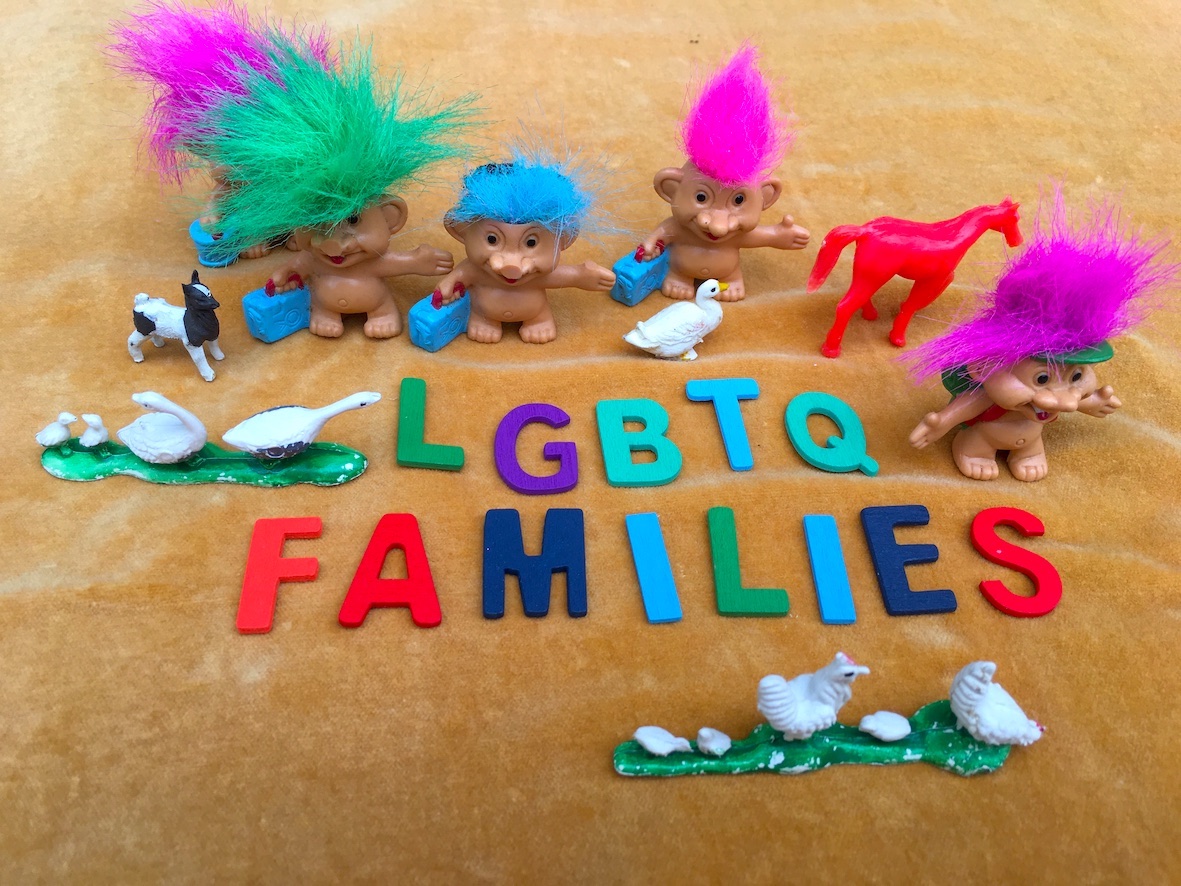
Trolls and plastic animals and letters spell out the title of the post

Introducing Rainbow Mums

‘Rainbow Mums’ is a podcast series about LGBTQ+ families, through interviews with gay and bisexual parents. The stories of LGBTQ+ families cover the rich lived experiences of five Mums plus one episode, ‘Sarah and Nicholas in Conversation’ where I reflect on queer parenting with Nicholas McInerny, the host of Rainbow Dads’.

Queer Parenting

For me, ‘to queer’ is a creative process where the edge-dwellers are essential, bringing vibrant, playful, unorthodox ways of doing things, looking at things from different perspectives with diverse voices. So, the ‘queering’ of parenting brings many different possibilities. There are many ways of becoming and living as an LGBTQ+ family. Queer Circle offers resources and events in London to explore creative health, including Queer Grief Tending.

Growing Up Gay

Some people come into life gay from the ground up. They may be perceived by themselves and others as different. They may be aware of same sex attraction. Puberty may bring sexuality to the front of their awareness. It may also register in the minds of family and friends and be met with judgement and stigmatisation.

In ‘Maggie’s Story’, the responses to teenage Maggie of those are around are challenging. Maggie speaks about the coming out scene from ‘All of Us Strangers’. In ‘Anjum’s Story’, there is a kinder response from family. Anjum’s journey includes being a lesbian and Muslim. The Naz and Matt Foundation offer support for gay Muslims. The homophobia and racism Anjum experienced outside the family offer reasons to advocate for justice. Galop, the LGBT+ anti-violence charity offers support for survivors of abuse and violence in the UK. If you need support with any aspect of sexuality and gender identity, Switchboard offers a listening ear.

Coming Out

As someone who came out later in life myself, which I talk about in ‘Sarah and Nicholas in Conversation, I have the luxury of stepping into a queer identity. I am conscious that I am able to do this precisely because of those who stood up against Clause 28, who challenged systemic oppression and struggled for equity and acceptance, civil partnership, and gay marriage. For a review of what came before, check out MJ Barker’s ‘Queer A Graphic History’. To see how LGBTQ+ people supported the miners’ and the political alliances which this inspired, watch Striking With Pride’.

For many, the ‘coming out’ rites of passage – to ourselves, to another, to family, to the outside world, can be huge turning points. I resonate with the awkward teenagers or middle-aged late teenagers, sometimes ambivalent and trying to come to terms with a new identity. There are many resources including zines for people questioning their identity by MJ Barker. Pink Therapy has a directory for those looking for an LGBTQ+ therapist to explore sexuality.

I look back at my own young hapless self, dressing sometimes butch, sometimes femme, seeking the elusive fantasy of same sex pleasure, but not knowing how to go about it. In ‘Emma’s Story’, her young goth self was bolder than me. Emma now hosts her own podcast series ‘Coming Out Stories’.

Sexual Identities

It took me many years to unpick the paradox of the bisexual experience. Bisexuality is often a landscape between a rock and a hard place of neither all heterosexual nor totally gay; often unwelcomed by those at both ends of the Kinsey Scale. The Bisexuality Report offers research on bisexual inclusion.

Misperceptions are often rife, and instead of fully expressing ourselves, we may find ourselves making tough choices to exclude parts of our core make-up. In ‘Sandy’s Story’, we follow her journey to make sense of the complexity of being pansexual and open to all kinds of attraction, while navigating the responsibilities of parenthood.

Once we have a sense of who we are in the world, comes the challenge of finding the other(s) we want to explore sex and relationships with. Our Rainbow Mums are diverse in age, and my sense is that Amy – the youngest, has grown up in a generation which is more open to sex and relationship diversity, than the Rainbow Mum’s who were finding their way in the 80’s and 90’s.

However, as Amy finds out, it is still a challenge when faced with the complex choices that love throws in your path. In ‘Amy’s Story’, the route to polyamory is a twisting tale that takes us across the globe in pursuit of a relationship dynamic that works. Polyamory comes in many forms, is definitely not for everyone, but can offer a way forward for those who wish to experiment with ethical non-monogamy. Amy talks about the classic primer, ‘The Ethical Slut’ by Dossie Easton and Janet W Hardy. I also recommend ‘Poly Secure’ by Jessica Fern.

Becoming LGBTQ+ Parents

Finding their way through the emotional mine-fields of desire, pleasure and relationships, we follow the Rainbow Mums in and out of partnerships – some of which don’t work out, and others which blossom into lesbian marriages. Either way, parenting continues to be a significant central axis for all of them.

Some gay and bisexual parents begin in heteronormative relationships, where children are conceived and cared for. Most of the Rainbow Dads were parents, and subsequently came out. Sometimes we suspected we were LGBTQ+, and sometimes that has been out of awareness even from ourselves. As we age, our priorities or sexual gearing can change too. For me, the need to be more myself increased with age, after I had spent significant time in a parenting role. It’s not uncommon for the changes of peri-menopause and menopause to also amplify hormonal shifts. Tania Glyde writes about navigating change in queer menopause.

Some bisexual parents may choose to parent together in an opposite sex relationship, as well as pursuing same sex relationships before, concurrently or after. In both ‘Sandy’s Story’, and ‘Amy’s Story’ they parent in relationships with a biological father, alongside other relationships.

For many same sex couples there are choices to be made. For AFAB’s and lesbians there may be a choice of who becomes a biological parent. There may be decisions about routes – such as donor insemination, surrogacy or adoption. These questions may involve choosing a biological father too – a known or unknown donor. There are ethical and personal reasons which a prospective gay couple will have to negotiate. In ‘Emma’s Story’, we hear some of the considerations for her family.

Then there are roles and names. Who gets to be called ‘Mum’? Are there one or two or more? Not all our Rainbow Mums, including me, are biological parents, but I hear how involved each of them are with the practical and emotional responsibilities of care-giving.

Children in LGBTQ+ Families

In every episode we hear about the unexpected joys of parenthood. It is a vital, often wonderful as well as a tough job, and is generally under-valued by society. In many ways it’s the same whoever you are. Whatever the route to becoming parents, we are delivered with a child that requires attunement, presence, practical support and encouragement. Emma mentions ‘Proud Parents’ who offer support to LGBTQ+ families.

All of the Rainbow Mums I speak to are passionate about and full of love for their children. We may have made choices about how to become parents, but the children that arrive are all unique and come with their own needs and strengths. In ‘Emma’s Story’, we hear about the unexpected life that has unfolded from having a child with Downs Syndrome. Children come with different abilities. For me, the neuro-spicy quality of my family has helped us to adapt to being different from the heteronormative frame, to allow space for each of us to change, grow and flourish.

The values which underpin my relationships and LGBTQ+ family are love, honesty, and a willingness to communicate. I hope that working with these intentions help us to navigate the tricky stuff – the ups and downs when we really need to see the best in eachother and find kind yet honest words.

LGBTQ+ Families

I grew up in a family where things weren’t spoken about without my curious questioning. There were several skeletons in the closet. My father was gay but didn’t begin to come out until he was 60. My own experience was, that on some level I knew, and the lack of direct conversation around the subject was confusing. The multiple masks that family members wore probably contributed to my inner confusion. I had a sense of dissonance, but struggled to work out what was going on beneath the surface.

As a consequence, I prefer to be open, to communicate clearly and in an age appropriate way with young people when necessary. I aim to parent in a way that allows both parent and child to express who they are. And of course, I have made many mistakes, and continue to learn from the younger ones. F F Flag support parents with LGBTQ+ children.

Families come in all shapes and sizes. Modern families often include a complex blend of step and half siblings. LGBTQ+ families often create a network of chosen family to provide supportive community around their immediate loved ones. This can be a brilliant resource, with an inter-generational flavour, as ‘Maggie’s Story’ describes, and I value so much in my inter-generational LGBTQ+ family. Family Equality work to advance equality for LGBTQ+ families in the USA.

Solidarity with LGBTQ+ People Around the World

I want to celebrate those who, often in spite of adversity, are able to be themselves and choose the relationships they want. All of these Rainbow Mums risk what comes with visibility, and have chosen to tell their stories, partly because there are many in the world who do not have those choices. Marginalisation and social injustices still happen. There are parts of the world, or cultures where LGBTQ+ families are not welcome, and being gay, lesbian or bisexual may be illegal.

I have the gift of being safe enough, but many are not able to express themselves freely. We offer Rainbow Mums and Dads in solidarity with those who are not able to be out and proud. Some of the organisations that support the human rights of lesbian, gay, bisexual, trans, queer + people around the world include the Kaleidoscope Trust the Peter Tatchell Foundation and Micro Rainbow.

Listen to ‘Rainbow Mums’ here.

Sarah Pletts is a Grief Tender and Artist who offers workshops in London and online, sharing rituals where grief on all themes is welcome. For more information about Grief Tending see www.griefsupport.org.uk .
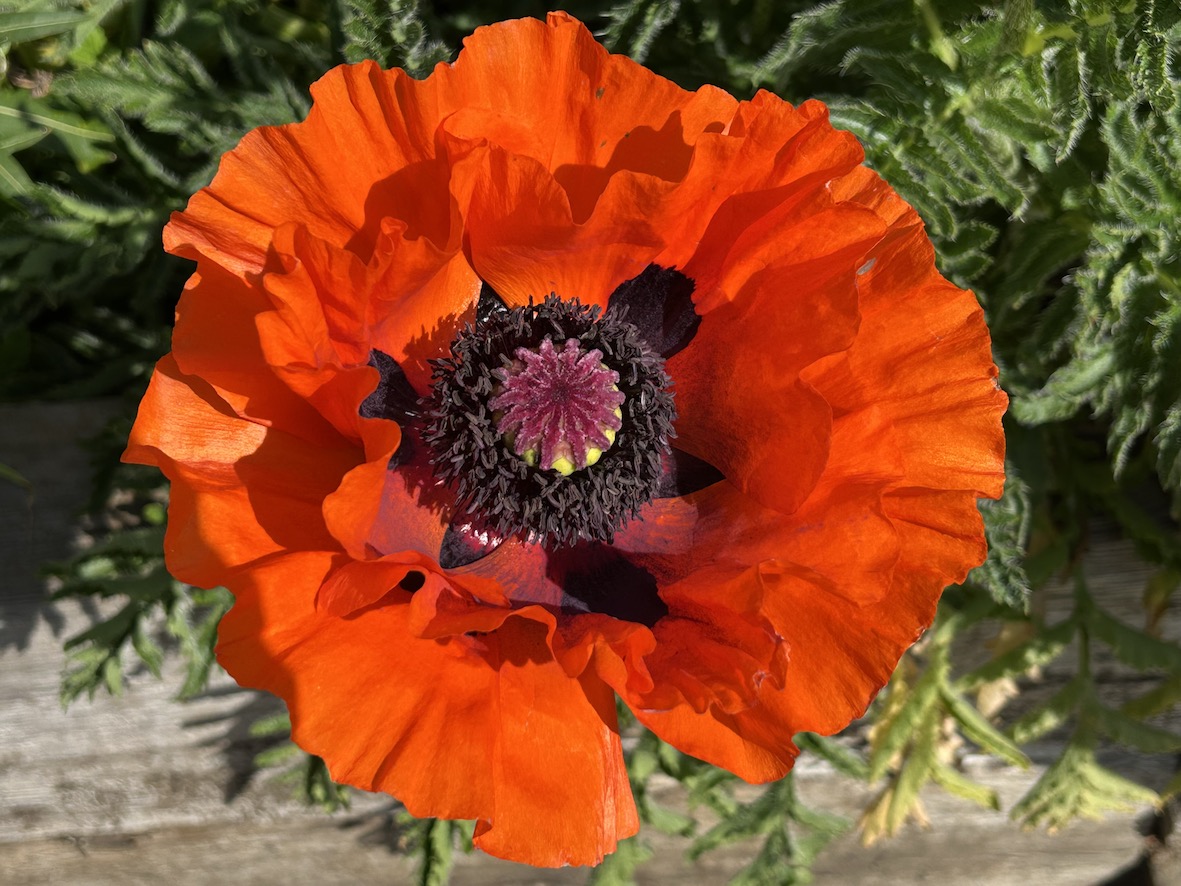
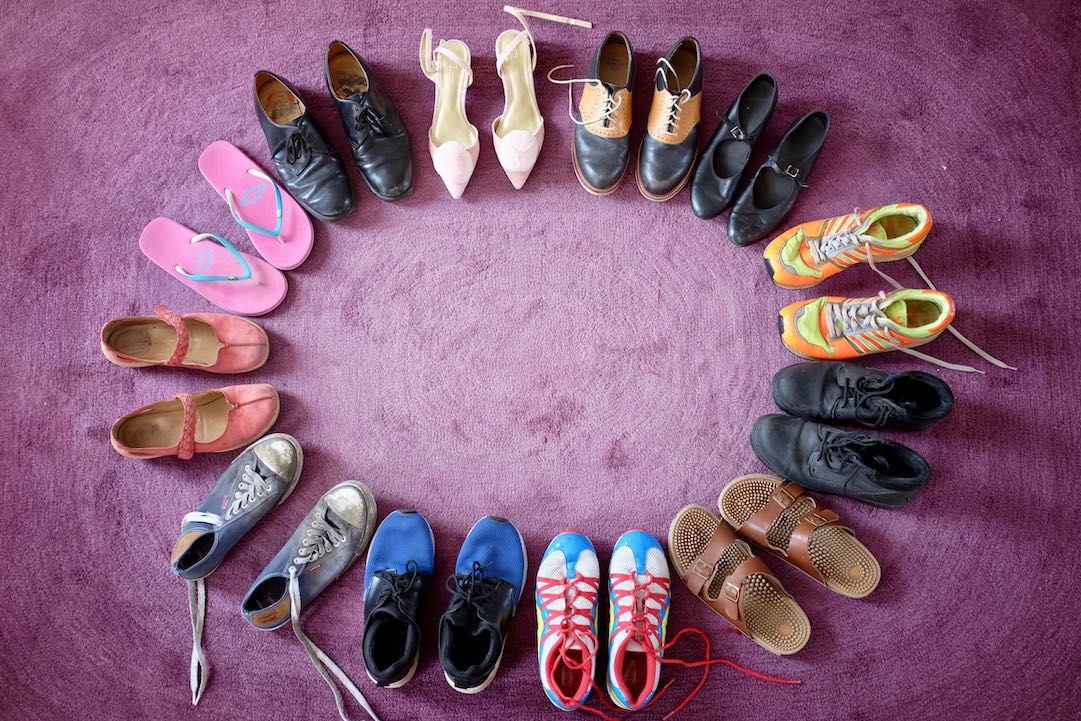
Image that represents the theme of the text, showing a circle of shoes

Embodied Support for Grief, Using Creativity, Ritual and Grief Circles

In today’s world many people long to return to places where grief is spoken of, where we can find connection and name our truths. There are many practices where a grief circle is central, and Grief Tending is one of them. In Grief Tending, we set an intention to move gently towards feelings. Before a grief circle we use exercises that help to make people feel comfortable enough with the process to be able to participate. A grief circle is a ritual where feelings make be expressed. At the end we use practices to move back to rest and digest mode, to soothe our nervous systems once the grief circle is complete.

Our Ancestors’ Circles

Since people have been on this earth, they have gathered in circles. Our ancestors sat with a fire at the centre, and the crackle of logs, the scent of smoke. People all over the world and throughout time gathered to find warmth, tell stories, sing songs and speak from the heart. In places and organisations where we depend on plastic chairs, and electric light, rather than the glow of a fire, we may long to return to the practice of gathering in circle in nature. Despite modern environments, grief circles continue to be meaningful to participate in.

Grief Circles in Grief Tending

In Grief Tending we include embodiment, creativity and ritual in our events, and the way in which we bring a grief circle. When we practice Grief Tending, we often use a grief circle as the central part of the event. When we meet face to face, we use a variety of central practices to express feelings, including grief circles.

A Trauma Sensitive Approach to Grief Circles

Working with a trauma sensitive approach, we structure events so that exercises to focus on embodiment and support happen before a grief circle. During a grief circle we encourage people to take care of their needs. Sharing is always optional. It can be a big step for someone to risk being vulnerable, and be witnessed in a group setting.

And then soothing and integration practices happen after a grief circle.

The Circle is Democratic

Sitting in circle is an ancient and simple format for sharing with others. It creates a non-hierarchical form that can be democratic. Although a grief circle may have a facilitator, they are not above or below anyone else in the space. The voice of each member can be equally represented and heard. In the role of grief circle facilitator, I may share my experiences in the circle (when time allows), which participants often appreciate. Because this mirrors the universal nature of the experience of grief. The facilitator is also part of the circle whether they share or not.

Grief Tending in Community

Grief Tending is a practice that happens in community, and during an event we will make and return to a circle together repeatedly. We invite participants to be part of the holding container, so that each person will at times be a holder, or step forward to express themselves in some way. People who are in the holding role give their attention to witness and acknowledge someone who is sharing something. The person who takes a turn to step into the being witnessed role may speak or sound, sing, move or be silent.

If this is speaking to you, to find out more about the practice of Grief Tending here. And the grief circles we hold here.

Unspoken Truths

People often share things in a grief circle that they may not be able to in other contexts. They may reveal something that they have never told anyone before. There may not be words but feelings that are expressed through sounds, tears, body movements. If it feels safe enough, people may voice something, and through it being seen and heard by others, it can have a transformative effect. Being witnessed can be a very powerful experience.

The Role of Witness

Stories that have been kept secret or feel shameful may be received with the supportive attention of the circle. We invite the group to acknowledge what they have witnessed with simple words, “I see you,” or “I hear you”, but not to offer advice. One at a time people share, and the group receives them and responds without judgement. Hearing one another can be an extraordinary experience too. As Kelly McGonigal puts it, “Listening with your whole body except your mouth”. In the Grief Tending circles we hold, the listeners do not offer reflections or ‘cross talk’ with their own responses to someone else’s story.

How Does a Grief Circle Work?

In a grief circle our experience is welcomed, given space, and seen. Turns to share may be taken starting in one direction, one person after another. Or people may be invited to take turns ‘popcorn style’, whenever they feel ready. In a small group everyone may have an equal turn to share. This may be timed, so that the group’s time is divided equally. Even a small amount of sharing time can be useful. There may be a talking ‘stick’ or a sound, to mark the beginning or end of someone’s time to share. In a large circle everyone may not take a turn to share something. This will depend on the time allowed, the group’s intention, and the agreements set before the circle begins.

The Role of Sharer

Stepping into the role of sharer can feel very intense. As a consequence of previous history, being an introvert, trauma around groups, or being seen, can make this feel either a bit scary or extremely challenging. In the groups we hold, sharing is not an obligation. People may pass if it is their turn. Choosing to take a turn, but remain silent is also a valid way to use the opportunity. It is often the case that people have felt alone, ashamed, overwhelmed, not good enough. But when they share their real feelings with the grief circle, they discover that other people may have similar feelings or experiences.

Vulnerability Builds Connection

Through someone making themselves vulnerable by revealing their inner experience, this deepens and strengthens the connection felt in the group. In response to what has been shared the participants of the holding circle often feel empathy. This can lead to a sense of compassion between people for one another. As a consequence, they may each begin to recognise some similarity in the way they feel. Common themes may emerge amongst participants. As a result, this increases connection between group members.

We Deserve Kindness

Through the grief work that I do, I see windows into people’s inner lives. I regularly see that we are fierce keepers of our hearts to protect ourselves. We often judge ourselves more harshly than others. Many people are scared, anxious, and ashamed. Our inner critic take control, undermining our sense of self worth and confidence. Our unattainable expectations, inner perfectionists and not-good-enough imposter syndrome ties us in knots that keeps us restricted and small.

People Deserve Respect

Recognising this in others can help us see that we also deserve kindness, respect, and a chance to be seen. Malidoma Somé speaks of people’s natural longing to shine:

“Whether they are raised in indigenous or modern culture, there are two things that people crave: the full realization of their innate gifts, and to have these gifts approved, acknowledged, and confirmed. There are countless people in the West whose efforts are sadly wasted because they have no means of expressing their unique genius. In the psyches of such people there is an inner power and authority that fails to shine because the world around them is blind to it.”
Malidoma Patrice Somé  The Healing Wisdom of Africa: Finding Life Purpose Through Nature, Ritual, and Community

The Context That Grief Happens In

Events which spark grief happen to everyone. But they always happen in a context. It is not just the impact of the event itself which may cause grief, but how it was handled afterwards that may have added to feelings of not being held, seen, or protected after the loss or difficult situation. People often arrive in a grief circle after experiences which have not been received with the care and unconditional love which support healing. Therefore, with the holding provided by the members of the group, this is another way in which a grief circle can have a strong and healing effect. Sophy Banks talks about the context of grief in relation to the landscape of trauma in her work on ‘Healthy Human Culture’.

Every Loss is Important

In a grief group it can be tempting to feel that what someone else shared is more important than what I bring. But each loss is important, a true expression of feeling. Consequently, this spectrum of different experiences, and variety of ways of expressing feelings adds value to the whole. I like the image of a jigsaw puzzle. We each bring a different piece. Through each person’s contribution, and the diversity of the group, we make up a more whole picture.

Grief Circle Agreements

Setting up a grief circle requires careful boundary setting. When we facilitate a grief circle, we make agreements with the group beforehand around self-care, confidentiality and mutual respect. This is essential so that people may feel safe enough to participate. We aim to give clear instructions about the different roles of witness and sharer. We also try to give permission for people to be able to respond to the space in a way that works for them.

Boundaries in a Grief Circle

In addition to this, we make clear boundaries about start and end times, as well as making sure we can be in a private space, where we won’t be interrupted. According to the limits of event length, allowing an equal time limit can be a helpful way of maintaining equal value of each participant.

A grief circle can work really well online, as well as in person. In both formats, we like to make a clear threshold at the beginning and end of a grief circle. We usually invite the participants to breathe or sound together so that we begin a process of attuning to one another. Silence is also valuable as we move into a grief circle, but it can also allow the group to drop into a deeper level together.

A Grief Circle is Where the Magic Happens

For me, the trust that has been created before a grief circle starts is crucial. The openness of the participants, the willingness of people to bring their vulnerability, and the capacity of the facilitator to hold the space, all add to the level of communication that the group collectively arrives at. There is also an element of mystery which it feels important to acknowledge. When people come together in a grief circle, something magical can happen. In addition to the conditions that have been set up, the dynamics of each group creates something unique.

Each Circle is Different

I have sat in circle many, many times, and each time it is different. Often there is a huge spread of different kinds of sharing, and sometimes themes emerge spontaneously. There can be a lot of difference between people or similarity. Whether it is large, or small, each circle has been valuable. And witnessing others is just as important as having a space to evoke feelings.

I am Not Alone

When we sit in a grief circle with one another, we may see how other people feel about themselves, which may help us be kinder to ourselves. When I hear that other people share my concerns for the things that are happening personally, locally or globally, it helps me to feel that I am not alone. In addition, I may gain a new perspective by recognising that it’s not just something that only I feel. It’s so easy to make judgements about others, to project our idea of who they are onto them, until we hear about their inner life, or the challenges that they are facing or the history that they carry.

Different Kinds of Sharing Circle

There are many different kinds of sharing circle. They may happen in a village, with an elder or leader, amongst peers in an existing community; or amongst strangers with a facilitator. Many different kinds of groups and organisations use this simple format, because it is as old as the hills and it works. A sharing circle may have a specific theme, such as grief, or a specific client group, such as people who live in this community, or people who have experienced bereavement recently. It is used for conflict resolution work, and for relating with others in many kinds of self-development work.

The Way of Council

‘The Way of Council’ is the format which underpins the grief focussed circles that we hold. Although in a Council, people may be invited to bring whatever is alive for them on any theme.

“The heart of these practices – of listening, learning, living and thinking like a circle – are needed now more than ever.”
Ways of Council

I echo this call for circles, the importance of listening to one another, of sitting with our truths, and the transformative power that this can have in our wider communities.

Grief Tending Often Includes a Grief Circle

In Grief Tending, a grief circle is one of the shapes we use. We may use other rituals according to the physical space, the number of participants, and the length of retreat. And in a Grief Tending circle we welcome different styles of expression, not just words.

You can find more about upcoming Grief Circles and other Grief Tending events here.

Sarah Pletts is a Grief Tender and Artist who offers workshops in London and online, sharing rituals where grief on all themes is welcome. For more information about Grief Tending see www.griefsupport.org.uk .

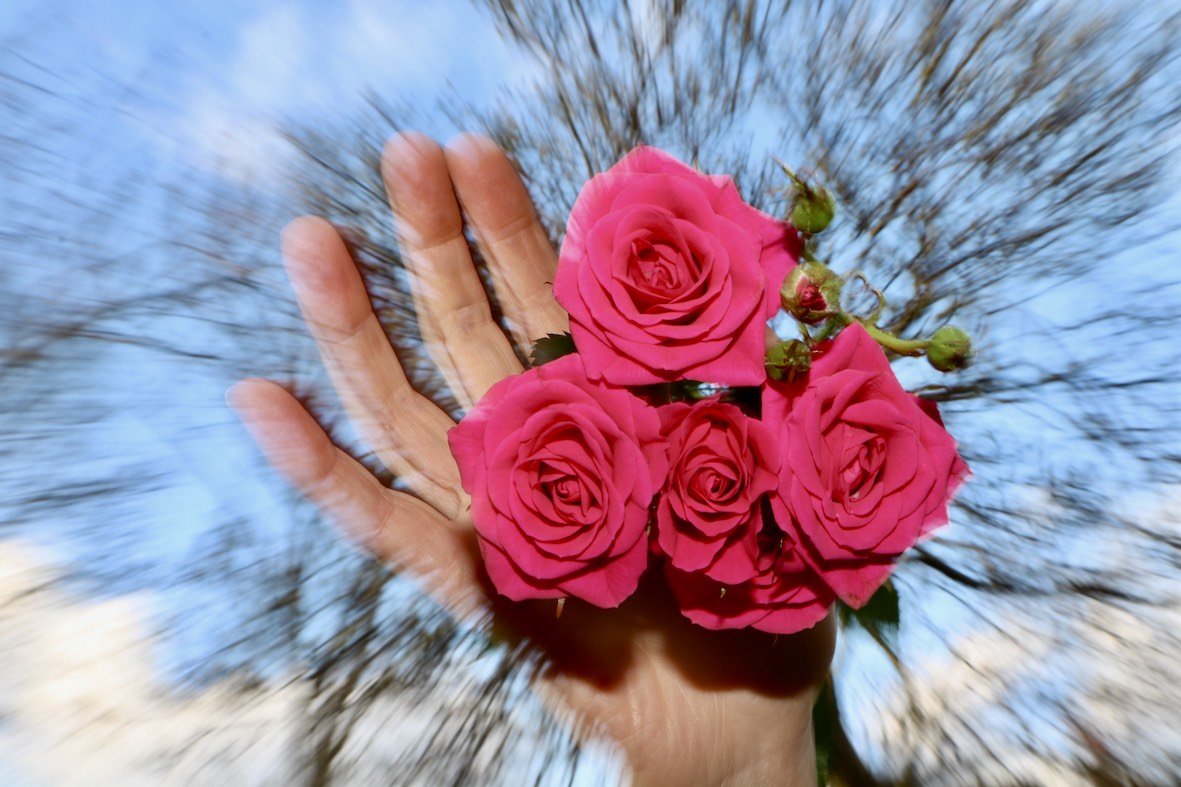
Roses in the hand and trees to give a sense of the theme of tending to the broken-hearted.

‘Grief Tending is a Way to Care for Our Broken Hearts’ was originally published as an article for FOYHT.

Why do we need Grief Tending?

Leaning into how we feel, giving time and attention to our emotions, can be a helpful way to process loss. In Grief Tending we do this by sharing with and witnessing others.

In many contemporary cultures, youth is prized. Social media tempts us to show only our best selves, and people often try to think positively in the face of difficulty. It’s easy to forget that our lives are part of a natural cycle, that has limits. There are beginnings and endings, as well as challenges and triumphs in between. Celebrating the ups with friends and family is welcome, but allowing space for our lows with others is more uncommon. Our expressions of grief are often hidden away in private.

Who would benefit from Grief Tending?

A Grief Tending event can offer us the space to be seen and heard without any pressure to solve or mend how we feel.

People often think that grief is reserved for the bereaved. But life brings us many curved balls and transitions, as well as the deaths of people you love. Every loss is significant, and may make us feel tender.

While some people come to a Grief Tending workshop with a broken heart, others may be dealing with depression, or be dealing with layers of disappointment, regret, absence, overwhelm or fear. It isn’t necessary to bring a specific loss to benefit from having time, in a supportive group workshop.

Grief and trauma recovery

Grief is a whole landscape of feelings that may include anxiety, anger, guilt, relief and numbness, amongst many other responses. It is an individual journey that doesn’t necessarily follow a neat route through the Stages of Grief originally proposed by Elizabeth Kübler-Ross.

Many cultures have had ways to be with grief, but others have lost the elders and knowledge to show us ways to digest our pain. Grief Tending is one kind of grief work, that brings together wisdom from different traditions and teachers including Sobonfu Somé , Francis Weller, Joanna Macy, and Martin Prechtel.

Current research and theories about trauma recovery provide a new understanding of what happens when we don’t have mechanisms to deal with trauma and grief. Gabor Maté sums this up in his recent film ‘The Wisdom of Trauma’,

“Trauma involves a lifelong pushing down, a tremendous expenditure of energy, and to not feeling the pain. As we heal, that same energy is liberated for life and for being in the present. So, the energy of trauma can be transformed into the energy of life.”

Gabor Maté

What does Grief Tending involve?

Grief Tending events happen both online and in person. A short 4 Hour event will allow someone to dip into the experience, whereas in a longer event there is more time to unfold complex stories. A ‘trauma-sensitive’ group will allow participants to work with the exercises in their own way. Groups include guided practices to connect and soothe, as well as a central part where feelings might come forward.

A workshop can be a powerful shared experience, that can help us to bear our suffering. In a group we may learn how to be with others’ losses too.  Participants witness one another, and may find more kindness for themselves and others. This approach to working with grief works well along-side other therapeutic approaches.

Finding the balance between grief and support

When we are settled enough, with some support in place, it is possible to begin to explore grief. Finding support is necessary in order to work with our difficult edges. But we need to have balance in life, to spend time doing the things that we love, remember the people who inspire us, and the places that nourish us too.

In Grief Tending, we encourage connecting with support before and after gently approaching grief. In this way, some of our ‘energy of life’, may resurface. When we dare to face our feelings, it can reconnect us with ourselves, and those around us.

More about Grief Tending and upcoming workshops.

Sarah Pletts is a Grief Tender and Artist who offers workshops in London and online, sharing rituals where grief on all themes is welcome. For more information about Grief Tending see www.griefsupport.org.uk .
How to Find Support For Dealing With Grief


The Buddha asks Kisa Gotami, who is deep in grief:
“Bring me a mustard seed but it must be taken from a house where no one residing in the house has ever lost a family member. Bring this seed back to me and your son will come back to life.” 


When we really need help, what are supportive ways for dealing with grief and loss? In the Buddhist story Kisa Gotami a grieving mother, asks the Buddha for help. Like Kisa Gotami, the reality that ‘everything you love you will lose’ (Francis Weller’s 1st Gate) may not touch you until you are in the clutches of grief. Kisa Gotami goes to her village, where she begins to find others who know the experience of grief.

Grief is an initiation. It is an inevitable part of being human, as Kisa Gotami discovers. Everything changes and everyone dies in the natural cycle, so at some point someone or something that we love will end. How we cope with the complex emotions of grief when it comes, is the challenge. Grief Tending is one way to find support for dealing with grief. It is a group practice to process grief.

How do I Find Support?

Before people come to a Grief Tending workshop, we ask that they connect with additional support during and also after the event. In this article I try to map some of the different ways to find support in order to process grief. Any of the following approaches may be useful when looking for support when working with Grief Tending as an occasional or regular practice.

Healing Grief

Healing grief may be what we long for, but to begin a journey towards acceptance we may need to find support. Our grief is a unique experience, and what each person needs will be different. When or if we feel safe enough to give space to our emotions will also be different. When we trust another person, we may be able to co-regulate our nervous systems so that we can give time and attention to our feelings. Feeling supported or ‘held’ may happen with the right conditions, with one person or in a group. We can only begin to heal from trauma when we have enough support.

The Fried Egg Theory

One way of looking at recovery from grief, also known as the ‘fried egg theory’, is when the grief stays just as big, but life begins to grow around it.

Lois Tonkin who puts forward this theory writes:

“What helps some clients about this model (and it does not fit everyone) is that it relieves them of the expectation that their grief should largely go away. It explains the dark days, and also describes the richness and depth the experience of grief has given to their lives”.
 ‘Growing around grief – another way of looking at grief and recovery’ Lois Tonkin.

Support for Dealing With Grief

Communities and our sense of belonging vary widely. Sometimes there is a wide range of inter-relationships and open communication between people. Perhaps there is an existing network of support for dealing with grief. There may be traditions, healers and practices to call on, especially around coping with death and dying. We may find intact or partial traditions that are recognisable in our own families, communities or faith teachings that may help us to deal with grief.

However, for a huge number of people it can feel as though grief is something that they are left to deal with on their own. Perhaps there are some traditional ways of grieving in their own background, but they don’t feel a connection with them. There may be practices that were more familiar to previous generations, which have been forgotten.

Weaving A ‘Basket’ of Support

In order to heal, we need to weave a basket of different kinds of support together. What this comprises is up to you. Start where you are and figure out what you need first.

Some of us have better developed networks of support than others. This may include people to talk to – friends, family, neighbours, work colleagues and health professionals. If we have financial resources, we may have more options to find a place to take our sorrows – a therapist, or body worker perhaps. If we are lucky, we may be able to access counselling services through a local organisation such as a hospice support group. There may be a charity or help line which serves as an emergency safety net for us in crisis. Links to crisis support here.

Finding Help for Dealing With Grief to Build Resilience

This is a brief over-view of some of the different kinds of support available for working with grief. This is not an exclusive list, and is intended as a rough guide to inspire further research and exploration. Always trust your gut feeling of what feels right for you right now. Most practitioners and therapists will welcome questions about how they work and whether they can meet your needs. Every person’s experience of grief is unique and each journey of learning how to cope with grief is different. You may want to include approaches that complement each other.

One to One Support Versus a Group for Dealing With Grief

One to one sessions will be tailored to your specific focus, with time to unfold your story. This is particularly helpful if you are dealing with intense grief or recent bereavement. Groups can offer witnessing, and shared understanding. Trust your intuition on what appeals to you. These two ways of working can support and complement each other. It is important to recognise that different approaches will suit different people, budgets or be helpful at different times.

Grief Tending Workshop

A short Grief Tending workshop (one day or less) can be a great introduction to the practice of Grief Tending in community. Ideally attention is given to both what supports us, and to our grief. A group comes together with a facilitator where participants can give space to their grief, without attempting to fix or change anything. There is usually a central practice or ritual, such as a Grief Circle, where participants have the chance to express how they feel. Witnessing each other can be powerful and helps us to recognise we are not the only person mourning.

Grief Tending Retreat

A longer Grief Tending retreat may last for a weekend, or a few days. Co-facilitated by a team, this is an opportunity to explore grief more deeply as part of a group journey. The extended time allows greater trust to develop between group members. Over several days, feelings have a chance to unfold more fully than on a short grief workshop. Grief Tending involves rituals to share feelings, embodiment exercises and may include time in nature. The practice of Grief Tending blends wisdom and inspiration from different teachers and includes both psycho-education tools and the opportunity for inner work.

Grief Circle

This is usually a facilitated space to talk on the theme of grief, where participants are given an equal chance to express something. A Grief Circle may be used as part of a longer Grief Tending event.

Death Cafe

This is a space where a group of strangers come together for conversation around the theme of death, usually over tea and cake. It is not intended as a therapeutic space, although it can be a relief to talk openly on the subject. A Death Cafe can be a good introduction to speaking in front of others about what can be a taboo subject. They are short not-for-profit events that happen in a range of locations.

Support Group

A support group usually gathers together people who are dealing with a specific challenge to meet at regular intervals over time. A support group is usually facilitated by a therapist. Bereavement or one specific source of loss may be the theme of a support group.

Group Therapy

An ongoing therapy group or group therapy can help us to explore our themes in relation to others. This is usually facilitated by a therapist. Participating in a facilitated group can help to uncover dynamics and blind spots in the way we operate with other people. It may be a closed group that meets regularly over an extended period of time. Sometimes there is a common theme, such as a women’s group or a men’s group.

Family Constellations

When working with sticky problems that seem to keep repeating, it can be really helpful to consult a Family Constellations practitioner. Often systemic patterns that we are unaware of and have nothing to do with our direct actions have travelled through our family lines. Whether passed down through styles of nurture, the epigenetics of trauma or something less tangible, ancestral grief can be a weight we are carrying from past generations. It may be particularly helpful where grief or repeating challenges such as addictions travel across generations. A Constellator may work in person, online, one to one, or in a group setting.

Crisis Support Helplines

Helplines are usually run by charities. They are excellent resources in a time of urgent crisis. They are often open long hours and can provide help when you have no-where to turn, or feel in acute need. If you are in a mental health crisis or feel despair, reaching out to a crisis helpline or your GP can be a life saver. If you are supporting someone who is in acute grief or despair, Grassroots offer excellent online resources.

One to One Counselling

Counselling is available one to one as a space to be heard. This may be offered as a brief course of talking sessions. It may be on a specific theme, such as ‘bereavement counselling’. This may be something that is available through a charity. Therapy tends to be a more open-ended process that delves more deeply into the unconscious material brought by the client. The main differences between a counselling and therapy are usually length of training and governing body.

Co-counselling

Co-counselling is reciprocal peer counselling. Taking a co-counselling training course can be a first step in developing tools such as Active Listening in order to give as well as receive support.

Cognitive Behavioural Therapy

CBT as it is usually referred to is a specific technique used to change negative patterns of thought or behaviour. It is a psycho-educational tool that can be taught. It is useful for some people, particularly if working with changing specific outcomes alongside other supportive measures.

Psychotherapy

Talking therapy is usually available through a private psychotherapist. This might involve a focused series of sessions on a theme, such as bereavement, or a wider reaching open-ended conversation. Psychotherapists differ in style and ways of working. Some have specific approaches, such as Psychosynthesis or Internal Family Systems. A therapist has usually trained over several years. A first session will often be a chance to explore what you hope for and whether you feel that the therapist is a good fit for you.

Body-Centred Psychotherapy

The therapist will explore the themes you bring through paying attention to the responses, sensations and symptoms in your body. Ask the therapist about the way they work, and whether it includes ‘hands on’ work. An embodied approach is particularly helpful when working with grief. The body can provide helpful clues when we are working with buried or hard to reach feelings. Sensorimotor Psychotherapy may be what you are looking for.

Body Work

There are many different techniques of hands-on bodywork. This may be gentle, soothing touch such as energy healing, cranial osteopathy or relaxing massage. Other techniques work more actively with physical symptoms and stress loads, such as acupuncture, breath work, and Grindberg Method. Sessions of body work can also complement other therapeutic modalities.

Trauma Work

If you are uncovering layers of challenging material, or have a complex history of trauma, I recommend a therapeutic approach that includes body and mind. For a complex history of adverse childhood experiences, a modality like ,Transforming Touch, Co-regulating TouchSensorimotor Psychotherapy  Somatic Experiencing or Reverse Therapy  are among the body-based therapeutic approaches that may all be helpful. For symptoms of burnout, there may be an underlying history which would benefit from this approach. Find a practitioner that works in a ‘trauma-informed’ or ‘trauma-sensitive’ way.

Single Traumatic Incident

EMDR is a specific technique that has good results in recovery from the impact of a specific traumatic incident.

Nature Based Therapy

Finding connection with the natural world can be a powerful place to find support. Different kinds of therapy are becoming available outdoors – whether talking therapies, healing with animals, forest bathing or a shamanic vision quest. Here is a directory of Nature and Health Practitioners. Nature connection also begins with spending time close to the nature, whether that’s tending a window box, gardening, walking in the park or climbing a mountain.

Expressive Arts Therapy

Drama, art, dance, music and singing are all practices that can be used to unfold feelings either indirectly or directly with a drama therapist, art therapist or practitioner who works with sound or movement. Movement practices like 5 Rhythms can also provide a ‘conscious’ or ‘ecstatic’ dance space to explore feelings, sensations, and have fun.

Weaving a Basket of Personal Support

Most people have things that they turn to in times of trouble. Many people consider themselves ‘spiritual but not religious’, and have developed their own ways to feel held by the beyond-human world. We encourage participants of our workshops to think about sources of support for coping with grief. It can really help us to deal with grief if we can identify the people, places, objects, activities and practices that support us.

What makes you feel grounded, connected, inspired or safe? More than ever when we grieve, we need to lean into the things that bring us comfort, connection and relief. In tough times it can be really helpful to have a list of supportive things to remember. You may not have considered them as grief support before. Carolyn Spring’s Emergency Box has a great list of things to reach for when you are feeling desperate.

Supportive People

Who are the people who you trust, and can rely on to be there in times of need? I like to actively acknowledge my need for support from close friends, and pay attention to weaving a ‘basket of support’. Who inspires you? These might be people you know, but also writers or teachers whose work speaks to you.

Support Objects

We often invite participants to bring a ‘support object’ to a Grief Tending session. This might be something that reminds you of positive qualities, or something that you like the feel of. You may have many objects and images that are talismans of things that you love, or are associated with someone you love. A support object could also be something that looks mundane but that helps you to keep going in life. This object might act as a ‘touch stone’ in your pocket or remind you that you are loved. What objects are significant to you?

Support Practices

What makes you feel good? This may include physical activities such as walking, swimming, and running. You may also enjoy more inner experiences like meditation, chanting, yoga-nidra, reading or doing soduku. Don’t forget things that bring you pleasure, which might include dancing, cooking your favourite foods, and going to exhibitions. Are there self-care practices that make you feel better, which you could make more of a priority? I like to skin-brush, take a salt bath, go to a sauna, keep a list of compliments to use when I feel low. What works for you?

Is there something creative that can give you a chance to express yourself and soothe your nervous system? This might include knitting, crafting, drawing, puzzling or writing poetry. Gentle self-touch exercises can be really helpful too, especially as a practice for returning from an activated nervous system.

Support Places

Is there a place that you feel good in? Perhaps there is a public building that inspires you. Somewhere in nature may fill you with awe. Or a supportive place may be a particular tree, a ‘sit spot’ or going to a favourite beauty spot. Perhaps you need to visit the sea regularly, or plan a special walk? Maybe there is a corner of a room that you can make a cosy nest in? Is there somewhere that takes you out of yourself by offering beauty or mental stimulation? Perhaps you like being among people in a café, at the library or solitary in a tent?

Support Rituals

Do you have rituals that bring you comfort, grounding or support? Perhaps you like to start the day in a particular way. It might be as simple as drinking coffee from a special cup? What are the personal or home rituals that you enjoy? I notice that when I make time for my daily prayerful ritual before doing anything else it sets me up for the day. It connects me with my highest intention, and makes me feel part of the web of life. What works for you to create intentional support in your life?

Grief Tending as Support for Dealing with Grief

We ask the participants of our Grief Tending workshops to commit to checking in with someone supportive after an event. Grief Tending can be a one-off resource, or sit alongside other forms of support. It can complement one to one work, offering a shared group experience.

We all have our unique histories and experiences of the world, which one to one sessions can unfold over time. Discovering our shared humanity and witnessing others’ courage and vulnerability in community are benefits of Grief Tending.

Like Kisa Gotami’s village, each person who comes to tend their grief is unable to find a mustard seed that come from a household untainted by loss, death or change. The distraught Kisa Gotami who grieves in each of us finds empathy and support through being vulnerable. But we can only be vulnerable when we feel supported enough.

Sarah Pletts is a Grief Tender and Artist who offers workshops in London and online, sharing rituals where grief on all themes is welcome. For more information about Grief Tending see www.griefsupport.org.uk .
Instrument described in the text, shown here

Why don’t we talk about menopause?

Why don’t we talk about the menopause? Are we just embarrassed to speak about personal things? Or is it because the things that happen to our bodies are loaded with shame? In talking about it, we might risk showing our vulnerability.  We are loaded in western capitalist society by unconscious messages about beauty and mortality. Youth, productivity and fertility are valued markers of success, rather than wrinkles and wisdom. It may also be because approaching our senior years reminds people that they will not live forever, the truth we all try to forget.

How can we talk to our peers about menopause? Media images encourage women in particular to compete at looking younger for longer. Is it because we daren’t risk being rude or invasive that we don’t ask or reveal to one another? Talking about the menopause may be just one taboo in a long list. We may not have talked about the things that came before this rite of passage – puberty, bleeding, pain, lost pregnancies, infertility, terminations, tampons, fibroids, sexually transmitted infections, our sexual encounters, our sexual pleasure, masturbation…

The metamorphosis of menopause

Like puberty, you don’t know when the menopause will happen, and how it will land in your life. It is official a year after your final period. I see it effect the people around me in different ways. The most likely predictor for when it will happen is genetic. Early menopause can also come way before mid-life. This is less common, and is sadly much less widely recognised, as it arrives unexpected with many consequences. My final period came when I was 51, the average age, despite my first period being early. I now have a nostalgic fondness for copious bleeding and the earthy messiness of menstruation.

“Everything you cling to that’s comfortable in its familiarity including your very identity is metamorphosing from the inside out,” Christiane Northrup.

Up to 10 years of peri menopause

The piece of information I wish I had known ahead of time was that it may have a lead up of 4-5 or even up to 10 years of peri menopausal symptoms. Menopause can also come suddenly in response to surgical or medical situations.

Menopause used to be known as ‘the change’; as though it was a single turning point in the transition from the archetype of mother to crone. My experience has been of a gradual process of transformation. With hindsight I can recognise difficult and sometimes dramatic symptoms in a lengthy peri menopause.

During, or perhaps as a consequence of peri menopause I was exploring my sexuality, and I enjoyed surges in sexual energy. At the same time, I needed to come to terms with infertility. There was grief in being unable to be a biological parent. I gradually let go of dreams of being a birth parent. This came with an enquiry into who I wanted to become. I weathered the emotional shifts as my creative energy was channelled into other new ventures.

“Our hormones are giving us an opportunity to see, once and for all, what we need to change in order to live honestly, fully and healthfully in the second half of our lives.” Christiane Northrup

Navigating the changes of menopause

I was unprepared for the physiological changes. I did have encounters with medical professionals during gynaecological medical emergencies, but I found little information or support elsewhere. My mother couldn’t remember how old she had been by the time I got around to asking. There was a distinct absence of elders to pass on their wisdom on the subject.

Davina McColl’s refreshingly straight-talking documentary on Channel 4 ‘Sex, Myths and the Menopause’ is a good starting point on the subject. Information can be found on websites such as Women’s Health Concern – the patient arm of the British Menopause Society, Menopause Support and Menopause Matters. Look for independent reliable information that is not covert advertising for products, treatments or consultants.

There is still stigma and embarrassment in talking about menopause issues. Like other signs of mortality, talking about ageing can be taboo, worse still showing visible signs of it. I am aware that some people feel more invisible in the face of the physical changes of becoming mature. Others may redirect their energies into new endeavours with vigour.

The issues around menopause are not just ‘women’s business’. In a mission to make menopause more inclusive, Tania Glyde recognises that ‘Queer Menopause’ effects many including women, trans men and non-binary people. Whatever your identity, it is likely to include hormonal, physiological and emotional changes.

Menopause in Relationships

Friends, family and partners may be in different life phases, or moving towards elderhood in different ways. It may be complex to co-navigate changing needs and desires in lifestyle and relationships. After many years caring for others, I found myself with more time to invest in new interests that I hope will sustain me into the next phase of my life.

Coming to terms with changes in levels of desire, or response may precipitate exploration into what works for us sexually. If you haven’t already considered what you still want to receive, or give, I recommend Betty Martin’s ‘Wheel of Consent’. Being menopausal doesn’t mean we have to give up on intimate touch, although it’s a great time to work out what we do want to share in relationships with others.

A rite of passage

Like most rites of passage, the route through menopause is a liminal journey of stages – preparation, threshold and return. Ideally there will be support and education during peri menopause, and adjustments made before the final period. The threshold occurs, but we may not know it until a year after it has happened. One of the things that I found tricky was not knowing when I had actually had my final period. There was a gap of six months and then a year between my penultimate and final periods.

During this time, we will be aware that our years of potential fertility or procreation have come to an end. As with any big life change, this transition is an opportunity to grieve what is ending. Our ability to recognise and face this letting go process will reflect how we feel about our achievements and regrets as our identity shifts. The health concerns that may have accompanied our menstruation cycles will also be factors.

As physiological changes happen, are we welcomed into a community? Do we have support in place for this new time of life? Do we have peers we can talk to? Is our GP willing to hear and respond to our concerns? Are we resourced enough to find the support we need to manage symptoms?

After all the changes that may accompany peri menopause, and then menopause, I notice an absence of marking this initiation. Will our arrival on the shores of eldership be acknowledged or better still celebrated? Is this the time, or will I have become a member of the older generation when my hair turns white, or when there are no longer any family members ahead of me?

The symptoms of menopause

There are many symptoms that may be part of the experience of menopause. Hot flushes, (hot flashes), poor memory, changes in sexual responses and vaginal dryness have affected me. Then there are night sweats and early morning anxiety which disrupt my sleep patterns. Symptoms may arrive suddenly or gradually then ease off or stick around.

I have experimented with a variety of alternative treatments to support my physical and emotional health at different times including Chinese herbs and Acupuncture, Grindberg Method, Cranial Osteopathy, Herbal Medicine and natural bioidentical hormone creams. This is in addition to taking food supplements, good nutrition and exercise. My family enjoyed regular yam patties for a while. Yam is one source of naturally occurring oestrogen, but quite an effort to mash.

One solution to ease vaginal dryness

If you want to avoid the graphic details of my journey with vaginal dryness, stop reading here. Vaginal dryness crept up on me, and I became reluctant to engage in penetrative sexual play until I discovered that regular activity in my vagina actually made the pain improve rather than worsen. I retreated from the dread of the words ‘vaginal atrophy’ by putting some practical steps into action.

Experimenting to find what works for me, I now have a daily practice of repeatedly inserting and removing a ribbed glass dildo into my vagina. You can find a selection at Women’s ‘adult emporium’ Sh! and other adult stores including Love Honey. This stretches my vaginal sphincter and helps my vaginal walls to lubricate. I use a dollop of ‘Yes VM’ natural organic vaginal moisturiser. (Their lubes are great too.) Over time I built up to moving swiftly in and out for a couple of minutes. Now I do it about 70 times every morning just before brushing my teeth. When I began, this was an unimaginable goal. But it has over time reversed the pain and dryness which I was experiencing during intimate touch.

Anything that enhances blood flow to the pelvic area may help. Practices of self-pleasure that work for you are worth experimenting with. I find ribbed glass good for stimulating and stretching, and the glass has a cooling sensation. I wish someone had given me a few tips, so I hope this will be useful information to pass on.

On the other side of menopause

What am I like several years on from my last period? A more direct communication style has replaced some of the buffers of ‘niceness’. I am more confident in who I am and what I want to do. My gender identity also feels less fixed, and also less important as my hair greys. Brain fog and memory lapses can make me feel at the edge of my capability, but I feel as though I have no time to waste, ready to offer my experience to the world as an elder in training.

My inexpert experiences here are a kind of coming out, to reveal what often remains unseen and unheard in the shadows. I value intergenerational work. The conversations I have with the extraordinary young people I come into contact with fill me with hope. The generations have such different perspectives and exposure to ideas around sexuality and the body. In writing this I offer an invitation to risk having conversations about the nitty gritty of life with elders and youngers alike.

Sarah Pletts is a Grief Tender and Artist who offers workshops in London and online, sharing rituals where grief on all themes is welcome.  For more information about Grief Tending events see here

Written by Sarah Pletts for Jillian Woods’ Diary of a House Blog in New Zealand


From my window, I see an occasional car. The main road beyond is busier – buses, delivery vans and a blue flashing light go past. The park opposite is green and lush. One or two pedestrians and cyclists navigate to or from the super-market, corner shop, chemist or post office. A small construction site is still growing up brick by brick, in the next street. The towers of the financial centre of the city are in the far distance.

I heard a historian speak on BBC Radio 4 when there were only a few cases of Covid-19 in the UK. He said, “In the future we will speak of ‘before’ and ‘after’ Coronavirus.” Remembering that snippet of news interview now seems like ancient history. London – recently a thriving multi-cultural city of 9 million is now quiet enough to hear the birds sing.

We have lost people, lots of them. More have died than were killed in the London Blitz. Statisticians are the new eagerly awaited storytellers. The exact figures are endlessly quoted and discussed – a messy set of deductions, additions and multiplications.

An alarming number of the dead are from black/asian/minority/ethnic backgrounds. Many key workers are in this demographic. Despite the covert racism in ‘Brexit’ divisions, some of these doctors, nurses, carers and bus drivers are now being celebrated on the more often white pages of the tabloid on-line press. Yesterday, on my Zoom call at 11am we joined a UK wide minute of silence to honour the key workers who have died so far.

Despite recent fluctuations, the roads are still more like the quiet that happens when England plays a world cup match and every ‘white van man’ was at the pub watching the game.

I went to King’s Cross in the city centre for an emergency dental appointment. Usually one of the busiest thoroughfares in London, the Euston Road was sparse with traffic. Shops in the area were shuttered as most are elsewhere. The forecourt of Kings Cross station was eerily quiet. It has been my only foray out of Hackney in weeks.

Pubs are shut, many boarded up with the prospect of staying that way for months. London’s extraordinary cultural spread of theatres, clubs, galleries, restaurants and cafés are closed. Freelance creative people and those on zero hours contracts are at home with their normally insecure incomes slashed.

Food banks exist to catch some of those who fall between the funding gaps and ‘Universal Credit’s £94 a week, (if you’re lucky enough to navigate the system). People queue at our local food bank at two metre intervals.

All of city life is now calibrated in two metre gaps. We weave along pavements – jogging, walking, cycling two metres apart. For those who are not struggling to get to essential work, in home-made mask and latex gloves on busy rush hour (reduced service) tube trains, we head to the park for daily exercise.

The last six weeks have been sunny. This is almost as unusual as the pandemic situation. Sky blue skies, un-streaked by vapour trails are recording 35% of the normal pollution levels. While those who are ill struggle for breath, the rest of us can at least breathe deeply.

Despite the high population density, London is still a very green city. Parks are bustling with people taking their hour of exercise outside. A few rebels pause to sit and enjoy the newly fresh air. Most people move with purpose. We dodge the panting breath of seemingly healthy runners. Parents use ingenuity to entertain their kids with scooters, Frisbees and balls (no team games allowed).

I can tell you what I see, but more than ever, London is full of parallel universes. I can see what is visible in my neighbourhood from the limited time I spend outside. I have an idyllic view from my privileged perch. I am one of a large household of the well. Others are not so lucky.

I know over twenty people who have had the virus, been knocked out of circulation into their beds for a week or two. Acquaintances have been hospitalised. Friends of friends have died. I am not reporting from the front line. I fear that as this time ebbs, more grief, more trauma, and more loss of hope will be visible.

I have seen our Prime Minister Boris Johnson on TV. Known for his arrogance, he ignored his own advice to avoid shaking hands and stay indoors, and caught Covid-19. Returning to our screens with dark circles around his eyes, post virus, he continues to emulate Churchill’s cadences. Many of us hope that his brush with mortality will chasten him. We hope that this time will bring opportunities to implement greener less petrochemical industry friendly policies. But, there are indications of a disturbing urge from those in power to return to ‘business as usual’.

What are the positive signs in this time of Coronavirus? I enjoy cleaner air, quieter streets, raucous bird song. I am relieved to have some time out from social busyness. Time to re-assess our food chains feels necessary. I’ve planted my first vegetables. I love quality time at home eating lovingly prepared food together with my housemates. I appreciate the gratitude that arises for the good things we still have.

We chat to friends around the world, who are now as near as those a few miles away on-line, but as unreachable in person. “What’s it like in London?” they ask. I am not necessarily a reliable witness. I can tell you what it is like in this house. I have a sense of how it is for my immediate neighbours as we chat, calling across the garden fence or from our doorsteps. I have an impression of how it seems in this neighbourhood. Although cases of domestic violence have doubled, so I know all is not well behind closed doors.

There are different attitudes to this crisis among different generations, and different social demographics. Many are under huge pressure, but with a range of causes. While isolation is often really difficult, there are also ways in which people are coming together, helping each other and showing kindness.

There seems to be a quirky British eccentricity about ways in which we are showing solidarity – Monty Python meets the Royal Family.  The 100 years old Captain Tom Moore has captured the nation’s imagination by pushing his walker up and down outside his house in aid of the NHS. Guaranteed to bring a tear to the eye, he has so far raised twenty-nine million pounds.

Children are creating pictures of rainbows to put in their windows. Then at 8pm each Thursday, we clap. Doors and window are flung open, and for a good few minutes we applaud to ‘care for the carers’. Where we live this might include banging pans, cranking a football rattle or shaking Maracas.  Curiously charming, it does raise my spirits.

Sarah Pletts is a Grief Tender and Artist who offers workshops in London and online, sharing rituals where grief on all themes is welcome. For more information about Grief Tending see www.griefsupport.org.uk .