
Creativity/Serendipity Tag

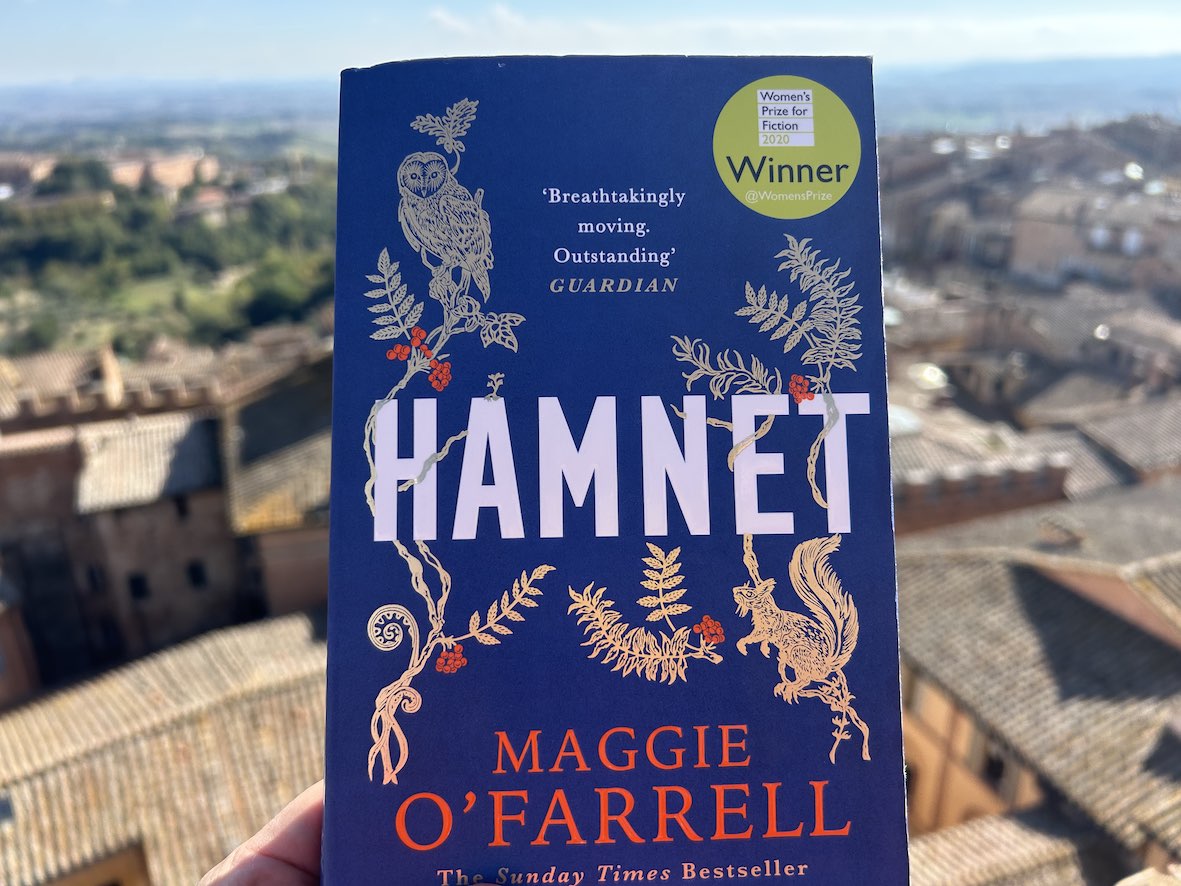
I was dazzled by ‘Hamnet’. It’s a novel that entertained and moved me in equal measure. ‘Hamnet’ by Maggie O’Farrell, is a fictional telling of Shakespeare’s home life based around the scant available facts. It is a brilliant imagining of his life in Stratford, of love and loss as he marries and becomes a father.

We already know the end of the story – that plays will be written, that the writing will be celebrated. The mystery that drives the story is the unknown rich life history that will foster the writer Shakespeare is to become.

Maggie O’Farrell writes in compelling prose about grief. She has experienced her own, writing on painful personal losses and close scrapes with death in ‘I Am, I Am, I Am.’ When loss comes in ‘Hamnet’, she describes the agony and its consequences with a recognisable truth.

“She discovers that it is possible to cry all day and all night. That there are many different ways to cry: the sudden outpouring of tears, the deep racking sobs, the soundless and endless leaking of water from the eyes.”

Although Shakespeare as we know him provides the skeleton of the story, we discover him through his parents, siblings, wife and children. ‘Hamnet’ is also a work of social history. It unpacks the tasks, troubles and joys of an Elizabethan household. It also takes us back pre-witch burnings to the practice of herbal medicines for home use, to the every-day world of women and children, as well as the rural and urban streetscapes of Stratford and Shoreditch.

The spelling of Hamnet is interchangeable with Hamlet. The off-stage events happen before and during the play ‘Hamlet’ is written. I’m seeing it at the National Theatre soon, so will listen for resonances.

Sarah Pletts is a Grief Tender and Artist who offers workshops in London and online, sharing rituals where grief on all themes is welcome.  For more information about Grief Tending
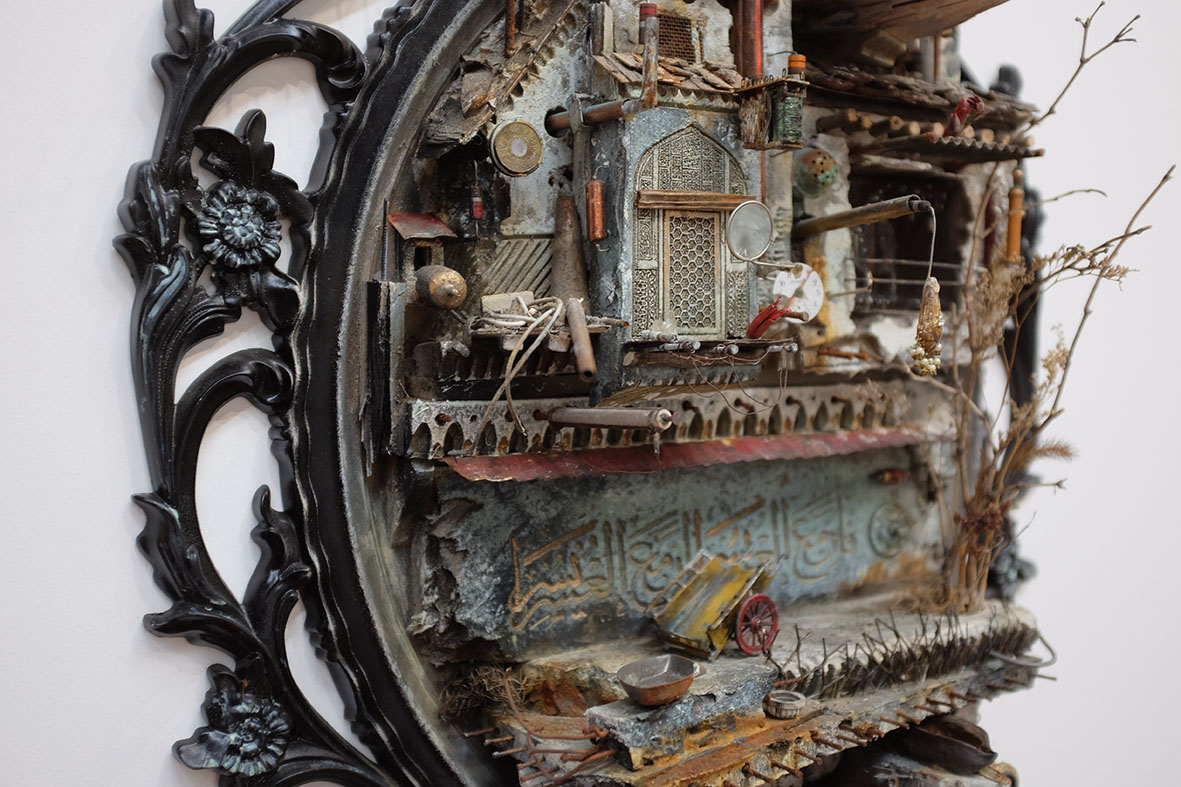
Image from the exhibition reviewed in the text

Imagine a streetscape the size of a doll’s house. In ‘Journeys from an Absent Present to a Lost Past’ an exhibition at Fabrica, in Brighton, Mohamed Hafez has crafted beautiful miniature installations, that transport the viewer to an urban Syrian landscape. Each tiny environment shows everyday traces of local life. Washing hangs in the street, a car is parked outside a front door, a satellite dish rusts on the roof.

Mohamed Hafez, Syrian born architect and artist living in the USA, began making model environments to soothe his homesickness. First because of a post 9/11 travel ban, and then as a result of the war in Syria, he is no longer able to go back to the home that he remembers. He recreates the Damascus of his memories. “There’s always that emotional longing to go home,” he says.

Understanding the power of art to both express and work with the grief of loss, Hafez makes meaning by communicating something of the migrant experience. Speaking in a short film that accompanies the exhibition, Hafez reminds us “that life is fragile”. Hafez wants to capture our attention with his exquisite model images, “I like to be sneaky, because you know, that’s how crises happen in our lives. They sneak up on us.”

I recall there have been three brief moments in my life so far, when I faced the possibility of losing my home, but I have never had to confront losing my homeland. For me, contemplating this surfaces empathy for those who are in more precarious situations.

In Syria, crisis is ongoing. These tiny fragments of old Damascus streets invite us to see a knotted global issue from ‘another’s shoes’.  An interactive element of the exhibition invites visitors to consider ‘What is home to you?’ I am aware that it is often only away from home that we really come to know the answer. I think of the familiar smell of Hackney’s green and grime that greets me after time elsewhere.

See here for next Grief Tending events.

Sarah Pletts is a Grief Tender and Artist who offers workshops in London and online, sharing rituals where grief on all themes is welcome.  For more information about Grief Tending events see here

Image from the exhibition described in this post

This is one of many postcard sized images which comprises Wish You Were Here’, an exhibition and raffle in aid of Art Refuge. I collaged together prints of my feet and hands with the message ‘WELCOME’. My humble artwork will be raffled alongside pieces by artists like Grayson Perry.

Recent surges of people running the dangerous gauntlet to cross the channel in small boats, regularly hits the news. I listen to reports on the radio in my comfortable kitchen while I eat a nutritious organic lunch. Many do not survive the journey.

Art Refuge work on both sides of the channel with people who are displaced, to provide art and art therapy, and offer crisis support. They also offer training to frontline workers. Their skilful and imaginative projects often begin with a welcome at one of their ‘community tables.’ These are covered with printed maps, which may represent former homes and travel routes, and aid conversations.

The team use a profoundly simple but effective way of embodied creative making to invite people into connection. “The Community Table model – originally developed by Art Refuge in Calais to welcome those who find themselves displaced – alongside volunteers, local staff, interpreters and visitors – to sit around a table and share spaces through art making.”

For me, welcoming someone has become an essential practice. In Grief Tending, we aim to welcome both people, and feelings which may not feel invited elsewhere. In some grief rituals, after expressing emotions, there is a moment of return, where the person is welcomed back into the holding support of the group. This can be a strong experience, especially for those who have rarely experienced an authentic welcome.

My inspiration for this image was to offer an open-armed welcome to those who step onto British shores. Many of the displaced have lost everything, and bring a history of trauma and struggle. Creativity is one way to begin a journey of repair – to connect, to find respite, to tell your story, and eventually to make meaning.

Sarah Pletts is a Grief Tender and Artist who offers workshops in London and online, sharing rituals where grief on all themes is welcome.  For more information about Grief Tending events see here
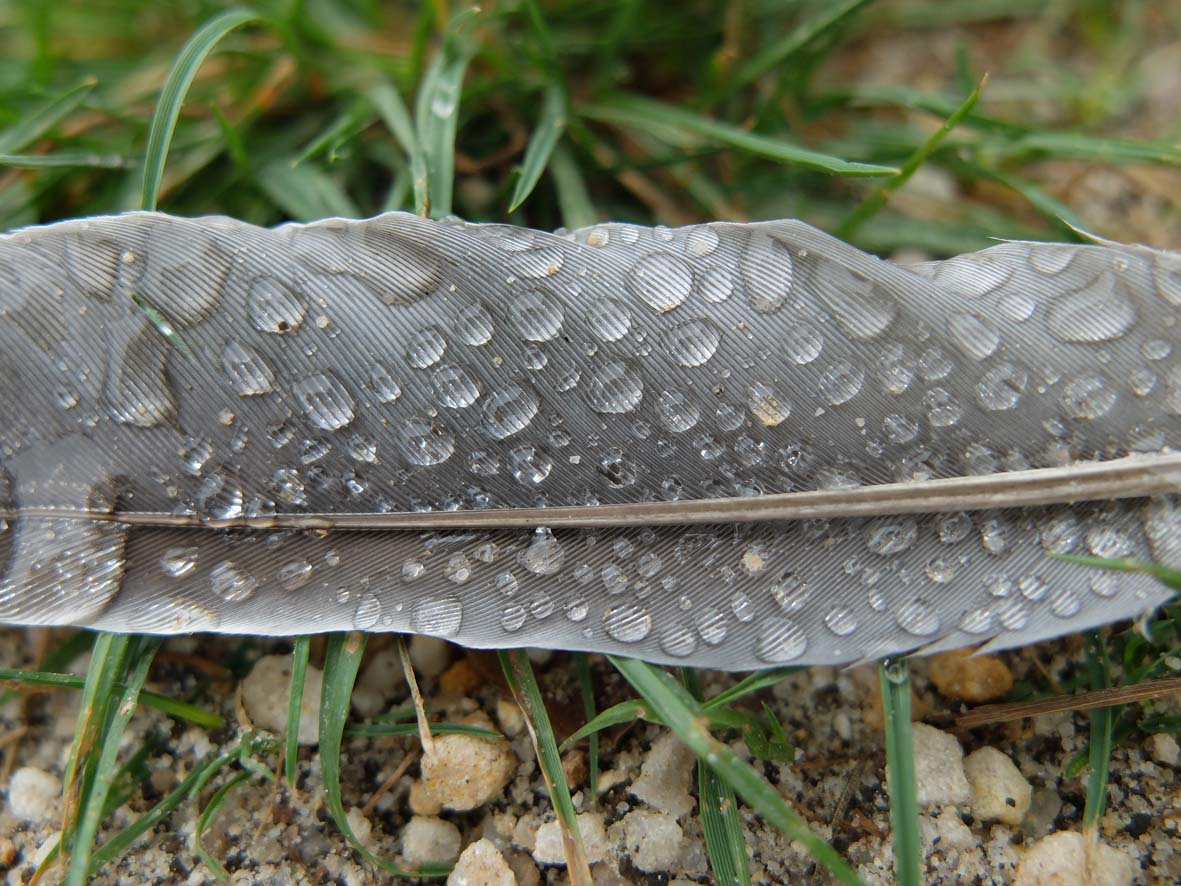
Living creatively is an invitation to walk through the world with eyes open to wonder. There is a quality of presence, of being in the moment, which ushers in a way of looking, unhindered by too much thinking. Whenever I travel to somewhere new, I put on this way of seeing like invisible glasses. But I also try to remain open to looking with my ‘travelling eyes’ in my every day places.

The serendipity of light, weather, season, and other chance encounters give endless variations to my daily walking route, and the kaleidoscope of natural patterns. To see like this is a commitment to curiosity. I urge myself to notice and follow the energy that is alive for me in everything. ‘Where is the juice in this subject, this conversation, or in the dance between us?’

I find a leaf, an insect, a feather, a puddle, examine the details with ‘mouse view’. Here sit droplets of water on a pigeon feather. Vast elements encapsulated in feather, grass, rain and light – air, earth, water and fire. Here lies beauty and simplicity.

Advertising plays on Mimetic Theory, (the impulse and consequences of envy), to tap into our desire for what someone else has. We are sold images and ideals of perfection that are unrealistic. Our role models: family members, media images, cultural leaders, TV heroes, teachers, and friends on social media in-still standards to aspire to, that we internalise.

“In the absence of adequate rites of passage, ad-men become the high priests of an initiation into the addictions of consumerism”, Marion Woodman warns in ‘The Pregnant Virgin: A Process of Psychological Transformation.’ Failing to measure up to these ideals causes shame and erodes our sense of self-worth.

Until I was 29, I sucked up magazine images, fed my fantasy life, was a ghost in the world. I developed a longing to become as wise as the Dalai Lama, while mining my creative potential like Frida Kahlo. In fact, I have had to lower my standards and to be content with being my ordinary self.

Letting go of my grandiose expectations of myself is painful, over and over again. I make mistakes, get things wrong, and despite my longing to be perfect, I never am. Like the Japanese art of ‘Kintsugi’, I am learning to celebrate my cracks, to make their scars visible, rather than hidden. My experience comes from this process of break and repair.

Embracing incompetency in creative work makes it more relatable. “The good thing about incompetency is it makes other people feel less shame”, says Tony Gammidge. Tony encourages my journey of making images that includes mistakes and the serendipity of accident. I notice that welcoming the probability of getting things wrong makes space for collaboration, and opens up possibilities. Increasingly surrounded by slick digital images, I yearn for the rustic simplicity of hand-made objects, with all their imperfections, made by real people, full of flaws.

My summer usually includes working and playing at several festivals. Long weekends under canvas bring me happiness. The effort of gathering all the paraphernalia for comfortable, dry nights includes digging wellies out of the cellar, rummaging at the bottom of my wardrobe for sequin hot-pants, fishing tents out of the attic, and then playing packing ‘Tetris’.

My reward is sitting on a sheepskin, kettle on the boil, looking out at trees in a field of tents. This is a pre-requisite for shaking off my city shell. Festivals mean diving into an environment where creativity is celebrated; including music, dancing, and having fun with people. But this is 2020, during a pandemic, and things are different.

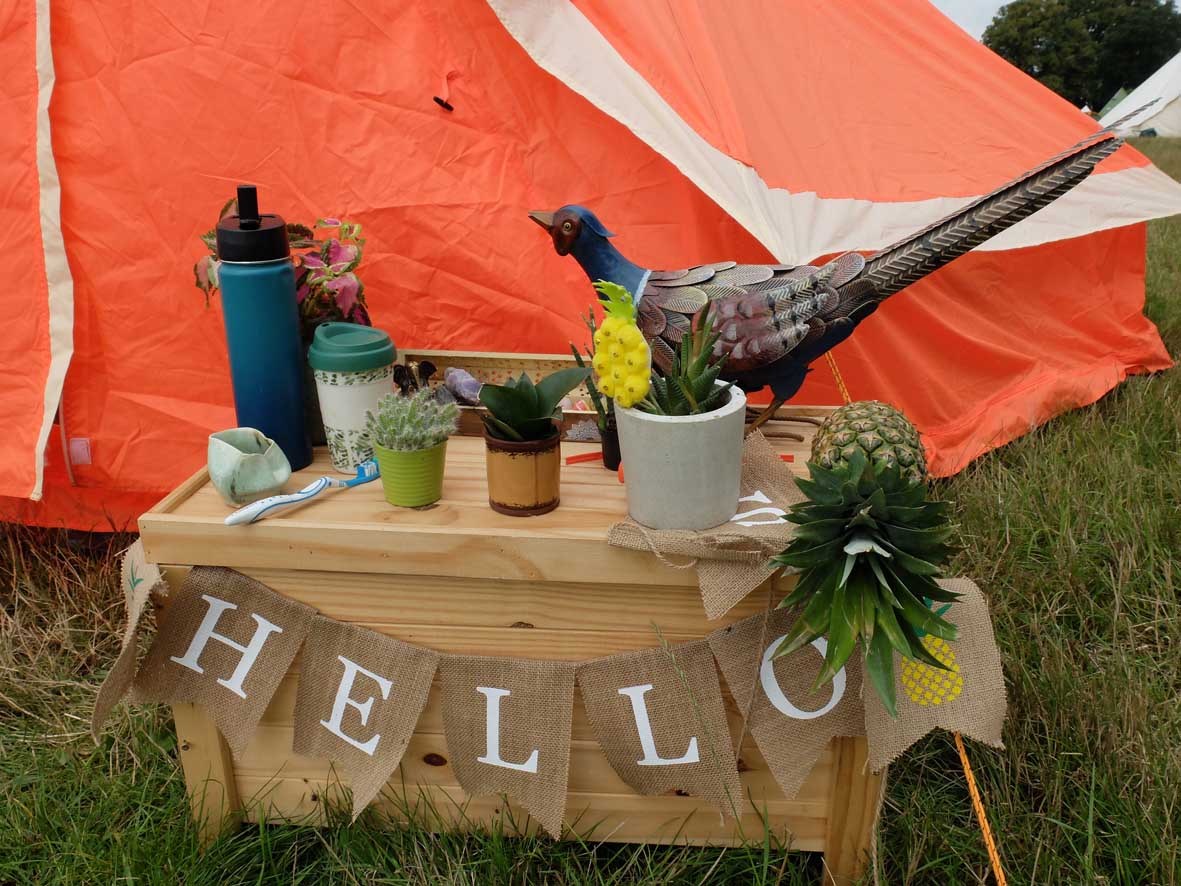
At the Medicine Festival, it feels special to be able to gather. ‘HELLO’ this bright orange tent announces, welcoming us back into some semblance of festival culture. There are canopies, beautiful installations, shamanic drums, onesies, but no hugs in sight. Dancing happens in my individual portion of field. My extrovert stays at home, while my introvert tries to navigate the socially distanced crowd. Seeing friends and familiar faces at arms length is both a joy, and an impediment. Instead of becoming wild and feral, I use hand sanitizer at regular intervals.

The programme, despite holes, (a consequence of indigenous participants remaining in other places), is still full. We follow a random trajectory through ceremony with some of the ‘Wisdom Keepers’, talks, performances, and workshops, via skinny-dipping in the lake. We connect with the very alive woodland, shared intentions, live music and each-other in hands off ways.

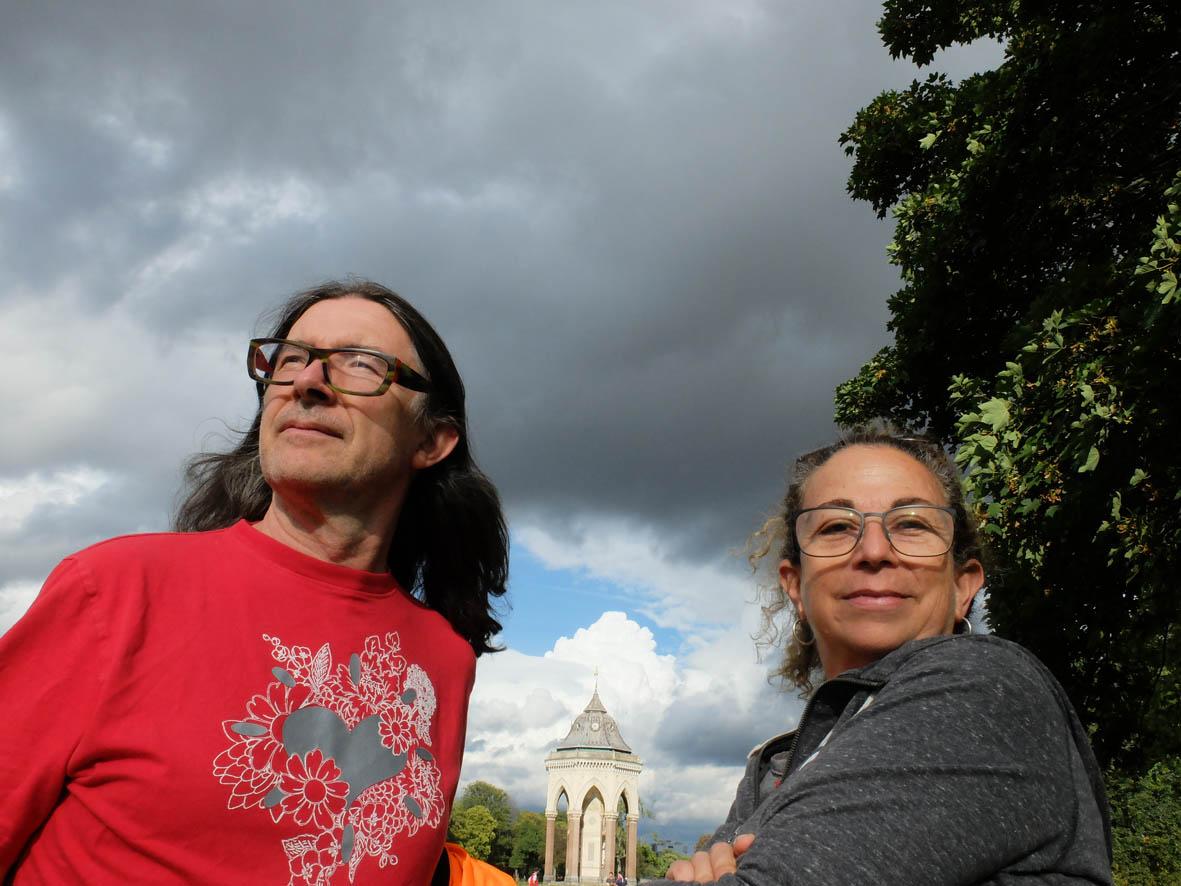
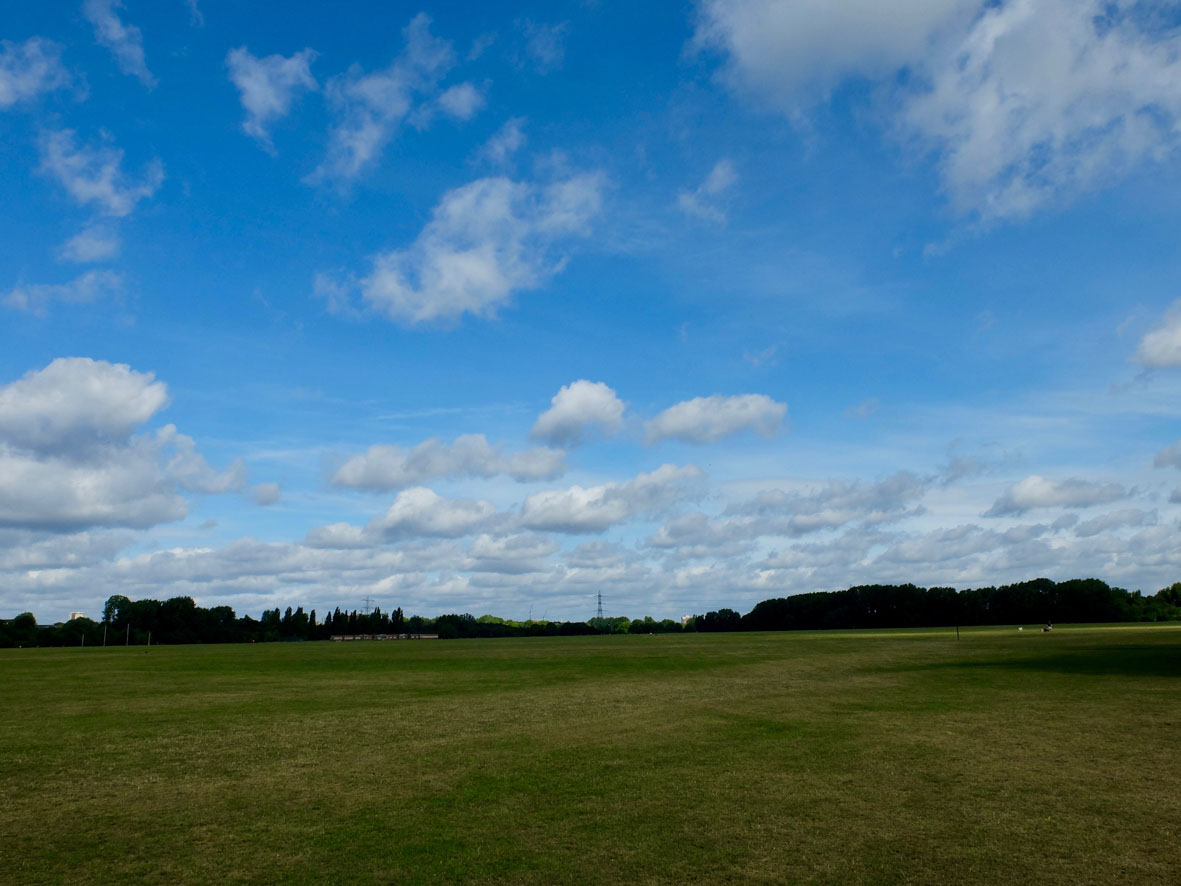
We admire the clouds in Victoria Park. They are worthy of John Constable’s paintbrush. With my ‘Romanticist’ eye, I see Tony and Monique, standing heroic against the tumultuous sky. We three share a love of words.

“Most of my students use too many adjectives,” says Monique. I wonder how to find the words that might describe this bold scene with pithy nouns and verbs. Writers stand in sunlight. Wordsmiths walk under a dark cloud. Friends look for change.

From our different perspectives, we search for words that expand our conversation, avoid those that close down communication. We discuss the tensions, which spring up from assumptions, judgements, and lack of information or imagination. How do we find the right words, use skilful speech, embrace complexity, debate with nuance? Can we encourage ways to reflect our experiences to increase our ability to understand one another?

“Everyone is broadcasting. I’m seeing what comes when I listen,” Julie says, in one of our characteristically candid conversations. I like to think of my time, energy and expression in terms of ‘input’ and ‘output’. I try to find a balance. There are times to speak out, to be heard, and there are times to receive. However, what I heard in Julie’s words is a more provocative enquiry. What happens when I listen more deeply? How can I sit with what’s uncomfortable in me enough to hear the other fully? How can I tune in to the voice of the unheard? What happens when I make space to listen to the unknown? At home I listen to a muffled city scape of footsteps, distant shouts, rumbles of passing cars, and fragments of electronic beats. Out on the marshes, I listen to birdsong, weather and the rustle of leaves. I open my ears to inspiration that blows in on the wind, and the energies of the land.

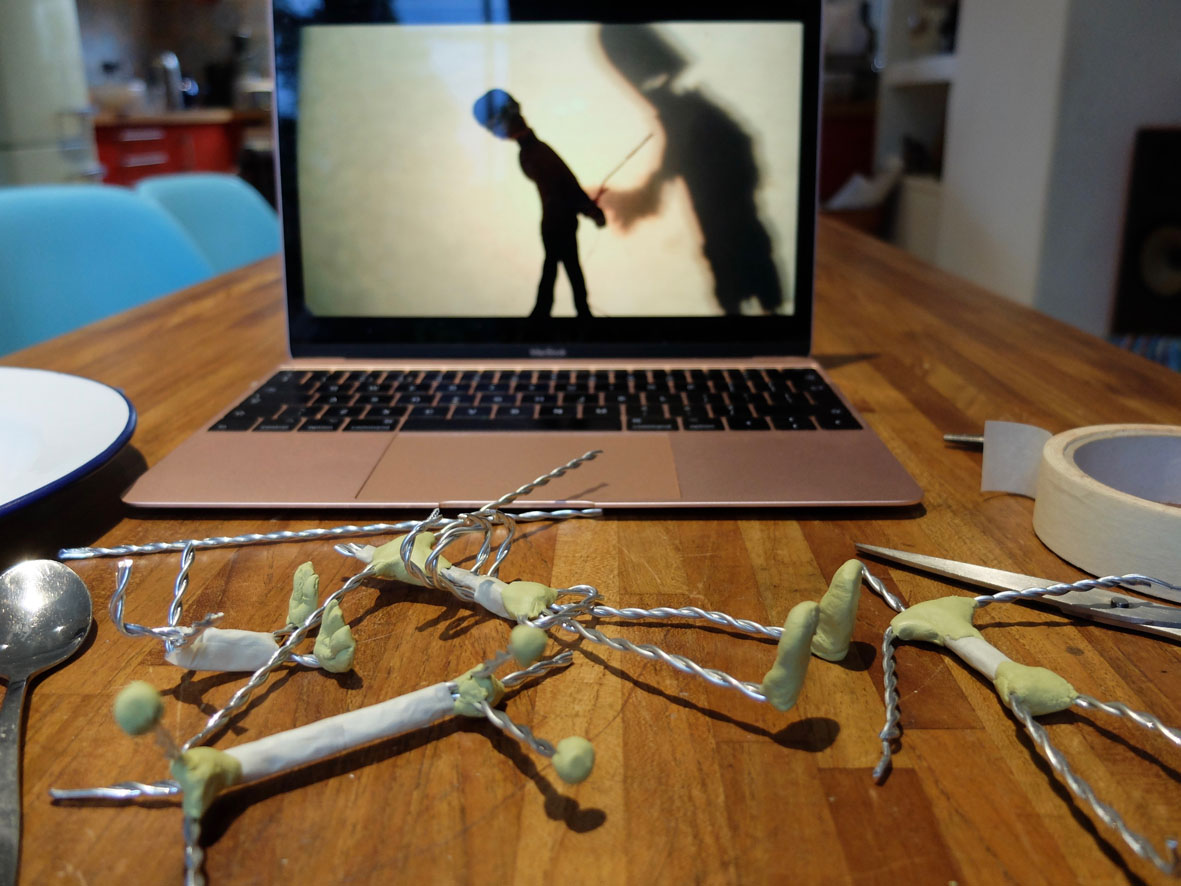
‘Norton Grim and Me 2019’ is a short, animated film about Tony Gammidge’s experience of being sent to boarding school. The film portrays strong emotional content with visceral images. It is also beautiful. Stark shadow puppets, plasticine figures, haunting photographs and quirky drawings weave together to illuminate his dark tale. He is one of the people who adds their perspective in ‘Sabre Tooth Tigers & Teddy Bears’ by Suzanne Zeedyk. Tony Gammidge invites us to find our own stories, to use creative expression as a way into healing. He brings his own grief, and trauma as raw materials to be transmuted. Inspired by Thomas Ogden’s work, Tony says, “To make art works from these events is not just about making sense of something, though this is important but also compensating for the loss, making something worthwhile and beautiful that in part makes up for it.” By watching the film, we bear witness to both his grief and its processing. “The film that charts his journey is not, then, just a re-telling of his childhood. It is a re-making of that childhood.”  With Tony’s encouragement I am fashioning my own characters to animate, out of wire armature and plasticine.
‘Norton Grim and Me’ by Tony Gammidge.

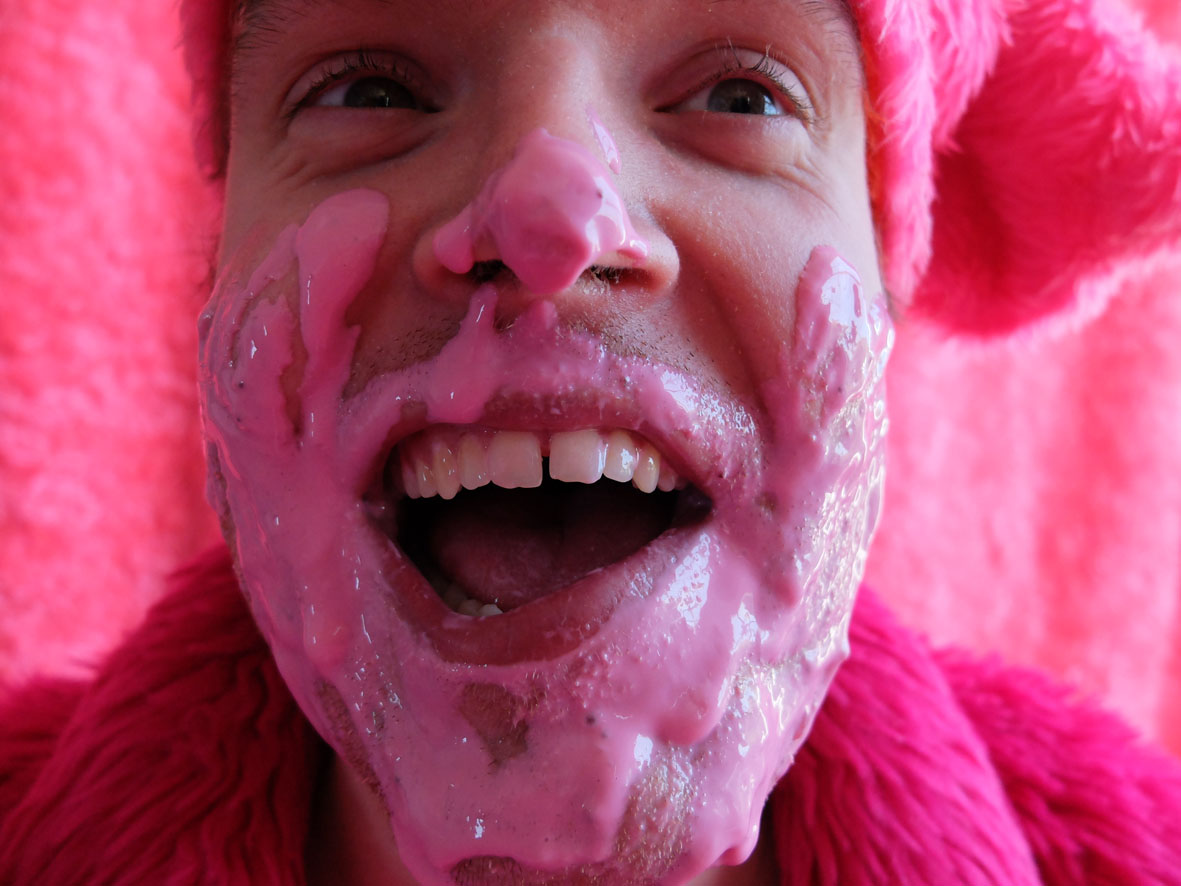
As an only child, I struggled to learn the rules of play. My games were often solitary imaginings of ‘house’, dolls being ‘mothered’ my way. Eventually I developed impulses to create – ‘Spirogyro’ patterns, badly spelled poems and an illustrated story about ‘My Aunt’. Dexter has always been more hands on. He introduced me to his games of make-believe, where he imagined, dressed up, and we acted out his devisings with him. “You be the shark, and now you fight me…” From an early age, he would suggest costume ideas, “fun-fur patchwork hoody?”, which I would procure. His eyes blazed then, as they do now, with fierce intensity as he conjured up worlds to escape into. He taught me to play, helped me to bring forth some of my reticence to get involved. We are still playing together. “It’s going to be a story, where I get messier and messier. I’ll wear my pink fluffy jacket. Can you find me a table cloth?” Each of us has a part to play. We all revel with delight, in the creative process, and it’s fun. I source the yoghurt.