
Remembrance/Gratitude/Praise Tag

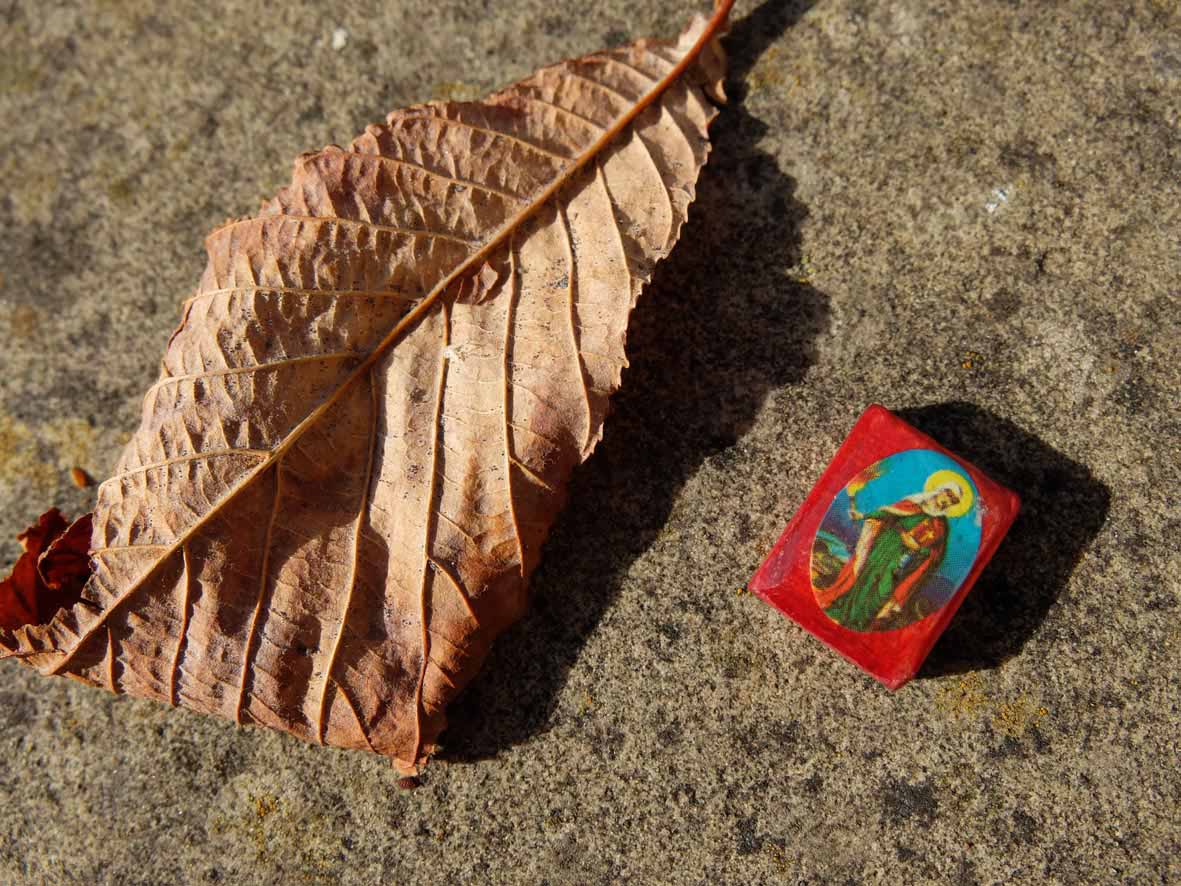
On opening the door, an unfamiliar dog bolts through my legs and dashes across the road into the park. I follow, adrenalin pumping. A high speed chase ensues through the park and out at the other end. “What’s the dog’s name?” I pant into my phone, the rush of traffic drowning out the reply. “What?” Dog crosses main road, down the pedestrian ‘Narroway’ and out into another road where cars stop their manoeuvres to let us pass. We are approaching another large busy road. I have run out of sprint. Then a young man appears on the opposite pavement on a scooter. He out-rides the dog-in-a-panic whose name sounds like ‘Daz’, catches him for me to grab. This is not a tale of a lost, injured or dead dog, but one about gratitude. After the briefest of thanks, the young man scooted off. Today, out walking a mile and a half in the other direction I meet my rescuer. We swap names, shake hands and I am able to thank him properly, my street angel. On the ground I find a very small saint.

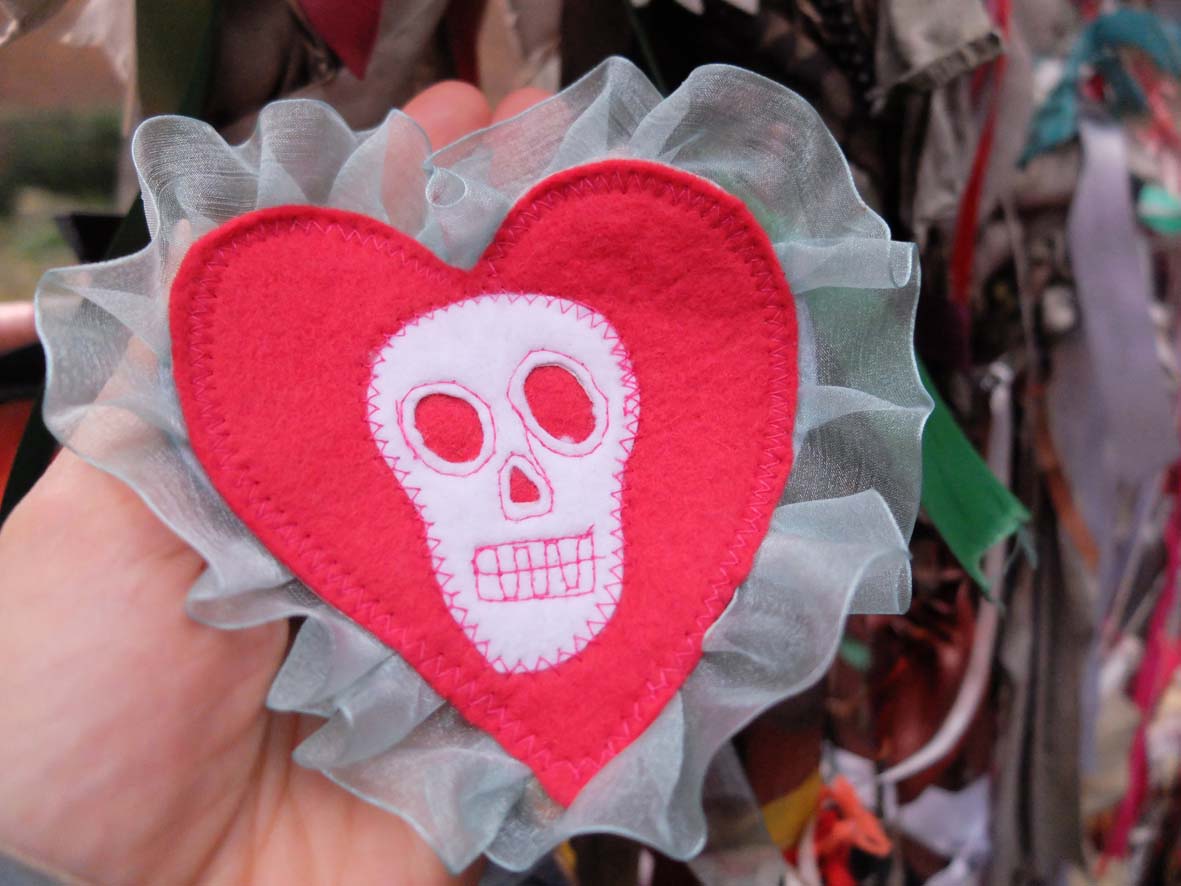
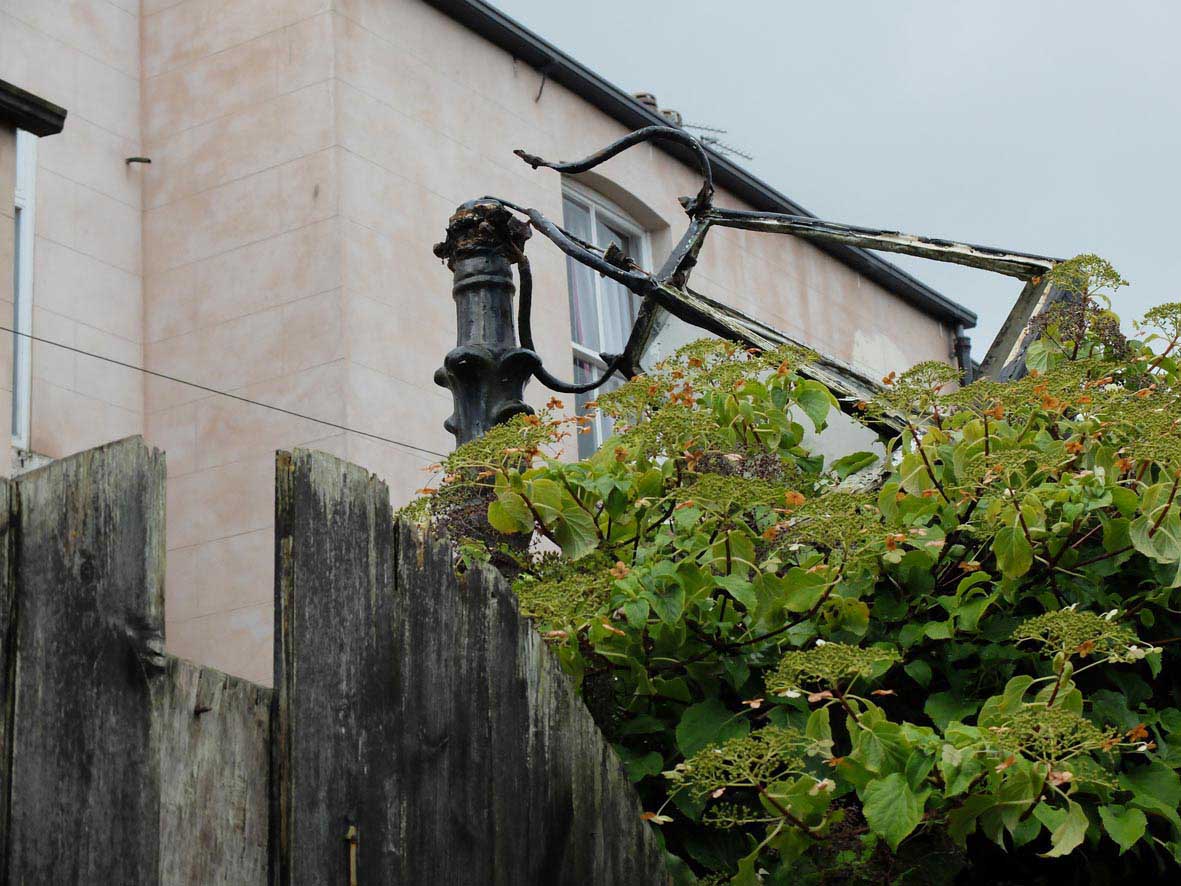
South of the river – behind and between the brick warehouses, pubs and centuries of old Southwark lies Crossbones. Gathering every 23rd of the month at this once forgotten paupers’ burial ground is a crowd of people come to celebrate the edge dwellers of life. We offer words and tokens in memory of the outcast, the ‘othered’ and of sex workers. John Crow – bard and shepherd of this flock welcomes the absurd and the unheard. I imagine this diverse but woolly-hatted crowd creeping out of the cracks in the city to bring their undervalued blessings; here to remember those who have fallen through the cracks. Libertines speak poems into the dark, drowned out intermittently by the rumble of jets full of people who can’t hear the poetry. www.crossbones.org.uk

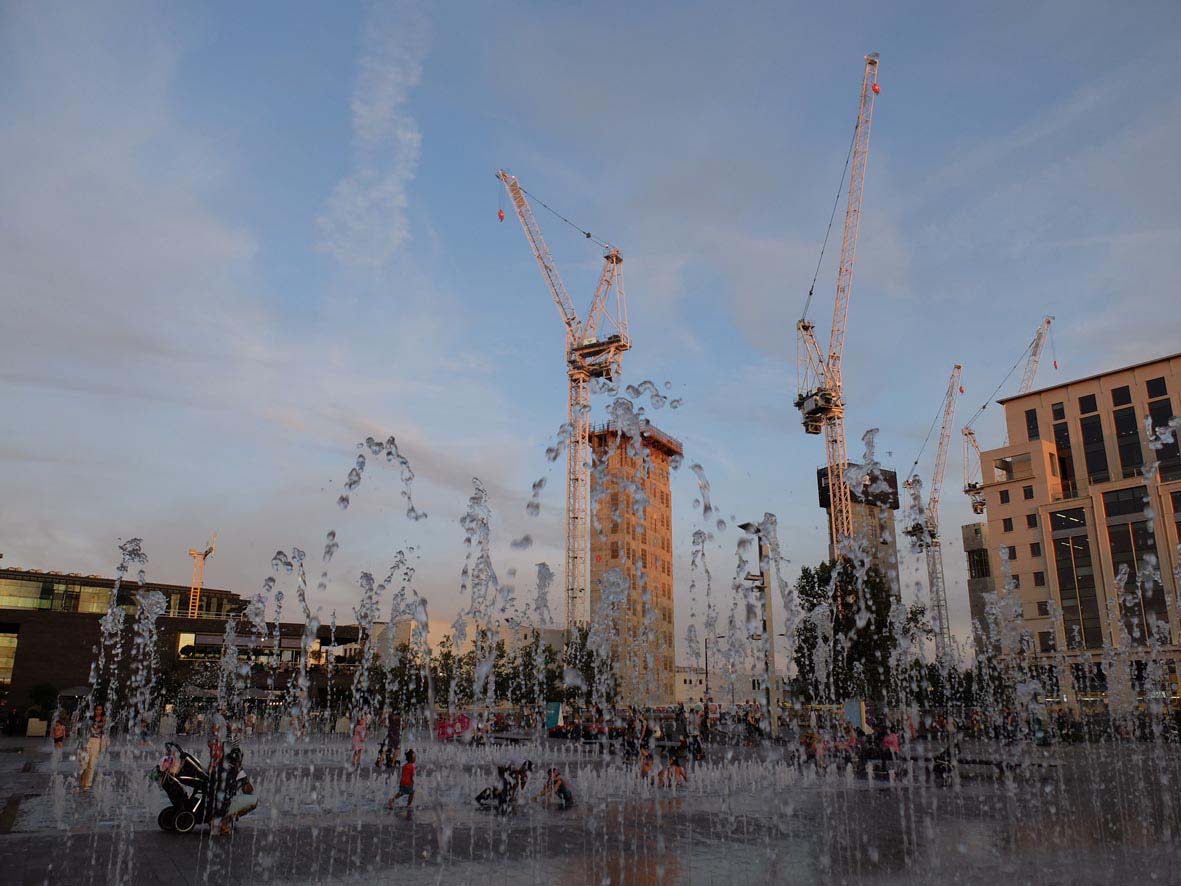
A long slow sun down strokes the city in copper light. We watch a new city rising up, and remember the places we have known over the years in this spot. Through the mists and splashes of the fountains run the ghosts of the groovers we were in the 80’s at warehouse parties in Battle Bridge Road. And ravers in the 90’s at the Cross or Bagley’s in dingy warehouses with festoon lights, beer residue sticking to our hyperactive trainers. Now the gas towers are an exoskeleton for apartments and the warehouses are filled with sparse rails of crisp linens.

The cemetery stretches into the distance. Monumental headstones made of York stone sit near, marble with occasional flower vases in the far reaches as the centuries shift. I park randomly, stepping out to find my great great uncle Jehu’s grave and along the first line of stones there are several familiar surnames. I scatter ginger cake and crumbly cheese, leave white roses as offerings to these forebears I never met who lived in this town I never knew until now.

The name of the mill was built into the brick façade with the confidence of the industrial revolution’s entrepreneurs. The history of the family is bound and twisted – like the ropes they made – with the mill. The place, its legacy has been knitted into my own psychogeography. Here it is, my first encounter with this legendary edifice. The dark red brickwork and broken windows conceal a complex weave of family history, ethics, and exploitation, and the story of cotton in Lancashire.

In 1901, my great great grandfather William, his brother and sister with their families lived in this terrace of 3 houses. The houses, ‘The Brooklands 1, 2 and 3’ still stand. Well to do briefly at the turn of the century, signs of worth and respectability have fallen into disrepair. My great grandfather who would later live in one of the houses is a cotton spinner living in a red brick two up, two down on the other side of town in 1901. My mother recalled him saying knowingly, “it takes 3 generations to go from clogs to clogs”.

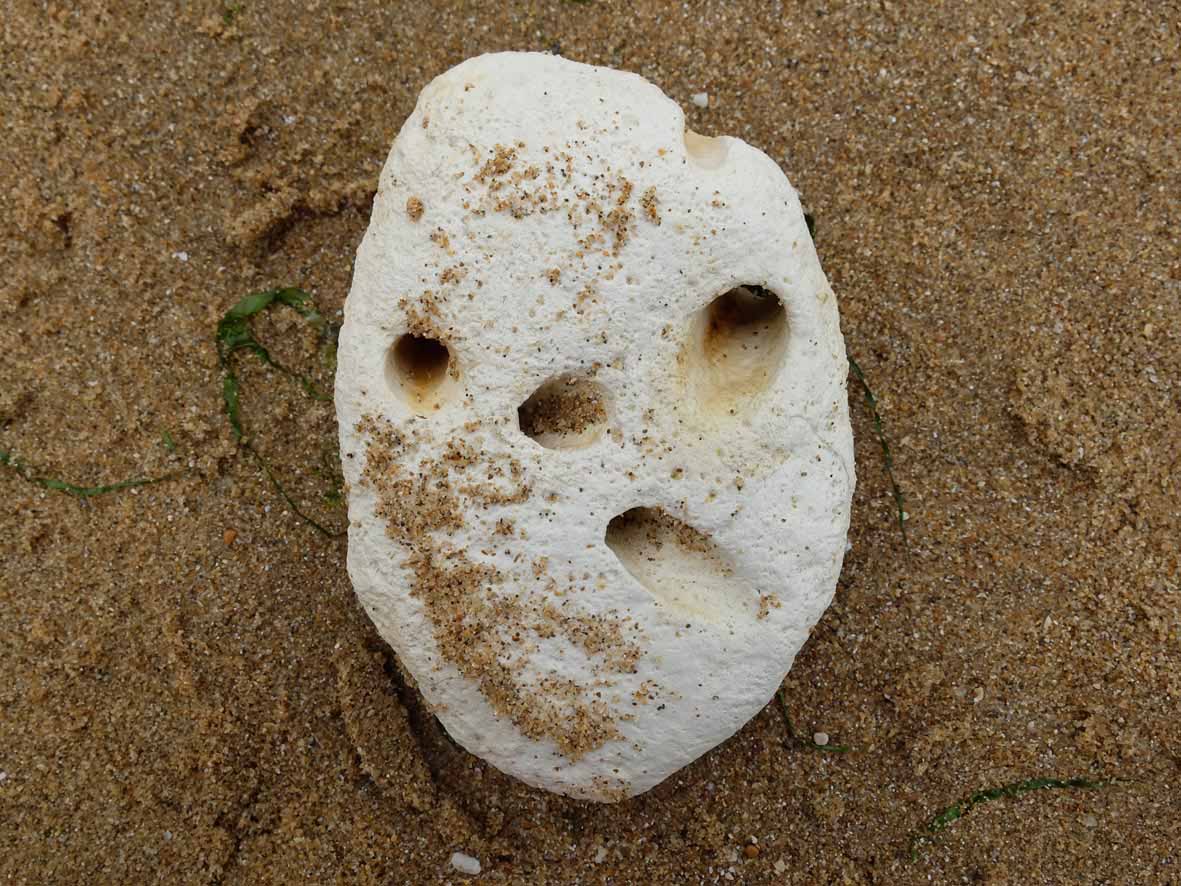
It’s a sign. Holes bored in a skull by eons of sea washing in, washing out. Socket for eyes, smaller for nose, a comet shaped mouth. Cranium worn rounded but the bone of my imagination is replaced by the waxy feel of unpolished chalk. “The Isle of Thanet in ancient times”, our Air B and B host says, “was known as The Isle of the Dead”. We walk along its shore now full of vigour, picnic and holiday enjoyment, but it was once a liminal place, a resting site for our ancestors.

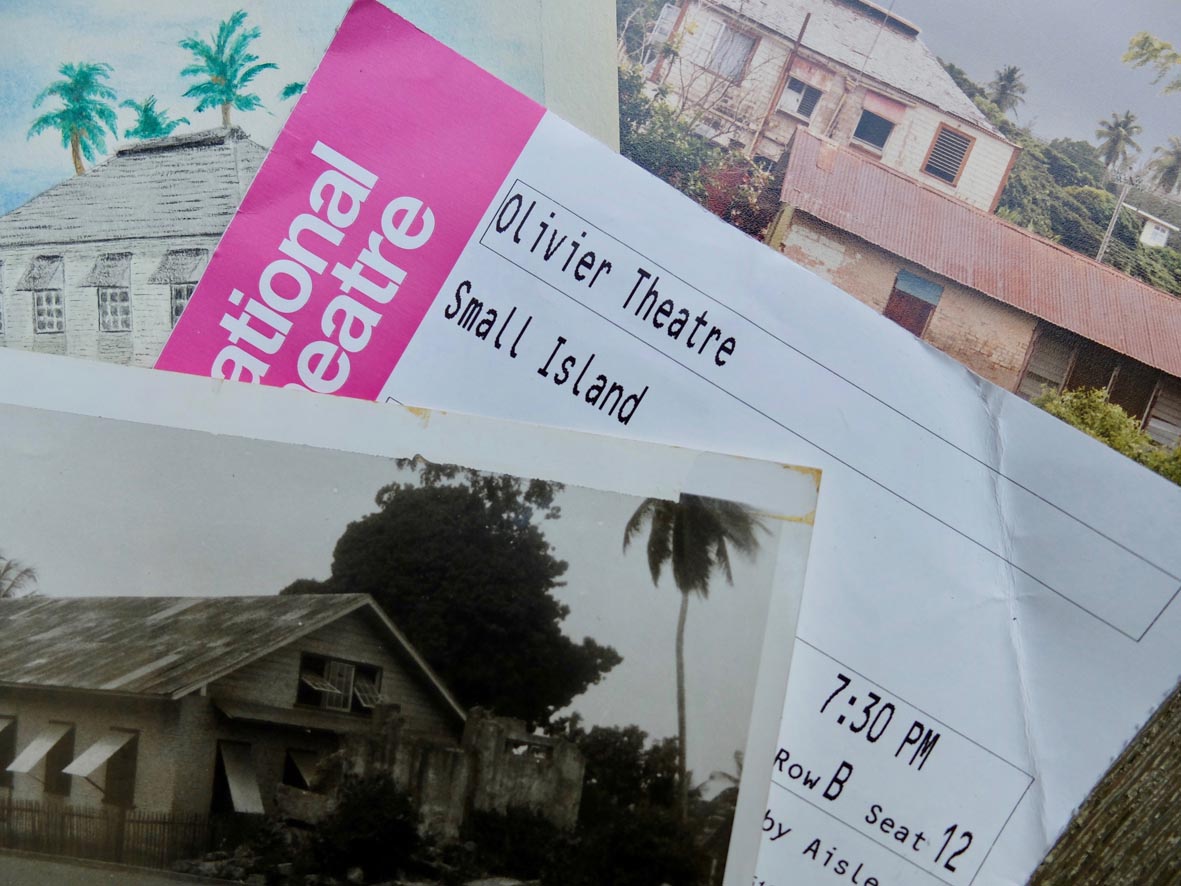
This is an epic tale which ranges across oceans and decades. A stunning panorama sets the scene for tropical Jamaica and then monochrome post-war Britain. Brilliantly staged, ‘Small Island’ is at the National Theatre. It chronicles the rises and falls of two families, explores exclusion and neighbouring themes – love, loss, kinship, belonging, racism and small mindedness. I am left feeling ambivalently British. Not long after the arrival of the Windrush, one after the other my parents sailed toward new lives in the Caribbean. They were heading towards meeting each other on another small island.