Author: admin

Review of Kristin Neff's 'Self-Compassion'

Kristin Neff’s ‘Self-Compassion – the proven power of being kind to yourself’ is a guide to how and why developing self-compassion is an invaluable tool for resilience. Neff offers practical steps to becoming more self-compassionate, and unpicks the pre-requisite ingredients.

As a result of the internalised expectations from unsupportive care-givers, competitive education, driven work environments and abusive systems and systemic cultural norms and social media, a judgemental inner voice is often running inside us.

In working with people who are coping with the challenges of grief, I often discover how much they are giving themselves a hard time, which exacerbates the emotional turmoil they are already facing. People often believe they are wrong in some way. They imagine they are grieving to hard, too long, not enough, or not in the right way. Teaching simple tools for self-compassion is an essential part of the Grief Tending approach we use. Kristin Neff explains the research that supports the benefits of self-compassion.

Neff defines self-compassion as requiring self-kindness, recognising our common humanity and mindfulness. Ending a habitual tendency for self-criticism requires regular self-nurture and care. She explains ways to do this like a self-hug which releases oxytocin in a similar way to a hug from another. Our nervous system usually responds positively to caring touch, which soothes. Learning to recognise our needs is the beginning of the way to shift from inner judgement to care.

Through Grief Tending, people often uncover a sense of shared humanity. It is powerful to experience that we are not alone with our suffering. The “suffering with” others of compassion is another piece in allowing ourselves more self-kindness. Neff’s research-based work looks at self-compassion as a personal strategy. She focuses less on the context in which we suffer, our external circumstances, which may be integral to our agency to practice self-compassion.

A mindful noticing of our emotional states is necessary to recognise them and offer ourselves kindness. People often understand the grief of bereavement, but may fail to register how many other sources of suffering they are carrying. Developing our self-compassion also builds our capacity to hold others,

“Our research shows that self-compassion allows us to feel others’ pain without being overwhelmed by it. It other words, when we recognize how difficult it is sometimes to be there for people who are struggling, and comfort ourselves in the process, we are able to be stronger, more stable, and resilient when supporting others in their suffering.”

“It’s not as scary to confront emotional pain when you know that you will be supported throughout the process.” Self-compassion is a way to manage our pain, by acknowledging hurt, and offering simple caring touch. Reading ‘Self-Compassion’ is a first step. Building habits around self-kindness is what may make the difference when we are coping with loss and emotional hurt.

For Grief Tending workshops in London and online see here.

Sarah Pletts is a Grief Tender and Artist who offers workshops in London and online, sharing rituals where grief on all themes is welcome.  For more information about Grief Tending events see here

Hand-drawn book about my relationship with death 'Hello This is Death'

“Why did you become a Grief Tender?” People often ask me why I hold Grief Tending spaces. There have been a number of profound experiences of grief and loss in my life. ‘Hello This is Death’ describes one of them. It is an animated hand-drawn book that I made in 2020 while I was learning to animate with Tony Gammidge. It is a series of images using felt-tip, crayon and ink. ‘Hello This is Death’ tells a visual story of my response to the death of my father.

My father died suddenly at 63. It wasn’t my first encounter with death, but it was the first one that turned my life upside down. I was a typically chaotic, naive 23 year old. It was a very intense time for me as I navigated a huge range of feelings, which is normal in any grief process. I reacted very differently to my mother, which added to my confusion.

There were also a lot of practical steps to take care of, many of which I attempted. In ‘Hello This is Death’ you can see some of the ways I responded to the situation. I try to convey the sense of unreality that I experienced, going through my own grieving process, while normal life continued.

When my father died, I felt as though I didn’t know what to expect, and I didn’t have any skills that were useful. Many people were generally unhelpful, and gave me bad advice. Most didn’t know how to be with someone who is grieving, and even at my father’s funeral someone tried to stop me from crying, just at the moment when I found an outpouring of tears.

Part of my investigation in the decades since he died, has been to find out how to be with death in a better way. I have had the chance to practice being with someone during their final years and last days several times since then. Each time I have learned more about the process of dying, and the practice of grieving.

Watch ‘Hello This is Death’ on YouTube. You can see some of my animated videos about Grief Tending here, and book Grief Tending workshops here.

Sarah Pletts is a Grief Tender and Artist who offers workshops in London and online, sharing rituals where grief on all themes is welcome.  For more information about Grief Tending events see here

'UK AIDS Quilt' shown at Tate Modern 2025

The UK AIDS Quilt is a series of 42 large panels plus 23 smaller textile panels to commemorate over 380 people who dies of AIDS in the 1980’s and 1990’s. It was also designed to raise awareness of the ongoing AIDS pandemic.

Each panel is comprised of about 8 individual textile pieces. Each piece is made to remember someone. Friends and families have sewn and painted names, dates, images, symbols and words that reflect each person represented. There are a few famous names portrayed too including Bruce Chatwin, and Denholm Elliott. There are more details about each panel including the names of those who died on the UK AIDS Quilt website.

Shown together at the Tate Modern, the quilt brings a joyous clash of colours and styles – more outsider art than usually adorns the space. It is lying for a few days in the cavernous Turbine Hall, which easily swallows its length. Despite the Quilt’s size, it is only a small representation of the impact of lives lost in the AIDS pandemic in the 1980’s and 1990’s.

A lot has changed since the first case diagnosed in the USA (1981) and the UK (1982). This is thanks to effective testing, information about transmission, antiretroviral treatment, needle exchange programmes, blood product screening and treatment as pre-exposure prophylaxis with PrEP. For those in communities most challenged, there were often frequent, multiple reasons to grieve as thousands died. For more information about the shifts in infection rates, treatments and different demographics affected by HIV/AIDS, see AIDS Map.

My cousin was diagnosed with HIV in 1986, and eventually died ten years later. During the last weeks of his life, I began to understand the nature of the disease, as I sat at his bedside watching its cruel progress on his fragile body.

I now wish I had joined in this creative memorial act at the time and made an oblong of vibrant colours stitched to mark ‘Amaya Ben’s’ dance through life. I imagine how this might sit among the groovy cat and music lovers, the religious, the irreverent and uniquely personal representations that now tell an important piece of our collective cultural history.

To mourn losses old, new, and systemic, find Grief Tending workshops here, and for a space that is LGBTQIA+ focussed we also hold Grief Tending events at Queer Circle.

Sarah Pletts is a Grief Tender and Artist who offers workshops in London and online, sharing rituals where grief on all themes is welcome.  For more information about Grief Tending events see here

Different sizes of grief ritual shown here with stones

Different Grief Ritual Sizes

Whatever the size or format of the Grief Tending rituals and events we offer, they all follow a similar shape, and include the same arc of experience. We begin by building connection within the group, and calling on support. Then we offer exercises to help surface feelings. A central grief ritual allows emotions to be expressed, and then we are welcomed back into community. This is followed by gentle soothing. Towards the end, we do some tasks to help us integrate our experience of the session before closing.

A Big Grief Ritual

The Embracing Grief Team and Sophy Banks are holding ‘Tending the Heart’, a 4 Hour Grief Tending communal grief workshop in London with the capacity for up to 100 participants plus a large team to provide support. It has the potential to be a powerful experience, an opportunity to share a big grief ritual with many others.

Small Group Grief Workshops

The size of the group we are in effects the shape and impact of the event. In our small group workshops in London, the maximum capacity is 12 participants plus 3 Grief Tenders in the team. At this size, everyone will be able to hear something from each person. A small group allows everyone to feel connected. It is intimate. We may feel visible, which may be both exactly what we hope for, and uncomfortable for some. The facilitators will have direct contact with each group member. There is usually an option for stepping into a quieter space, or having a one to one chat with a team member if needed, to support someone’s ability to participate.

Medium Size Grief Workshop

In a medium sized group of 13-24, there is usually a bigger team supporting the participants. There may be exercises in small groups, where intimate sharing is possible. But not everyone will hear from each person. A group ritual is likely to have more energy than in a small group. There are more potential connections to make, so it may feel less intimate, but also provide more opportunities to meet different people or find those with shared experiences. The group itself may be a dynamic mix of people. The facilitators will still have direct contact with every member of the group. We have capacity for up to 20 participants plus team at our new venue in Devon.

Big Grief Ritual Events

We design the format of the session to accommodate the size of the group. We also take into consideration the surroundings. In a large event with more than 25 people, everyone will not necessarily meet or hear from each person. The group itself takes on more of a holding role. The facilitators will hold the space and steer the energy of the whole group, but not have direct contact with every person.

The big workshops and community rituals which we have held at festivals have comprised 150-200 + participants, depending on the available space. This may allow people to feel more anonymous, to try the practice with less self-revelation. Strong singing and drumming may happen in a big group, offering another layer of community holding. This kind of stimulation and noise may also be overwhelming if sensory processing is challenging for someone.

Grief Tending rituals with Sobonfu Somé, one of the main conduits of Grief Tending as a practice, would regularly hold huge groups. When a gathering of this size comes together, there is opportunity for a very potent ceremony.

People often have different needs, and understanding these different grief ritual sizes may help someone recognise what is right for them. Our frequently asked questions page includes more information about different formats of event – such as online or in person, one or two day events. You can see more about Grief Tending, and different workshops here.

Sarah Pletts is a Grief Tender and Artist who offers workshops in London and online, sharing rituals where grief on all themes is welcome.  For more information about Grief Tending events see here

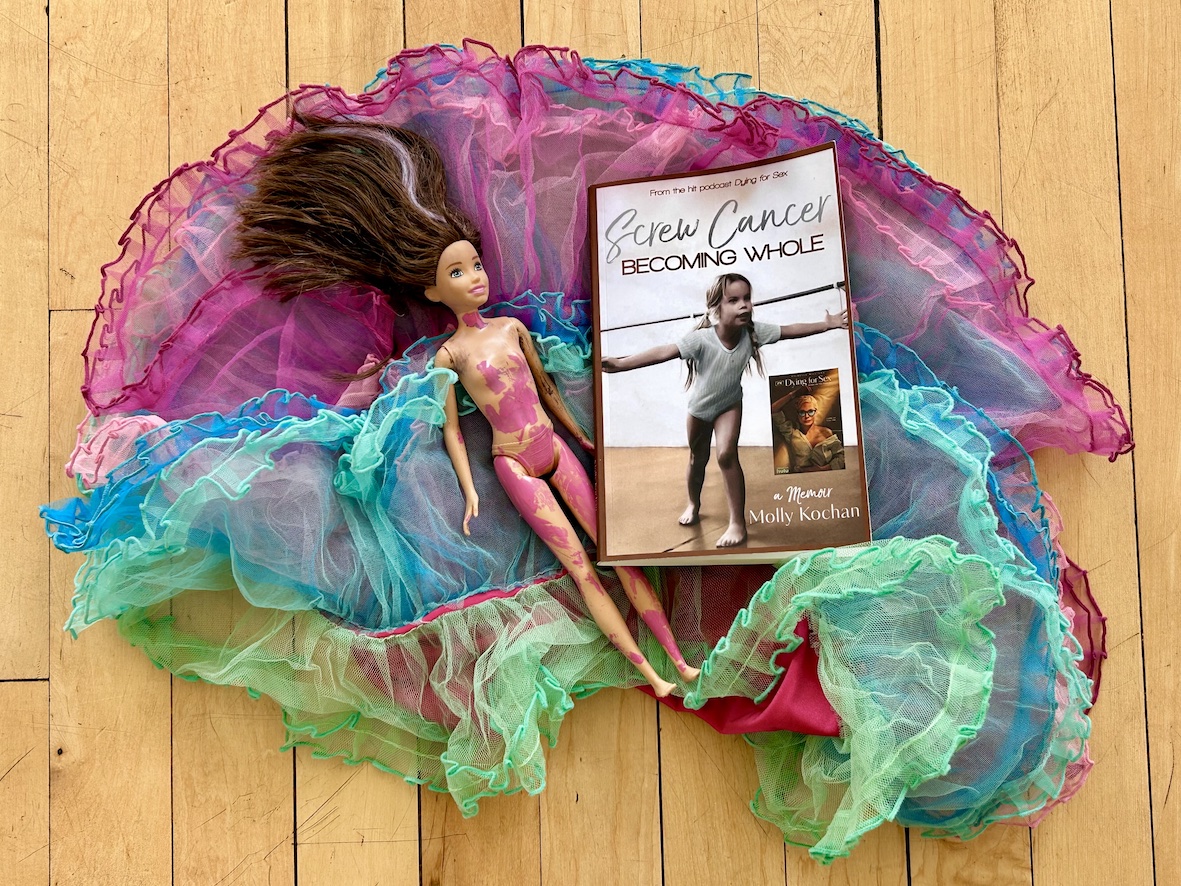
Molly Kochan is author of 'Screw Cancer: Becoming Whole' as in 'Dying for Sex' the podcast and TV Series.

‘Dying for Sex’ is a stunning podcast on Wondery. (The first four episodes are available to listen, but sign in to a free trial to hear the last three). It is raw, honest and funny. Molly Kochan and Nikki Boyer are best friends, and invite us into their revealing conversations.

Molly has Stage IV breast cancer, has just left her husband and is on a mission to find out what she likes sexually. On the way, she begins to reclaim her sensuality after a history of abusive relationships. It sounds like a drama, but it is just two friends chatting about life.

Molly’s sexploits are fun, but the intimacy of her relationship with Nikki sucks the listener into a more real, deep and meaningful conversation about sex, death, love and friendship. It made me laugh, and cry, as we hear Molly, and picture her through the lens of Nikki’s loving encouragement.

‘Screw Cancer; Becoming Whole’ is a short book by Molly Kochan. Finished in hospital, Molly is writing the completion of her journey to heal and grow around her childhood trauma. The urgency with which she is writing gives another window into her story, but it lacks the warmth and humour that Nikki brings into the dynamic between them in the podcast.

The ‘Dying for Sex’ TV series takes the bones of the podcast, and some of the themes in the book to create a drama inspired by real events. It takes Molly’s experience of relationships after a Cancer diagnosis and develops them into a credible script. Playing with the details that are shared in the book and podcast, the series takes the central premise and creates a hugely entertaining drama. It is both funny and moving as it challenges the viewer’s perception of how someone with Stage IV cancer should behave.

I love the way love and loss entwine in the narrative. Molly’s story is both tender and real, portraying sexual intimacy. The themes of both sex and death are explored with a refreshing openness, and humour.

Laughter in distressing circumstances is often a much-needed valve when someone is grieving. How to have fun and experience pleasure is also an important ingredient in end-of-life care, that may be unexpressed by someone with a life-limiting condition, or overlooked by care-givers. Take heed, it is never too late to try something new, or ask for what you desire.

For Grief Tending workshops that honour both love and loss as interconnected, see here.

Sarah Pletts is a Grief Tender and Artist who offers workshops in London and online, sharing rituals where grief on all themes is welcome.  For more information about Grief Tending events see here

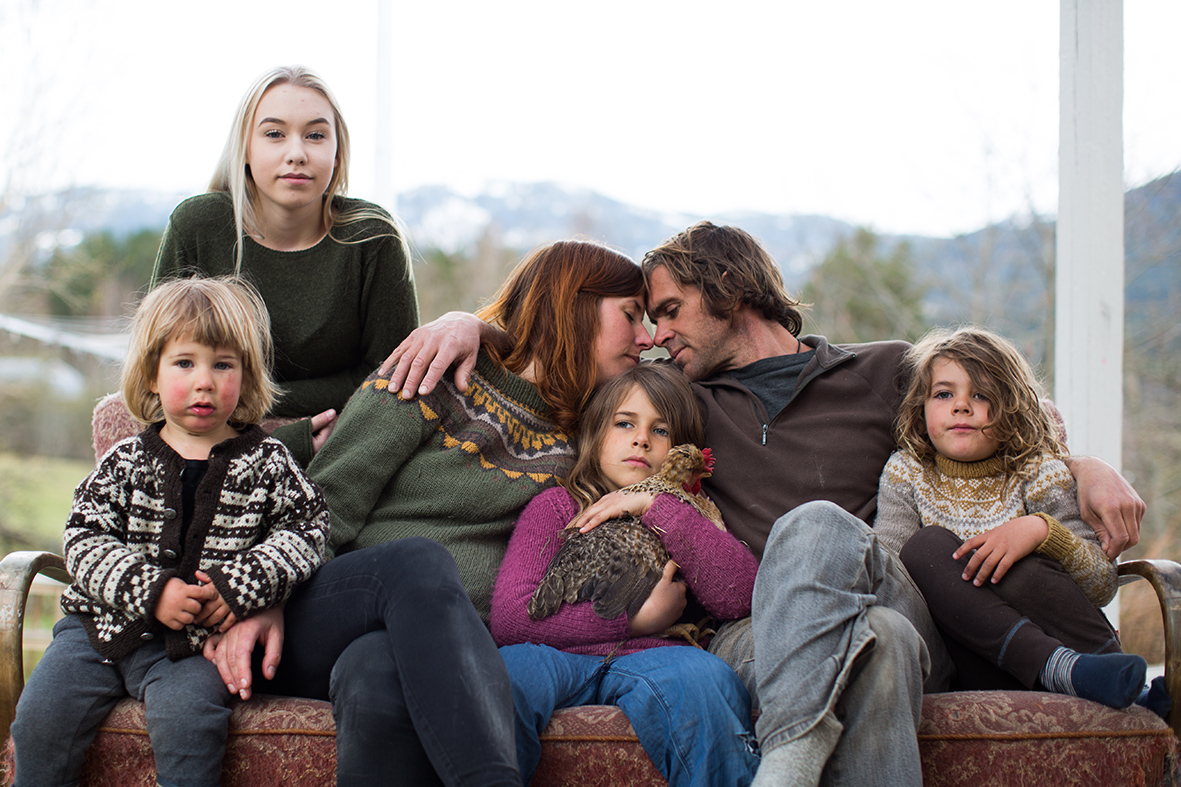
'A New Kind of Wilderness' image from the documentary film.

The Wilderness of Grief

‘A New Kind of Wilderness’ is a moving portrayal of a family navigating love, loss and belonging. The film captures how grief shows up in many forms. We see the family’s struggles to navigate change. It is unusual to see the intimacy of grief revealed, as it often remains private, and undocumented. Over time, we discover how the family meets the challenges, through the beautifully captured micro details of their relationships with each other and the world around them. This documentary film may resonate with different experiences of the wilderness of grief for its audience.

Loss of Hopes and Dreams

In everyday life, grief manifests as a range of natural emotional responses to many kinds of loss, change and absence. This includes bereavement, as well as other forms of separation, longing or change.

One of the ways in which grief plays out in ‘A New Kind of Wilderness’ is in the loss of hopes and dreams. We see multiple elements of grief in the film, as one impact sparks an unravelling of layers. Nik and Maria have chosen to create a sustainable lifestyle, home-schooling the 3 younger children, but the future they have imagined together crumbles.

Secondary Losses

When grief impacts us with one loss, separation or tragedy, there may also be other associated losses, endings or changes. Some of these ‘secondary losses’ or consequences may dramatically affect the life of someone who is already grieving. The death of a loved one for example, may start a whole connecting set of losses like dominoes falling. This may cause a bewildering and devastating impact on all those involved.

Our Existing Emotional Landscape

Each person’s grief is unique. When something happens in our life, like the death of someone close to us, it doesn’t arrive in a neutral environment. It lands in our existing emotional landscape. What impacts have come before, may define how this new event adds to our current grief load. Are there unresolved issues, previous losses, absences, childhood traumas, minority stresses, or other pressures that might affect how we deal with what is happening in the present? There isn’t usually a neat and easy pathway to follow, but we may turn away from the feelings; and then when we have capacity, move to face into grief.

Additional Factors to Grieving

If we are well supported, and resilient enough to experience the emotional storm, we may be able in time to grow through grief. When the death of a loved one happens, there are many factors that will affect our ability to cope. What was our relationship like? Did we have time to prepare for their end-of-life? Were the circumstances traumatic? Are we accepted by their friends and relatives? Are we separated from home? How resourced are we?

Finding Enough Support

In order to meet the challenges of grief, we need enough support, and resources to manage our circumstances. A supportive community around us in the wake of loss, is really helpful. Feeling a sense of belonging and shared values may enable us to feel held by family or community. If this is not available, it may be yet another reason to grieve. There are ways that the family in ‘A New Kind of Wilderness’ are making ‘alternative’ choices. Belonging becomes an important longing, as each person learns to adapt to new circumstances.

When we are grieving in a grief-averse culture, it can really amplify the sense of being an outsider. Whether there are people around us who are ‘grief literate’ and willing to listen without judgement or fear matters. We also need people to help with practical jobs that are beyond our capacity. It is important to be able to reach out to ask for and receive the support that may be available to us.

Simple practices that help us to take care of ourselves are essential. In the wake of loss, juggling the needs of everyone at home, and having space to be with grief may be complex. As a parent in a grieving family, it can be difficult to find what supports you, as well as helping children to adapt and grieve at the same time.

Grieving Style

Our grieving style is one of the things that will affect our ability to grieve well. Our personality, history, socialisation, cultural norms and even our neurobiology will make a difference in how we experience feelings and express grief. When things are too much to bear, we may find ourselves overwhelmed or numb. We may feel a confusing mix of anxiety, rage, despair, guilt, and deep sorrow. There may be relief, gratitude and love present too. These are all normal responses to life’s challenges.

There are many ways to allow the natural expression of grief – whether quiet or loud. If we can find kindness, without judgement, (from ourselves or others) it can ease our journey through the wilderness of grief. Shame is also often present where others are suggesting that it’s time ‘to move on’. Grief doesn’t have a sell-by date. Space to be with our own grieving process, for as long as it takes, is a more useful frame. We don’t ‘heal’, but may in time, be able to grow our life around the grief.

Rituals to Manage Change

Rituals can help us to manage change. In ‘A New Kind of Wilderness’ we see the family create some of their own rituals to mark the passing of time, to remember and to honour what is important. You may have an existing belief system with a known set of practices around rites of passage. For those without a particular faith, choosing what to do and how to mark significant moments may be more unknown. There are many possibilities available to the ‘spiritual but not religious.’ There are often many ways to experiment and make your own personal or family rituals.

Sometimes the small ways to honour someone or something are supportive and healing. It may be as simple as lighting a candle, writing a letter to someone to tell them you love them, placing an offering of flowers by a photography, or placing hands together on the earth. Community rituals are another great way to step from one phase of life to another, or to process grief.

Grief for the Earth

From the opening of the film, we find ourselves embedded in wildness. Our guides are parents who believe in teaching their children to respect the natural world. Their choice is to live sustainably ‘without taking more than we need’. Earth grief, and the collective pain of climate disruption and bio-diversity loss are the implied context of ‘A New Kind of Wilderness’. An awareness of the disconnection from nature in an extractive, and digital culture is the wider grief that provides the context for the setting of the film. Maria and Nik have set out to live in close connection with the cycles of nature, and the family find themselves understanding more about what it means to live and die, to be part of the cycle of life.

Imagining a New Future

From the impacts of loss, and ruptures with their chosen lifestyle, we watch the family move towards a re-imagined future. Belonging isn’t easy. Each person has to step into vulnerability, and risk something to grow up. Finding their way to make a new life takes us on a moving and inspiring journey. The love of what is lost remains. Grief is hard to bear, but sometimes, through experiencing it, there can be a deeper-meaning integrated into our lives.
Sarah Pletts is a Grief Tender and Artist who offers workshops, sharing rituals where grief on all themes is welcome. She has a close relationship with local urban wildlife, and chosen family in Hackney, London. For more information about Grief Tending events see here. For a review by Sarah of the film ‘A New Kind of Wilderness’ see here.


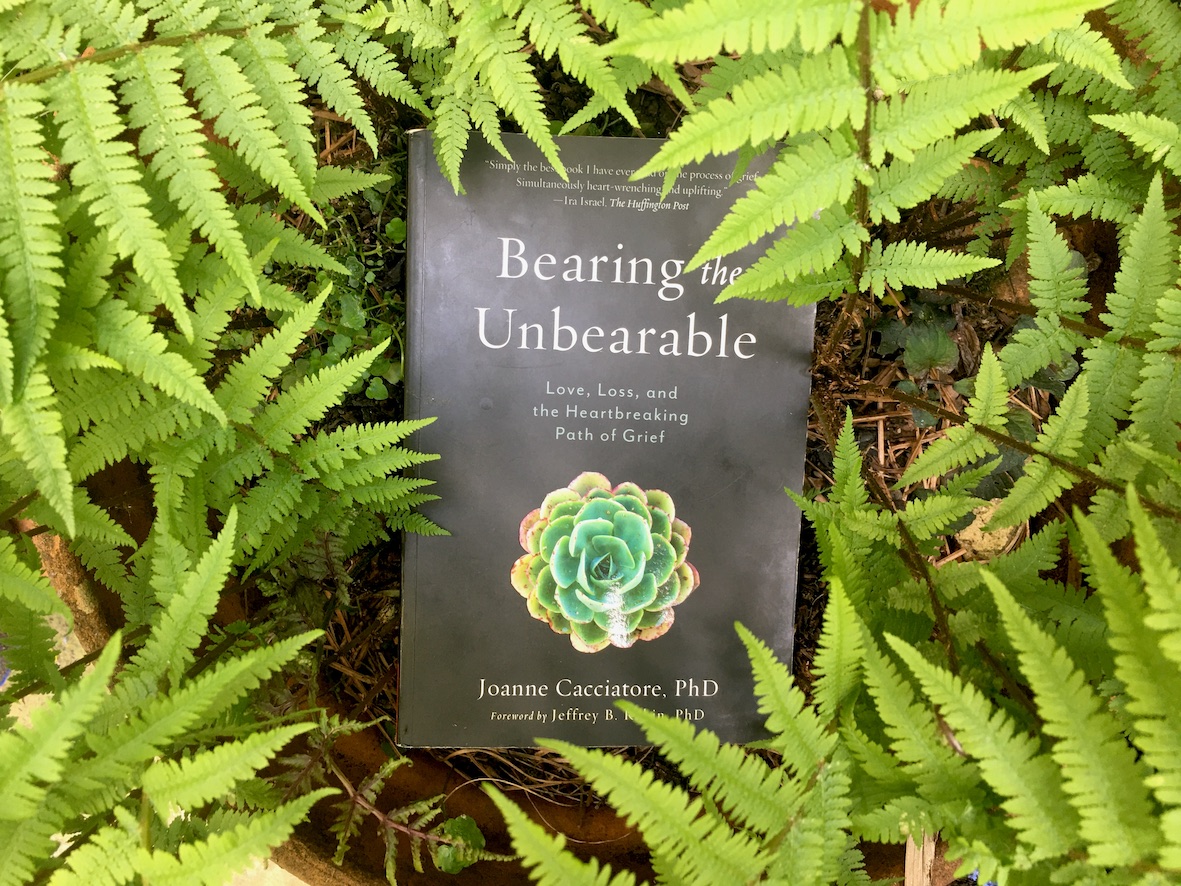
Review of 'Bearing the Unbearable' by Joanne Cacciatore by Sarah Pletts.

Joanne Caccciatore’s book ‘Bearing the Unbearable’ is a profoundly intelligent guide to heart-breaking loss. She draws on her own experience as the mother of a new born child who died. In this book, stories of unimaginable tragedy from others who have experienced traumatic grief also illustrate many different aspects of grief. She has gathered an understanding of grief from two decades working with the bereaved and bereft.

Through a deep familiarity with the process of mourning, her descriptions offer an empathic understanding of the realm of loss.
“We might never accept that our child or parent or spouse or grandchild or friend or loved one has died, but we can learn to accept how we feel about that loss, where in us the pain is most acute, its dimensions and texture, its tenor and depth. And over time, grief can morph from a dreaded, unwanted intruder to something more familiar and less terrifying – a companion perhaps.”

‘Bearing the Unbearable’ is divided into short chapters, each of which present nuggets of informed wisdom. Joanne Cacciatore manages to describe the experience of grief with soul-relieving words, while also offering a practical approach for living through the storms of suffering.

While ‘Bearing the Unbearable’ is a handbook for dealing with personal loss, Joanne Cacciatore also recognises the vital importance of processing grief on a macro level.
“…I suspect the bypassing of traumatic grief may be the greatest threat facing humankind today, responsible for immense suffering from addictions and abuse to social disconnection and perhaps even war. When we disconnect from our grief, we disconnect from ourselves, we disconnect from others and from the natural world.”

 Joanne Cacciatore describes the possibility of a collective shift that is a counter cultural revolution when we “pause to be with grief.” She is also an advocate of self-care as a radical practice, and encourages us to grow self-compassion.

In her professional practice, she suggests creative expression, rituals large or small, and meaningful acts that commemorate our losses are all helpful ways of working with grief.

Grief Tending uses a blend of awareness and creative practices, alongside ritual. To see more about Grief Tending or find an event in London, Devon or online, see here.

Sarah Pletts is a Grief Tender and Artist who offers workshops in London and online, sharing rituals where grief on all themes is welcome.  For more information about Grief Tending events see here

Still from the documentary film 'A New Kind of Wilderness.

‘A New Kind of Wilderness’ is a tender and moving documentary. It follows a family dealing with change in the wake of loss. Nik and Maria are re-wilding their family, and have chosen a self-sufficient life-style in Norway and home-schooling for the three youngest children. But when Maria dies, Nik is left dealing with the fallout of grief. We witness each member of the family struggle with Maria’s absence.

Director Silje Evensmo Jacobsen took inspiration from the images of Maria Vatne, whose death happens before ‘A New Kind of Wilderness’ begins; and yet Maria’s words create the context for the drama that unfolds.

There are interconnected consequences of Maria’s death – many ‘secondary losses’ that impact the family. We see Nik struggling with complex decisions, and the loss of a shared future dream.  They hoped to raise the children wild and free, to understand the life cycle of plants and animals, and our relationship with them.

The narrative is seeped in the beauty of a life lived in close connection with nature. It also portrays the paradoxes of modernity. We watch Nik grapple with how to earn a living, educate children and grow food solo.

Squeezed by financial necessities and an external pressure from others to ‘move on’ from grief, the siblings and father each have their own issues. The camera catches the many faces of their emotions, through body language and touching exchanges. It made me cry at unexpected moments.

We are offered glimpses into the private world of the family at a vulnerable time where cameras would not usually be invited. Time passes, and through small rituals, we watch them grow through grief. Moments tinged with happy/sad draw the viewer into the intimacy of their family life. Their story touched me, as we watch them begin to ‘build a future’.

‘A New Kind of Wilderness’ is a beautiful story about the upheaval that death may bring, and of resources and challenges arising in response. It reminds me that we can adapt and that through navigating change, we grow more resilient.

For an article about the themes of love, loss and belonging in the film, see here.

If the themes in this film affect you, you can find Grief Tending workshops in London and online here.

Sarah Pletts is a Grief Tender and Artist who offers workshops in London and online, sharing rituals where grief on all themes is welcome.  For more information about Grief Tending events see here

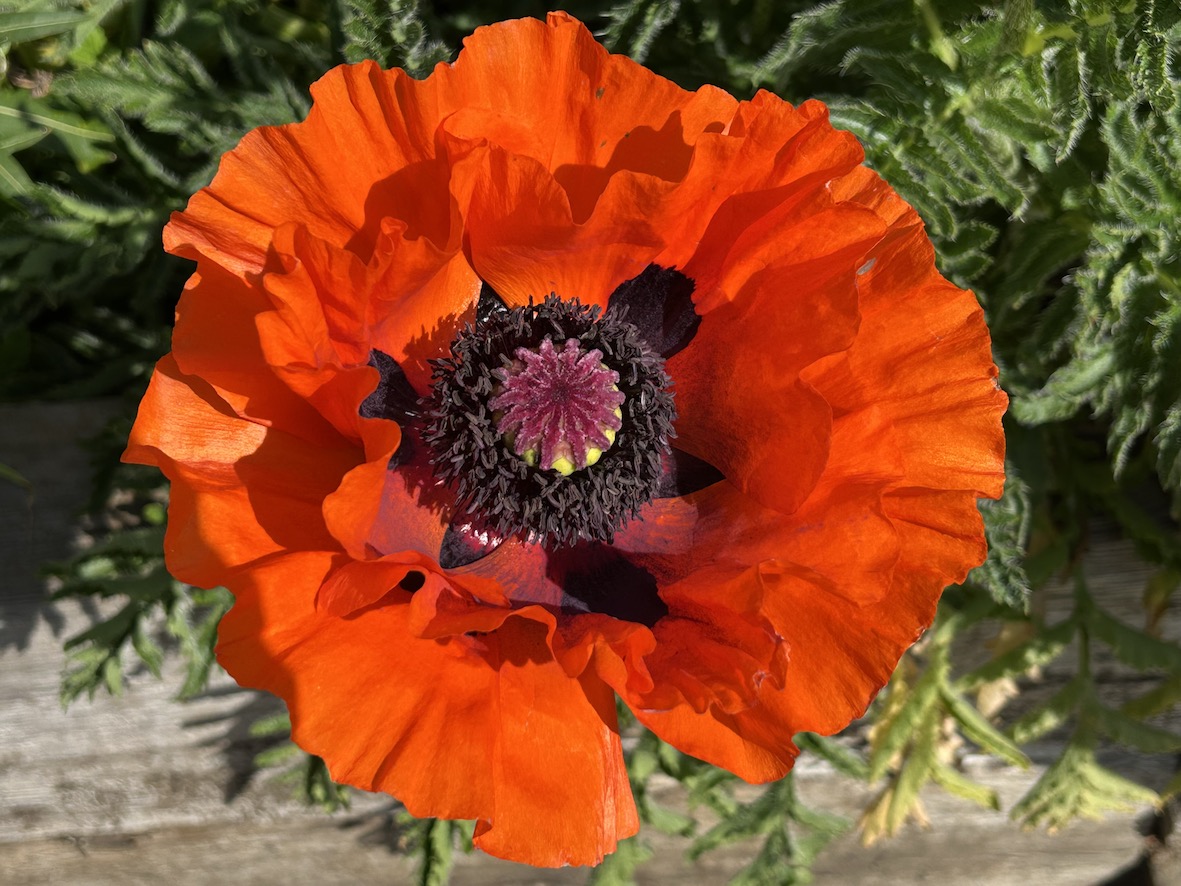
Poppy in full bloom to represent the flourishing of Grief Tending.

We have been collaborating with Sophy Banks of Grief Tending in Community to track the way that Grief Tending is flourishing. It is becoming more widely known, and spreading geographically. Many more people are offering the practice and there is a growing number of people who have attended one or more Grief Tending workshop, ritual or event.

Introduction to Grief Tending Audit

Grief Tending in community is a practice that involves a group of people coming together to share grief, with space to express their emotions. It can be a life-affirming experience and in addition to providing support and relief for current grief, can help people learn skills to cope with grief. Grief Tending events including a range of practices: simple exercises for participants to build trust, group ritual to express and witness feelings, embodiment to regulate the nervous system.

In Grief Tending events, all kinds of grief are welcome. We honour loss, absence, longing and change, and reconnect with intimacy and belonging. Grief tending is rooted in the teachings of Sobonfu and Malidoma Somé, Joanna Macy, Martín Prechtel and others, and has been shaped by teachers including Maeve Gavin, Francis Weller and those in this network.

Grief Tending events take place in a variety of face to face and online settings, including: an existing community, a group of people who come together temporarily, and a group who meet regularly.  Each Grief Tending event is facilitated by Grief Tenders.

In 2024 a preliminary audit was undertaken of Grief Tending events in order to observe and record the range and diversity of current practice

Audit Methods

Grief Tenders recorded and shared information on their face to face and/or online events. Information on the date and length of event and numbers of facilitators, assistants and participants was recorded in an online spreadsheet. This information was then summarised.

Note that we recorded the numbers attending each event. Some will be returners, so the total number of people who have attended events is less than the number shown here. We estimate that between 10 – 25% of people have been to an event before.

Results Show Grief Tending is Growing

Eight Grief Tenders shared information on 225 events held between 1/12/2013 and 31/12/2024, where grief was shared and witnessed. In total there were 3066 people attending (including a total of 720 at two festivals in 2023 and 2024). Participants joined from all continents (except Antarctica), the majority from the UK, followed by Europe and the US and Canada.

The number of Grief Tending events increased over time. The duration of both face-to-face and online events varied widely.

There were multiple short online events – some lasted 1 hour others 4 hours and others were all day or over multiple days. The longest online programme is the Apprenticing to Grief, which runs over 3 weekends.

The duration of face-to-face events varied from one or more hours, to workshops which ran over four days, and the Apprenticing to Grief over six days. Most face-to-face events lasted for 1 day or 3- 5 days.

All events (online or face-to-face) were led by a Grief Tender and supported by at least one other Grief Tender, facilitator or assistant.

Developing our Research

We believe this to be the first audit of Grief Tending events. Some participants have taken part in more than one event, so the total number represents workshop spaces attended. The number of unique people who attended is estimated at around 80% of this figure. Some figures provided by facilitators are estimates based on average numbers attending workshops.

Our initial objective in gathering this data was to sense the impact and reach of this network. In 2025 we aim to gather more comprehensive information from more people who are holding spaces. We would also like to see what else has resulted from attending the Apprenticing to Grief programme.

Many of us holding workshops gather evaluation information at the end of a workshop, or invite this feedback from participants online afterwards. We believe Grief Tending in community to be a low-cost, high impact intervention to improve mental wellbeing of those impacted by bereavement, loss, past trauma, stress, and life changes. We also believe it can have beneficial effects on those around people who come, which would be harder to measure. We would like to understand more about the impact of these practices on those who have attended Grief Tending events. We are exploring the best methods for doing this e.g. a survey of people who have attended.

Thanks to all those who shared their data, and all of you who are helping this vital work to spread to those who may need it.

You can find Grief Tending workshops with the Embracing Grief Team in London, Devon and online here. For the Apprenticing to Grief programme online or in person see here.

Sarah Pletts is a Grief Tender and Artist who offers workshops in London and online, sharing rituals where grief on all themes is welcome. For more information about Grief Tending see www.griefsupport.org.uk .

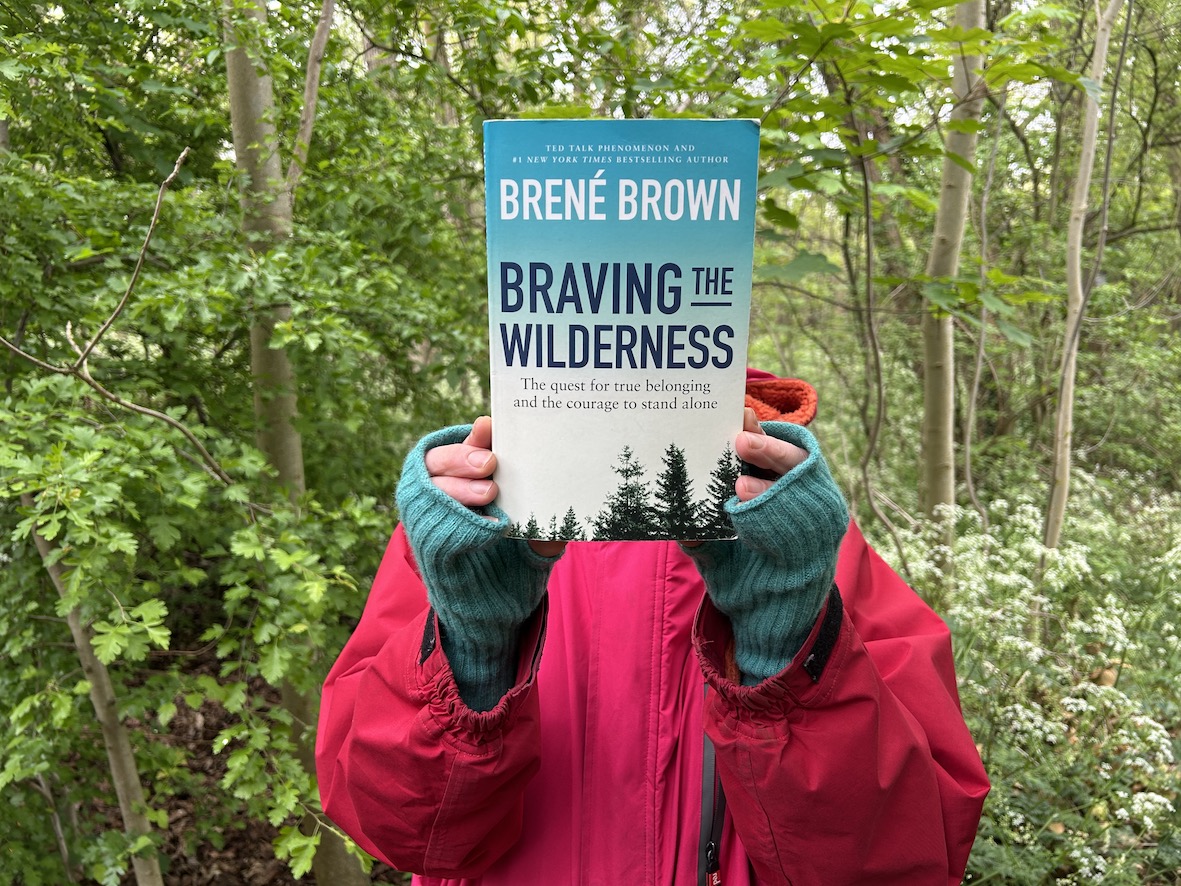
A review of 'Braving the Wilderness' by Brené Brown by Sarah Pletts

‘Braving the Wilderness’ is a gem of sense-making by Brené Brown. She extrapolates from her detailed research to illuminate cultural patterns of behaviour. In this book, she takes on belonging, and in its absence, “the lonely feeling”. With her signature Texan flavour, she communicates how to make brave choices to speak out and be courageous.

Brené Brown shot to fame with her Ted Talk ‘The Power of Vulnerability’. She has continued to study vulnerability along with its relatives, shame, empathy and courage. The full title, ‘Braving the Wilderness: The Quest for True Belonging and the Courage to Stand Alone,’ speaks to the resilience necessary to be true to yourself, in the face of resistance. How do we speak truth to power, defend our values, advocate for what we believe in?

Learning from her research subjects, Brené Brown has put together a guide for navigating through differing opinions to risk not fitting in, in order to find true belonging. While the book is about leadership and belonging, it offers pathways to repair collective grief.

The steps in ‘Braving the Wilderness’, from the evidence-base suggests, read like a recipe for Grief Tending.
>“We’re going to need to intentionally be with people who are different from us. We’re going to have to sign up, join, and take a seat at the table. We’re going to have to learn how to listen, have hard conversations, look for joy, share pain, and be more curious than defensive, all while seeking moments of togetherness.”

Building connection across difference, through sharing vulnerability and joy is how we bridge love and loss, grief and praise. Being willing to do this takes courage.

She identifies steps to risk vulnerability and find belonging. Joining with others to celebrate with food or music is an essential ingredient. Working with gratitude helps to grow joy too. Brené Brown’s conclusion:
“The answer that emerged from my research shocked me. Show up for collective moments of joy and pain so we can actually bear witness to inextricable human connection.”

First published in 2017, ‘Braving the Wilderness’ predates the exponential growth of culture wars, the proliferation of certainty and polarised debates. (For a background history on culture wars, listen to Jon Ronson’s ‘Things Fell Apart’.) Collectively, we would do well to pay attention to Brené Brown’s findings in order to navigate these times.

If you would like to experience how vulnerability builds connection through Grief Tending, you can find workshops in London, Devon and online here.

Sarah Pletts is a Grief Tender and Artist who offers workshops in London and online, sharing rituals where grief on all themes is welcome.  For more information about Grief Tending events see here